Key Takeaways
- Verify licensing: California requires contractors to hold a valid state license (often D-3 classification) for patio cover projects over $1,000
- Demand desert expertise: Generic contractors often lack understanding of local wind loads, UV exposure, and permit requirements specific to the Coachella Valley
- Get detailed quotes: Vague lump-sum pricing is a red flag – quality contractors break down materials, permits, labor, and any additional work
- Check real portfolios: Ask for photos and references from completed projects similar to yours, not generic stock images
- Beware of pressure tactics: “Today only” deals and reluctance to provide documentation are warning signs of unprofessional operations
Choosing the wrong patio cover contractor is an expensive mistake.
Beyond the wasted investment, you’re left with a structure that doesn’t perform in extreme desert heat and fails to meet building codes. That leaves you with costly repairs, red tape, and potential safety hazards.
Palm Springs has no shortage of contractors willing to take your money. But it’s also home to several excellent patio cover teams that can help you bring your ideas to life!
The challenge is identifying which ones will actually deliver the quality, expertise, and service your investment deserves.
Why Your Choice of Contractor Matters
A patio cover isn’t just shade. It’s a permanent structure attached to your home.
Just like anything else in your home, poor installation can lead to water intrusion and structural failures. It can also mean code violations that create liability and complicate future home sales.
And in desert regions, the risks go up quite a bit. Structures must withstand extreme UV exposure – exposure that can degrade inferior materials within years.
There are also wind loads that can exceed 90 mph during seasonal storms, and temperature swings from below freezing to above 120°F.
The difference between a quality installation and a problematic one isn’t always visible on day one.
It shows up three years later when finishes fade, fasteners fail, or you discover the permit was never finalized.
By then, your original contractor may be unreachable – or out of business entirely.
Qualifications to Verify When Looking for a Patio Cover Installer
Licensing and Insurance
California law requires any contractor performing work over $1,000 to hold a valid state license.
For patio covers, this typically means a D-3 (Awnings and Patio Covers) specialty license or a general contractor’s license with relevant experience.
Before signing anything, verify the contractor’s license through the California Contractors State License Board (CSLB) website. This free lookup confirms license status, expiration date, and any complaints or disciplinary actions on record.
Equally important? Proof of insurance. Legitimate contractors carry both general liability coverage (protecting your property) and workers’ compensation insurance (protecting you from liability if a worker is injured).
Request certificates directly – and be wary of any contractor who hesitates to provide them.
Local Experience and Specialization
Years in business matter, but years in this specific business matter more.
A general contractor who occasionally installs patio covers brings different expertise than a company specializing in shade structures and outdoor living.
Look for contractors with demonstrated experience specifically in the Palm Springs area.
They should understand local building department requirements, common HOA restrictions in communities like Rancho Mirage and Indian Wells, and the architectural styles that define desert homes – from mid-century modern to contemporary desert estates.
What to Look For in a Quality Contractor
Material Knowledge and Options
Top contractors can explain why they recommend specific materials for your situation – not just quote “generic options”.
They should discuss powder-coated aluminum systems designed for desert UV, insulated roof panels for heat reduction, hardware rated for local wind loads, and the differences between budget and premium material tiers.
Be cautious of contractors who offer only one material option or can’t articulate the performance differences between choices.
The best firms provide a range of solutions – from solid covers and lattice designs to motorized louvered systems – and help you understand which best fits your goals and budget.
Design Capability
Quality contractors offer design consultation that considers your home’s architecture. This includes building around sun angles throughout the day and the seasons, and integrating with existing structures.
Ask whether the company provides custom designs or simply selects from a catalog. The best contractors think beyond the immediate project.
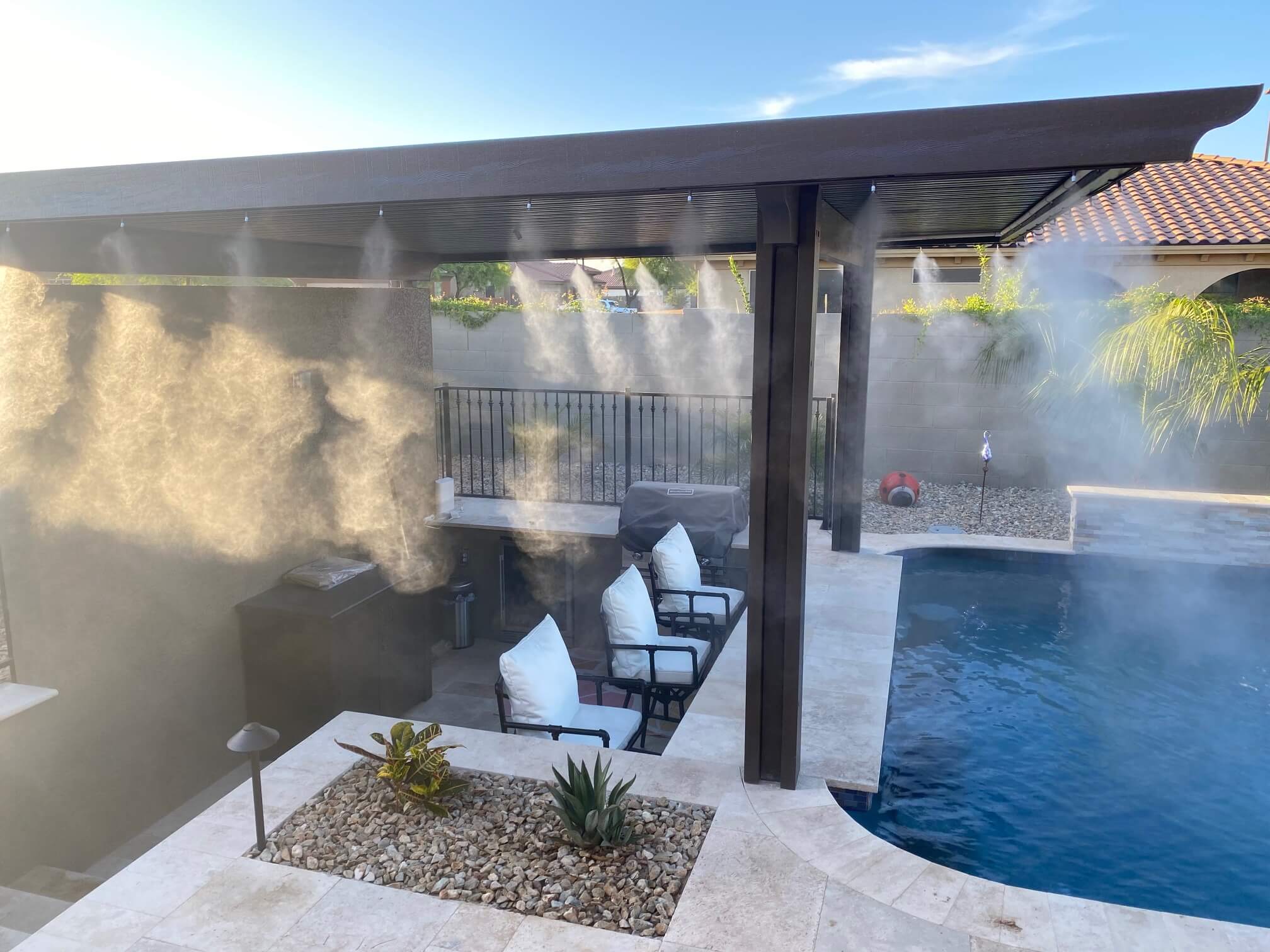
They should be able to discuss how your patio cover could integrate with future additions, such as misting systems, outdoor lighting, or hardscape improvements.
Permit and HOA Management
Palm Springs and surrounding communities require building permits for patio cover installations.
Reputable contractors handle the entire process: preparing plans, submitting applications, scheduling inspections, and ensuring final sign-off.
If your home is in an HOA community, the contractor should also be experienced with design review processes.
This includes understanding what documentation HOA architectural committees require and how to present designs that win approval efficiently. A contractor who suggests skipping permits or seems unfamiliar with local requirements is one to avoid.
Clear Process and Communication
Professional contractors follow a defined process:
- On-site consultation
- Design development
- Detailed written proposal
- Permit acquisition
- Scheduled installation
- Final walkthrough
They should explain this timeline upfront and keep you informed at each stage.
Written quotes should itemize materials, scope of work, permit fees, and any electrical or concrete work.
Vague lump-sum pricing with no detail is a warning sign. So is any reluctance to put agreements in writing or explain what’s included versus excluded.
Red Flags to Avoid
Experience teaches what warning signs to watch for. Protect yourself by being alert to these common red flags:
- Dramatically low bids: When one quote is significantly cheaper than others, it usually reflects inferior materials, shortcuts, or inexperience—not a better deal
- Pressure tactics: “Sign today for this price,” or “We have a cancellation and can start tomorrow,” often signal desperation or deceptive practices
- No local references: Hesitation to provide contacts for past customers or addresses of completed projects (with owner permission) suggests limited experience or unresolved issues
- Generic portfolio images: Stock photos or manufacturer images instead of actual completed projects indicate the contractor may not have substantial local work to show
- Large upfront deposits: Industry standard is 10-30% to start; demands for 50% or more before work begins create unnecessary risk
- Suggestions to skip permits: This creates liability, complicates home sales, and often indicates a contractor who can’t meet code requirements
- Resistance to written contracts: Everything – scope, price, timeline, warranty – should be documented before work begins
What Sets the Best Contractors Apart
Beyond meeting basic qualifications, the best patio cover companies distinguish themselves through several qualities that translate directly into better outcomes for homeowners:
Specialization over generalization.
Companies focused on outdoor living structures bring deeper expertise than general contractors who treat patio covers as a sideline. They stay current on materials, techniques, and design trends specific to this category.
Integrated solutions.
Top contractors think beyond the immediate project. They can coordinate patio covers with complementary elements, creating cohesive outdoor environments rather than disconnected additions.
In-house installation teams.
Companies that use their own trained employees maintain better quality control than those that subcontract to whoever’s available. Ask who will actually be doing the work on your property.
Long-term presence.
Established local companies with years of community presence have reputations to protect. They’re accountable in ways that fly-by-night operations aren’t, and they’ll still be around if you need service or have questions years later.
White-glove service standards.
The best contractors treat your property with respect – protecting landscaping, maintaining cleanliness, communicating proactively, and conducting thorough final walkthroughs. This attention to detail reflects how they approach the work itself.
Making Your Final Decision
Get multiple quotes (three to five is ideal) and compare them carefully. The lowest price is rarely the best value.
Look at what’s included, material quality, warranty terms, and your confidence in the company’s ability to deliver.
Remember, though the final result is important, trust matters most. You’re inviting these people onto your property and entrusting them with a significant investment.
This is where a good consultation process reveals a lot:
- Do they listen to your goals?
- Do they offer thoughtful recommendations?
- Do they communicate professionally?
Your instincts about chemistry and competence are worth heeding.
The right contractor makes the entire experience smoother – from design through installation to years of enjoyment. Take the time to choose well, and your patio cover will deliver comfort, beauty, and value for decades to come.
Want to learn more about patio covers and other luxury outdoor living spaces? Schedule a consultation and see why Palm Springs trusts Horizon Patios to deliver the best patio cover solutions.
FAQ
What license should a patio cover contractor have in California?
Patio cover contractors in California typically hold a D-3 (Awnings and Patio Covers) specialty license or a general contractor’s license (B classification) with relevant experience. You can verify any contractor’s license status for free through the California Contractors State License Board (CSLB) website.
Do I need a permit for a patio cover in Palm Springs?
Yes. Palm Springs and other Coachella Valley cities require building permits for patio cover installations. A reputable contractor will handle the entire permit process as part of their service.
How much should I pay upfront for a patio cover project?
Industry-standard deposits range from 10% to 30% of the project total. Be cautious about contractors who demand 50% or more before work begins. Payment schedules should be tied to project milestones, with final payment due only after completion and your satisfaction.
What’s the difference between aluminum and wood patio covers?
Aluminum patio covers are highly durable in desert climates. They resist warping, cracking, and rotting, and don’t need painting. Wood covers look traditional but require maintenance and don’t last as long in intense UV and heat. Premium aluminum systems can mimic wood grain while offering better longevity.
How do I verify a contractor’s insurance?
Request certificates of insurance directly from the contractor, including both general liability and workers’ compensation coverage. You can also contact the insurance company listed on the certificate to verify the policy is active and current.
What questions should I ask patio cover contractors?
Key questions include:
- How long have you specialized in patio covers in this area?
- Can you provide local references and portfolio examples?
- Who handles permits and HOA approvals?
- What materials do you recommend for desert conditions and why?
- What’s included in your warranty?
- Who will actually perform the installation?
How long does patio cover installation take?
Most residential patio cover installations take 1-3 days once construction begins. However, the total project timeline – including design, permits, material ordering, and scheduling – typically spans 4-8 weeks. Custom or complex projects may require additional time.