Summer in the Coachella Valley means temperatures that routinely exceed 100°F (and sometimes push past 115°F!)
Even mornings and evenings often stay in the 80s and 90s. Without an active cooling strategy, even a beautifully shaded patio becomes uncomfortable for much of the day.
Here’s what we’ve learned after two decades of building outdoor living spaces in this climate: shade alone may not be enough.
A patio cover blocks direct sun, which helps enormously. But when the ambient air temperature is 110°F, sitting in the shade still feels hot. The air itself needs to be cooled.
A properly designed misting system can drop the temperature in your outdoor space by 15-30°F. That’s the difference between staying indoors all summer and enjoying the backyard you invested in!
Misting systems have been standard at local restaurants, resorts, and golf clubs for years. Walk into any upscale outdoor dining area in Palm Springs or Palm Desert during summer, and you’ll find misting quietly keeping guests comfortable.
Now homeowners are discovering what the hospitality industry has long known: in our hot, dry desert air, high-pressure misting systems work exceptionally well.
This guide covers everything you need to know – how these systems work, what options exist, and what makes the difference between a system that transforms your outdoor life and one that leaves you disappointed.
Want to explore misting options for your patio? Schedule a consultation with our team today and let’s discuss how to bring your project to life!
Types of Misting Systems
When it comes to misting system types, it’s all about droplets.
The pressure at which water is forced through the nozzles determines droplet size. And droplet size determines whether you get effective cooling or just get wet.
Low-Pressure Systems (40-60 PSI)
These connect directly to a standard garden hose. They’re the lowest cost option and super easy to install yourself – just attach some tubing and nozzles, turn on the water, and you have mist. You’ll find basic patio misters and kits at home improvement stores and online.
The tradeoff? Low-pressure systems produce larger droplets that don’t fully evaporate before landing on surfaces.
The result is noticeable wetness on furniture, flooring, and people. (Not great!)
They work for certain applications: cooling dogs in the backyard, misting plants, or adding a bit of relief to a tiny seating nook where dampness isn’t a concern.
But they won’t transform a full patio into comfortable living space. In our extreme heat, the cooling effect is limited, and you’ll find yourself choosing between being hot or being wet.
Mid-Pressure Systems (150-300 PSI)
These require a pump to boost pressure beyond what a standard hose provides. You get finer droplets than low-pressure systems, with less wetness and moderate cooling improvement.
Mid-pressure can work for budget-conscious residential patios needing moderate relief. The cooling is real, and you’ll notice a difference.
But they’re still not fully “dry” in all conditions. On the hottest days or in windy spots, you may still encounter dampness.
They’re also more sensitive to wind blowing the mist away from your seating area.
High Pressure Misting Systems (1,000-1,500 PSI)
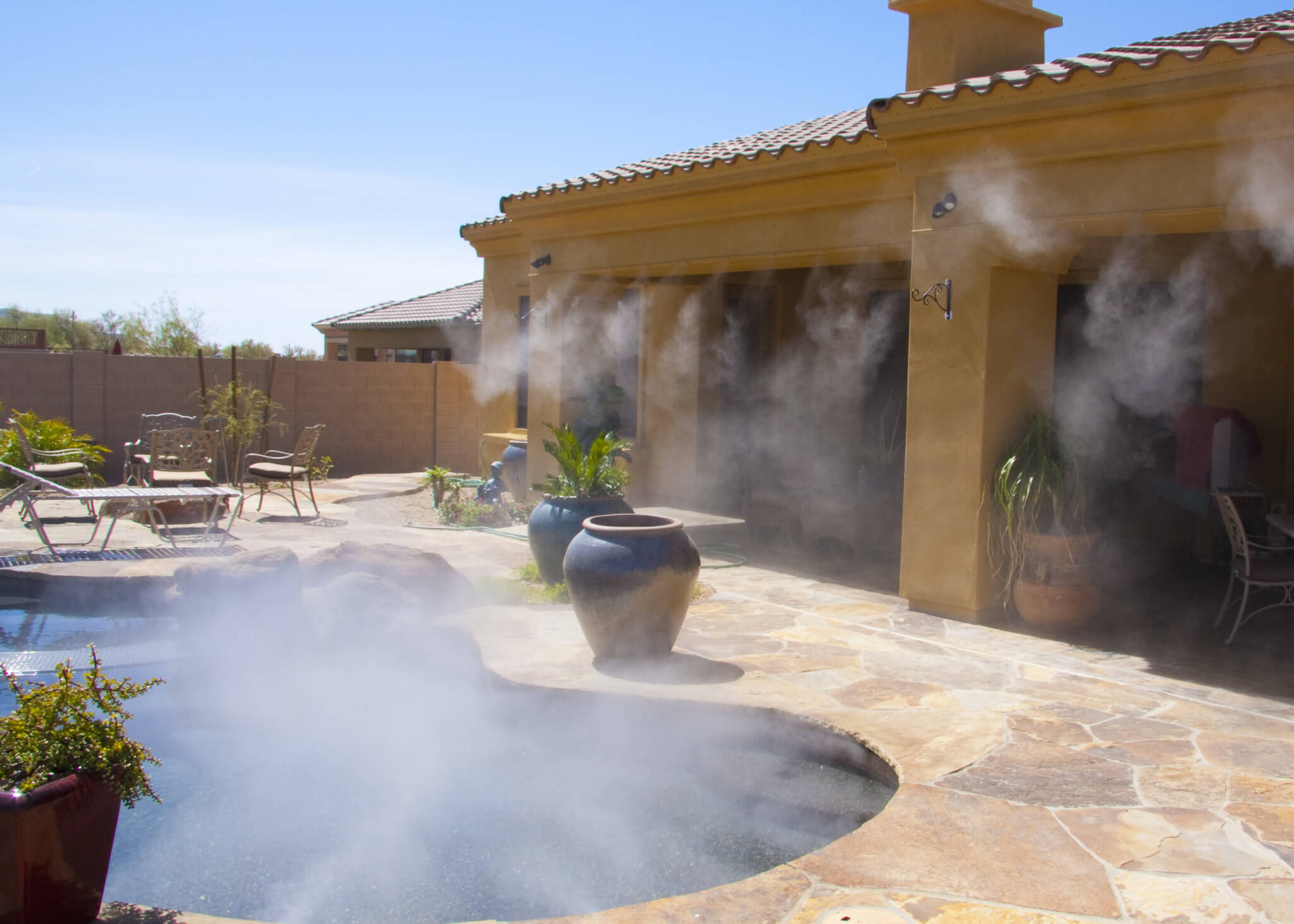
This is where real cooling happens. Professional-grade pumps create ultra-fine droplets – down to a few microns – that evaporate almost completely before reaching any surface.
High-pressure misting delivers significant temperature reduction: 15-30°F in desert conditions. The mist is so fine it’s essentially invisible. You feel the cooling effect without seeing or feeling the water itself.
This is what local resorts and high-end restaurants use – and now you can enjoy the same at home. When we talk about misting systems that transform outdoor living, we’re talking about high-pressure systems.
What are the Benefits of Misting Systems?
A Quick and Dramatic Temperature Reduction
Quality high-pressure misting systems can reduce felt temperatures by 15-30°F. A 110°F afternoon becomes an 85°F outdoor experience.
This dramatically extends your usable patio hours. Instead of being limited to early mornings before the heat builds and late evenings after it breaks, you can actually use your outdoor space during midday.
Your outdoor kitchen becomes functional when you want to grill, not just after dark when it finally cools down.
Dry Comfort in Dry Air
In our low-humidity environment, mist evaporates before it reaches the ground. No wet furniture. No slippery surfaces. No soaked guests.
The cooling feels like a breeze, not a spray. Guests often don’t even realize there’s a misting system running. They’ll simply notice how comfortable they are!
Health and Comfort Benefits
Lowering air temperature reduces the risk of heat exhaustion during outdoor time. This is especially important for kids playing outside, older adults who are more heat-sensitive, and dogs who can’t cool themselves as efficiently as humans.
The fine mist can potentially capture dust and pollen particles and knock them out of the air, potentially improving air quality around your patio.
Plus, misting adds a slight amount of humidity to extremely dry air. A bit of added moisture eases that desert dryness and makes breathing more comfortable.
Energy and Water Efficiency
Misting uses far less energy than attempting to cool outdoor areas with conventional air conditioning.
Why? Because you’re not fighting thermodynamics by trying to refrigerate the outdoors – you’re working with nature’s evaporative cooling process.
Modern high-pressure systems use approximately 10-15 gallons of water per hour. That’s efficient compared to most alternatives for outdoor comfort!
Lifestyle Transformation
This is the benefit that matters most. A great misting system lets you host daytime gatherings during summer months.
Your patio functions as true additional living space – not seasonal square footage you abandon from June through September. For many homeowners, that’s hundreds of additional hours of outdoor enjoyment every year.
Key Components of a Quality Misting System
Understanding what goes into a system helps you evaluate options and ask the right questions.
The Pump
The heart of any high-pressure system. Quality pumps run at 1,000-1,500 PSI to create optimal droplet size. The pump should be engineered for continuous desert use – built to handle long run times in extreme heat.
The pump needs adequate ventilation and protection from direct sun and blowing sand. A well-designed installation locates the pump where it can operate efficiently while staying out of sight.
Filtration
In our area, the hard water and airborne dust create challenges that demand excellent filtration. Without it, mineral deposits and sediment clog nozzles and damage pump components.
Dual-stage filtration systems catch sediment and minerals before they reach the pump and nozzles. This prevents clogs, extends system life, and maintains mist quality over time.
If you’re in an area with particularly hard water, you may need more aggressive filtration or even water softening pretreatment.
Misting Lines and Tubing
High-pressure rated tubing connects the pump to nozzle locations throughout your patio. The tubing must be rated for the pressure your system generates – standard irrigation tubing won’t work.
UV-resistant materials are essential for desert sun exposure. Lines that degrade in sunlight will fail prematurely and need replacement. Professional installation routes lines cleanly within patio structures so they’re functional but nearly invisible.
Nozzles
These are precision-engineered to create ultra-fine droplets at high pressure. The size and design of the nozzle orifice determines droplet size and spray pattern.
Nozzle placement determines your cooling coverage. Quality nozzles resist clogging and maintain consistent spray over time. Cheaper nozzles may work initially but degrade quickly, leading to uneven cooling and maintenance headaches.
Fittings and Connectors
Every connection point in a high-pressure system must be rated for the operating pressure. Quality fittings prevent leaks and maintain system integrity. Stainless steel or brass construction ensures durability in our harsh desert conditions.
Controls
Timer systems allow automated operation so your patio is cool when you want to use it. Set it to start 15 minutes before you typically head outside, and you’ll walk into a comfortable space.
Optional smart controls enable remote management from your phone. Some systems include temperature sensors that activate cooling automatically when conditions warrant.
For homeowners who want hands-off operation, automation makes the system even more valuable.
Maintenance Tips for Misting Systems
Desert environments are hard on misting systems.
Sand, dust, and hard water create challenges that require consistent attention. Neglected systems develop problems. Well-maintained systems provide years of reliable cooling.
1. Before Each Season
Inspect nozzles for uneven spray, dripping, or streams instead of fine mist. Any nozzle that isn’t producing proper mist needs cleaning or replacement.
Flush lines thoroughly to push out sand, scale, and debris that accumulated during the off-season. Check all fittings and connections for leaks or cracks from UV exposure.
2. Monthly During Summer Use
Wipe exposed lines, nozzles, and brackets to remove wind-blown sand and dust. This debris can work into threads and orifices over time if not removed.
Remove and soak nozzles in a 50/50 white vinegar and water solution for 30-60 minutes. This dissolves mineral buildup. Gently clear any remaining deposits with a soft brush or pin, then rinse thoroughly before reinstalling.
Inspect the pump area and clear sand from ventilation grills so the motor can cool properly. A pump that can’t dissipate heat will fail prematurely.
3. Filter Care
Check inline filters every 1-3 months depending on your conditions. In dusty or hard-water areas, monthly inspection is wise.
Replace filter cartridges at least annually – more often if you see buildup or notice performance dropping. Clean filters are essential to system longevity.
If you notice frequent nozzle clogs or white mineral crust on tips despite regular cleaning, your filtration may need upgrading.
4. Pump Maintenance
Check pump oil level approximately every six months. Change oil after the first 50 hours of operation, then roughly every 500 hours of run time. For most residential systems, that works out to about once per year.
Listen for unusual noises or vibration that can indicate wear, loose mounting, or developing problems. Catching issues early prevents expensive repairs.
5. After Dust Storms
Desert wind events deposit sand and dust everywhere. After a significant storm, rinse lines and nozzle exteriors.
Run the system briefly to check for blocked sprays, and inspect tubing and clamps along exposed areas where wind may have caused damage.
6. End of Season
When you’re done using the system for the year, depressurize and drain all lines. Clean or replace nozzles and filters before storage. Protecting the system during the off-season extends its lifespan.
DIY Kits vs. Professional High-Pressure Installation
You’ll find patio misters and misting kits at home improvement stores and online. These low-pressure systems connect to your garden hose and can be set up in an afternoon.
The price is appealing, and installation is typically fairly straightforward.
But that’s about where the benefits end. In Coachella Valley’s extreme heat, low-pressure systems rarely deliver the transformation homeowners expect.
The larger droplets don’t evaporate fast enough even in our dry air when temperatures push past 105°F. You end up with damp furniture, wet flooring, and cooling that’s noticeable but not actually comfortable.
We’ve talked to many homeowners who tried the DIY route first. The common experience: it helped a little, but not enough to really change how they used their outdoor space. Eventually they invested in a professional system and wished they’d done it from the start.
A professionally designed high pressure misting system is a different product entirely. Professional installation includes:
- Correctly sized pump for your specific space
- Appropriate filtration for local water quality
- Strategic nozzle placement for optimal coverage
- Clean integration with your patio structure
- Electrical work done properly and to code
- A system designed for years of reliable desert operation
The investment is higher upfront. But if you’re serious about using your outdoor space through summer, professional installation is the only path that actually delivers on the promise of comfortable outdoor living.
Ready to Cool Your Outdoor Space? Let’s Chat!
A quality patio misting system changes how you experience your Coachella Valley home. Spaces that sat empty from June through September become comfortable gathering areas.
The outdoor kitchen you invested in becomes usable when you actually want to cook outside. Your pool area feels like a resort instead of a heat trap.
The technology is proven. Our climate is ideal for it. The question isn’t whether misting works – it’s whether you’re ready to stop surrendering your outdoor space to summer.
Schedule a consultation today and let’s talk about the right cooling solution for your patio.
FAQ
How much can a misting system lower the temperature?
A properly designed high-pressure misting system can reduce felt temperatures by 15-30°F in hot, dry climates like the Coachella Valley. The cooling effect depends on humidity levels, system quality, and nozzle placement. Low-pressure systems typically achieve only 10-15°F reduction with noticeable wetness.
Do misting systems get you wet?
High-pressure misting systems (1,000-1,500 PSI) produce ultra-fine droplets that evaporate before reaching surfaces, so you stay dry. Low-pressure systems connected to a garden hose create larger droplets that don’t fully evaporate, leaving furniture and people noticeably damp.
How much water does a patio misting system use?
Modern high-pressure misting systems use approximately 10-15 gallons of water per hour, depending on the number of nozzles and system design. This is relatively efficient compared to other outdoor cooling methods and significantly less than filling a pool or running a fountain.
Do misting systems work in humid climates?
Misting systems work best in hot, dry climates where low humidity allows droplets to evaporate quickly. In humid environments, mist lingers in the air and creates dampness rather than cooling.
How much does a patio misting system cost?
Costs vary significantly based on system type. Basic low-pressure DIY kits start at a few hundred dollars. Professional high-pressure systems with quality pumps, filtration, and installation typically range from several thousand dollars depending on patio size and features.
What maintenance do misting systems require?
Desert misting systems need monthly nozzle cleaning during summer use (soaking in vinegar solution), filter checks every 1-3 months, pump oil changes approximately once per year, and seasonal flushing of lines. Hard water and dust increase maintenance frequency.
Can I install a misting system myself?
High-pressure systems require professional installation due to specialized pumps, electrical requirements, and the expertise needed for proper nozzle placement and filtration setup. Professional installation ensures optimal performance and system longevity.
Do I need HOA approval for a misting system?
Many Coachella Valley HOAs treat misting systems as architectural modifications requiring approval before installation. Always check your CC&Rs and submit plans to your architectural committee before installing a misting system.