Your Planning Guide to the Perfect Outdoor Living Space
Dreaming about turning your backyard into a true outdoor oasis?
A luxury outdoor living project is more than just adding a cover to your patio. The best home upgrades include a design-led process that can completely transform how you experience your home.
For Coachella Valley homeowners, the stakes are higher than most markets. Our desert climate demands solutions that actually work in extreme conditions. And our communities expect results that match the quality of the homes themselves.
After two decades of helping homeowners create their perfect outdoor living space, we’ve developed a systematic approach to the entire process. Rather than simply build, we believe in a bespoke experience that takes you from initial vision through finished installation.
When we partner with you, we remove the guesswork and protect your investment.
So, what can you expect? Read on to walk through each phase of planning a luxury outdoor living project. You’ll know exactly what to expect and how to make the right decisions that lead to amazing results.
The difference between an outdoor space that merely exists and one that elevates daily life? It comes down to planning.
Want to skip ahead? Schedule a consultation with our team to discuss your project today!
Step 1: Define Your Lifestyle and Purpose
Before we jump to materials or outdoor structures, there’s a more important question: how do you actually want to use the space?
Remember, function drives every design decision that follows. So spend some time here.
Ask yourself:
- What’s the primary use? Entertaining large groups of friends? Intimate dinners? Quiet morning coffee? Poolside lounging?
- What about secondary uses? Outdoor cooking, al fresco dining, firepit gatherings, watching the game?
- Who uses it most? Just you and a spouse? Extended family? Frequent guests?
With those answers in mind, it’s time to shift your design thinking – zones.
Rather than thinking of your backyard as one big “patio,” think of it as multiple distinct areas. A dining zone. A lounge zone. A cooking zone. A pool zone. A fire feature gathering space.
Each zone has different shade, cooling, and infrastructure needs. When you design with zones in mind, you create outdoor rooms that function as beautifully as anything indoors.
Why does this matter so much? A cover designed for hosting 20 guests looks very different from one optimized for a couple’s evening retreat.
Getting clear on purpose now prevents expensive mid-project changes later.
Step 2: Understand Your Site and Climate Realities
We’ve worked on a lot of properties across the area, and we can tell you: every single property is different.
And in the desert, those differences matter enormously.
Here’s what a landscape professional typically evaluates:
- Sun path throughout the day and year
- Prevailing wind patterns
- Existing views worth preserving (or blocking)
- Grade changes and drainage
- Relationship to your pool and existing hardscape
- Architectural style of your house
But desert-specific considerations add another layer:
- The afternoon western sun is brutal. Orientation matters enormously for comfort.
- Wind loads vary significantly between open desert lots and protected courtyards. This affects structural requirements.
- Glare off pools and light-colored concrete creates secondary heat sources that many homeowners don’t anticipate.
- Monsoon drainage patterns impact where structures can safely be placed.
And then there’s the community factor. Many Coachella Valley neighborhoods have specific requirements for setbacks, height limits, color palettes, and view corridors. Being able to identify these constraints early prevents costly redesigns down the road.
All of these elements shape early decisions. They determine when solid covers make sense versus louvered systems. Where misting becomes essential. How orientation affects your ability to relax outdoors in comfort.
Step 3: Set a Realistic Budget and Project Scope
Most homeowners start with a wish list that exceeds their initial budget. That’s completely normal. The key is having a framework for making smart decisions about where to invest.
Here’s a strategy we recommend: phasing.
Many luxury outdoor living projects are built in stages. Core structure and cooling first. Outdoor kitchen added next season. Fire feature and landscape elements in phase three.
Smart phasing gets you enjoying your outdoor space sooner while building toward the complete vision over time.
For most Coachella Valley homeowners, structural shade and cooling are non-negotiable foundations. You simply can’t spend time outdoors in summer without them. Everything else – the outdoor furniture, accessories, and finishing touches – layers on top.
This is where working with a professional contractor makes a real difference. We help sequence investments so each phase stands alone beautifully while setting up future additions.
The goal? Avoid the “we should have thought of that earlier” regrets that plague DIY projects.
Step 4: Choose Your Core Outdoor Structures
Now we get to the fun part: selecting the structures that will frame your outdoor living space.
Your main options:
Solid Aluminum Patio Covers
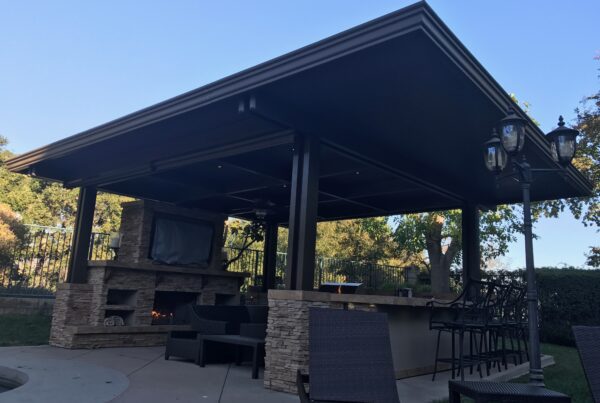
Solid aluminum patio covers deliver maximum shade and weather protection. They feature clean architectural lines and are ideal for primary entertaining areas, outdoor kitchens, and anywhere you need reliable protection from sun and rain.
Louvered Roof Systems
Louvered roof systems offer adjustable control over sun, shade, and airflow. Motorized options integrate with smart home systems, making them perfect for spaces where versatility matters. Open them up for stargazing. Close them for afternoon shade.
Pergolas and Lattice Structures
Pergolas and lattice structures provide filtered light and architectural beauty. They’re often combined with solid covers for visual variety, and they work especially well over secondary zones like garden seating areas or as a frame for climbing flowers.
So, how do you decide?
Consider how much direct shade you need. Think about whether adjustability matters for your lifestyle. Look at the architectural language of your house. A
nd consider how this structure will integrate with future additions like pool houses, cabanas, or a gazebo.
A note on materials:
Premium aluminum has become the luxury standard in desert climates for good reason. It offers longevity, zero maintenance, and clean aesthetics. Most importantly, it performs in extreme heat and sun in ways that wood simply can’t match.
The craftsmanship and durable materials you choose now determine how your investment looks and performs for decades.
Step 5: Plan Cooling, Comfort, and Infrastructure From Day One
Where do most projects go wrong? When the design treats cooling, lighting, and electric as afterthoughts.
These elements should be designed into the structure from the start. Retrofitting is always more expensive and never looks as clean.
Cooling elements to consider:
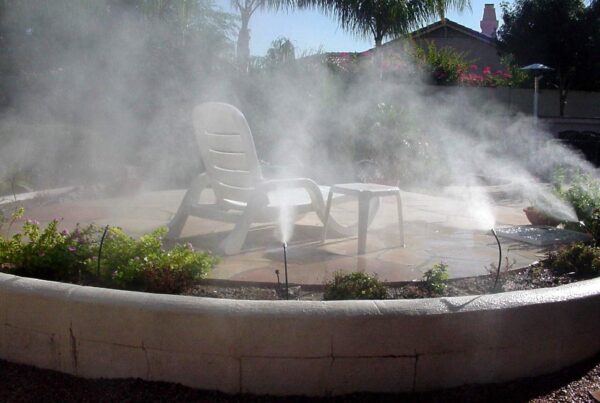
- High-pressure misting integrated within cover structures
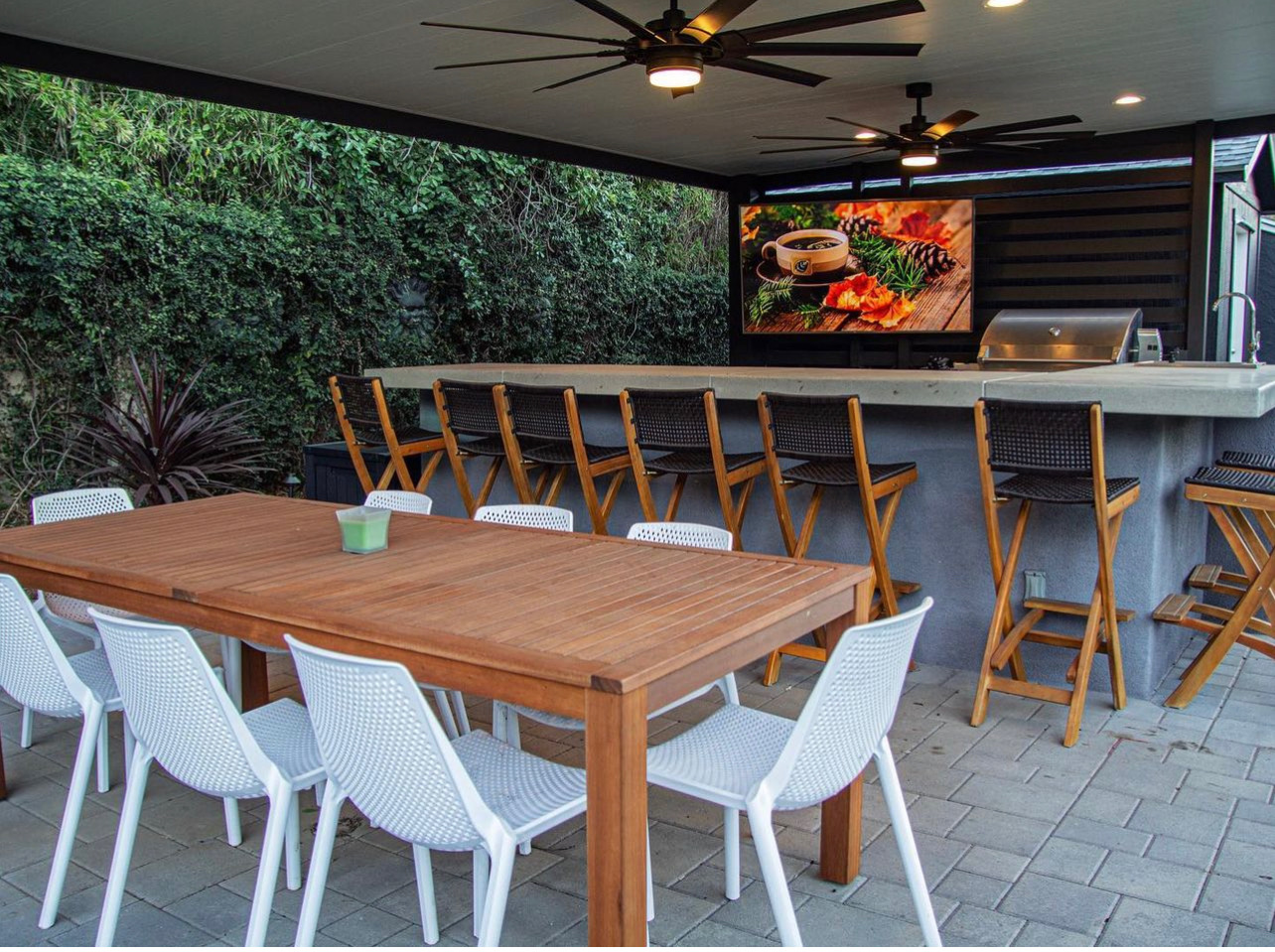
- Ceiling fan placement for air circulation
- Strategic shade orientation for maximum temperature drop
- Heating provisions for evening and winter use (think integrated heaters or a fireplace)
Infrastructure planning:
- Circuits for fans, misters, heaters
- Lighting zones (task lighting for cooking, ambient for dining, accent for landscape)
- Audio system pre-wiring
- Outlet placement for outdoor kitchen appliances
- Plumbing for sinks or outdoor features
- Future-proofing for technology additions
Why does this matter so much? There’s a clear difference between a space that feels “wired for living” and one where extension cords and surface-mounted fixtures reveal poor planning.
The goal is invisible infrastructure. When installation is complete, all you notice is how effortless the space feels – not the systems making it work.
Step 6: Design Layout and Flow
Now, the next important consideration: how do people actually move through outdoor spaces?
Knowing the flow will shape everything about the design.
Circulation
Circulation matters when it comes to flow. Good flow feels intuitive. Poor flow creates awkward bottlenecks where people bunch up or feel lost.
- How do guests move from indoors to the main patio?
- What’s the path from patio to pool?
- How does the cooking area connect to dining?
Zone Relationships
Which areas should be adjacent? Cooking and dining, obviously. But your quiet lounge zone might benefit from separation from the active pool area where kids are playing.
Think about sight lines, too. What do you see from each zone? Can you watch the game from the outdoor kitchen? Can you keep an eye on the pool from the dining table?
Furniture Planning
Here’s something many homeowners skip: plan your outdoor furniture footprints before finalizing structure placement.
Column and post locations should work with seating arrangements, not fight them. The size of your dining table, lounge configurations, and traffic paths all inform where structural elements go.
Outdoor spaces almost always need to be larger than people expect. What feels generous on paper often feels cramped once furniture is installed and people gather.
Professional design prevents the undersized deck or patio that never quite works the way you imagined.
Step 7: Materials, Finishes, and Architectural Cohesion
Your outdoor structures should feel like natural extensions of your home’s architecture. Not afterthoughts bolted onto the back of the house.
So you’ll want to think about style alignment:
- Desert modern homes: Clean lines, warm neutrals, slim profiles
- Mediterranean style: Arched details, warmer tones, textured finishes
- Contemporary: Bold geometry, contrasting colors, integrated technology
- Mid-century: Period-appropriate proportions, authentic materials
When it comes to finishes, color selection for aluminum systems should coordinate with existing roof and trim. Hardware and detail choices either elevate or undermine the overall impression.
Custom options let you match your home style precisely rather than settling for off-the-shelf solutions.
But remember to think beyond the structure. Consider: how does your patio cover relate to the surrounding concrete, pavers, or stone? A unified material palette creates cohesion. Intentional contrast can create drama.
And don’t forget the landscape. Plantings, boulders, and ground cover should complement structures and create that cohesive desert oasis aesthetic that homeowners dream about.
The combination of structure, hardscaping, and landscaping working together transforms a backyard into something truly special.
Step 8: Navigate Permits and HOA Approvals
Nobody’s favorite topic. But ignoring permits and HOA approvals can quickly create very real (and potentially very expensive) problems.
Most substantial outdoor projects require permits. And nearly all Coachella Valley communities have HOA requirements that must be addressed before construction begins.
Common requirements include:
- Setback distances from property lines
- Maximum height restrictions
- Color palette limitations
- View corridor protections (especially in golf communities)
- Architectural committee approval process
Remember – HOA approvals can take weeks or months. Building permits require engineered drawings. Factor these timelines into your project planning from the start.
That’s why we help. In our outdoor projects, we handle or support drawings, submittals, and revisions throughout the process. You shouldn’t have to navigate bureaucracy alone while trying to bring your dreams to life.
Step 9: From Proposal to Construction Schedule
You’ve made your decisions. Design is approved. What happens next?
The typical process:
- Final proposal: Detailed scope, specifications, and investment
- Contract and deposit: Secures your place in our construction schedule
- Material ordering: Premium aluminum systems have lead times
- Permitting: Submission and approval process
- Pre-construction meeting: Review of schedule, site access, and logistics
Quality outdoor living projects take time. Material lead times, permit processing, and proper construction sequencing mean luxury projects typically span several weeks to a few months from contract to completion.
Our crews work carefully around existing pools. We protect landscaping, coordinate with neighbors, and minimize disruption to your daily life.
You’ll have a clear point of contact throughout the process and regular updates on progress.
Step 10: Installation and Final Walkthrough
Now the construction begins! Here’s what to expect throughout the process. Naturally, each build will be unique – but here’s what you can usually expect to happen:
Installation Sequence
- Site preparation and layout
- Structural installation
- Electrical and systems integration
- Finishing details and cleanup
Final Walkthrough
Before we consider any project complete, we review everything together. Structural elements. Drainage. Shade performance throughout the day. System controls for louvers, misters, and lighting. Overall finish quality.
If anything needs adjustment, we address it immediately.
Long Term Care
One of the advantages of premium aluminum systems? Minimal maintenance.
Louvered roofs need occasional cleaning and annual inspection. Misting systems require winterization and filter changes. But compared to wood structures that demand constant attention, you’ll spend far more time enjoying your space than maintaining it.
These systems are designed for desert living – durable enough to handle the sun, heat, and weather for decades.
Let’s Turn Your Vision Into a Desert-Ready Retreat
A luxury outdoor living project becomes far less overwhelming when you understand the roadmap.
Each step builds on the previous one. And the right contractor guides you through decisions rather than leaving you to figure it out alone.
The payoff? An outdoor space that extends your home’s living area. That handles our desert climate beautifully. That delivers the indoor-outdoor life you imagined when you chose to live in the Coachella Valley.
These aren’t just backyard improvements. They’re investments in how you live – where you gather with friends, where you relax after work, where you create memories with family.
If you’re ready to begin planning your perfect outdoor living space, we’d welcome the conversation. Every project starts with understanding your vision, your property, and your goals.