Key Takeaways
- A professionally installed residential high-pressure misting system in the Coachella Valley typically runs $3,000–$4,500, with turnkey luxury installations integrated into existing patio covers reaching $8,000–$15,000.
- High-pressure (800–1,200 PSI) is the only pressure tier that performs reliably in desert conditions. Mid- and low-pressure systems leave surfaces wet and don’t drop temperatures enough to justify the install.
- Operating costs are surprisingly low: a typical 20-nozzle system uses under 10 gallons of water per hour, which costs most Coachella Valley homeowners well under $1 for a six-hour evening.
- Cost is driven by four factors: linear feet of tubing, number and type of nozzles, pump class, and install complexity. Tile roofs, stucco penetrations, and HOA-sensitive routing add labor hours.
- A quality system lasts 10–15 years in our climate when properly maintained, making it one of the lowest annualized cost-per-hour-of-use improvements you can make to a desert patio.
You’ve searched how much does a misting system cost and found a dozen articles built around Phoenix, Dallas, and Miami averages.
None of them address what really matters in the Coachella Valley — 115°F summer afternoons, low humidity that makes evaporative cooling outperform humid markets, and desert-grade components engineered to survive UV that would destroy cheaper systems in a single season.
After two decades installing outdoor living systems across Palm Springs, Palm Desert, Rancho Mirage, and the rest of the valley, we’ve seen every pricing trap and every corner homeowners try to cut.
Here’s the honest answer, with real numbers, on what a patio misting system costs here in 2026.
What Does a Misting System Cost in the Coachella Valley in 2026?
Here’s the short answer: a residential high-pressure misting system in the Coachella Valley typically costs $3,000 to $4,500 installed, with most luxury homeowners landing in that range for a professionally installed patio-scale system.
Mid-pressure residential kits run $1,200 to $2,500. Commercial and custom luxury installations start around $5,000 and scale to $15,000 or more.
National benchmarks put outdoor misting installs between $1,957 and $3,584, with a typical project landing near $2,747 according to 2026 data.
Those numbers are useful as a floor, but they reflect projects in milder climates with shorter runs and basic components.
Coachella Valley pricing skews higher for a reason. Our climate demands better equipment — desert UV destroys cheap nylon, 100°F-plus sustained temperatures punish budget pumps, and the luxury homes we work with typically cover larger patios than the national average.
We think about pricing in four tiers:
- Entry-level ($500–$1,500): DIY kits, basic nylon tubing, budget brass nozzles, small low-pressure pumps. Fine for a small covered porch; falls short on an actual outdoor living space.
- Mid-range ($1,500–$3,000): Mid-pressure residential systems (150–300 PSI), typically 10–20 nozzles. Cools adequately but doesn’t deliver the dry mist desert homeowners want.
- Professional residential ($3,000–$4,500): High-pressure systems running 800–1,200 PSI, 20–40 quality nozzles, stainless or copper tubing, desert-rated pumps. This is where most Coachella Valley homeowners land.
- Custom luxury ($5,000–$15,000+): Integration with existing patio covers, automated controls, zoned cooling, premium materials, smart home integration. Typical for 1,500+ sq ft patios or multi-area installations.
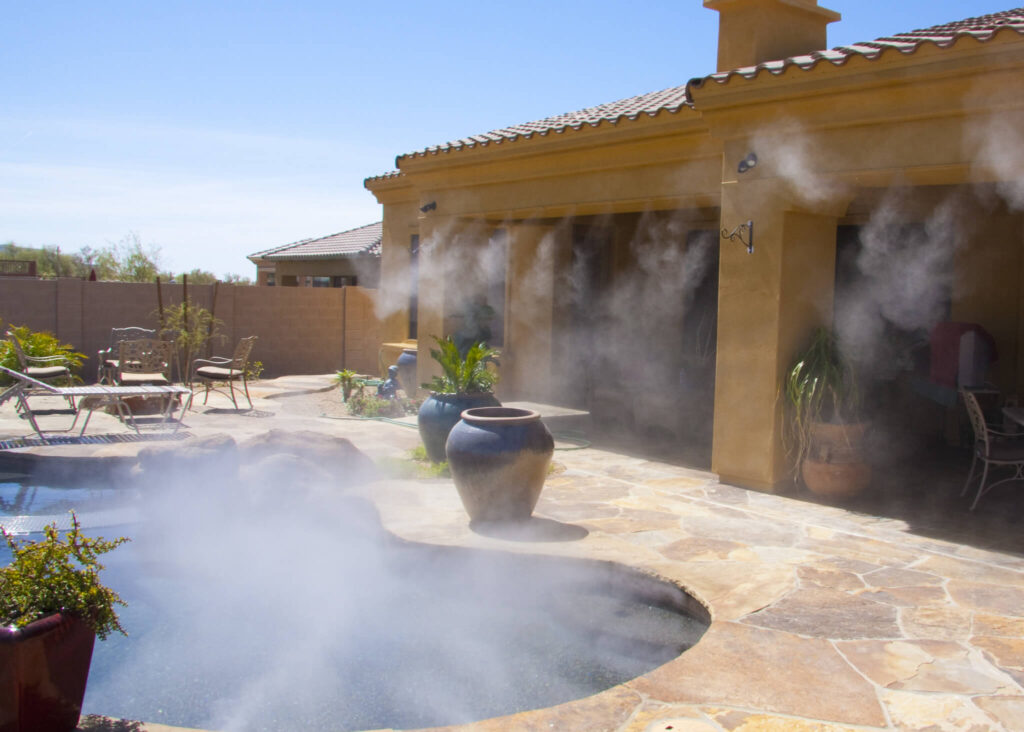
High-Pressure vs. Mid-Pressure vs. Low-Pressure
The pressure tier determines whether a misting system actually cools your patio or just makes everything damp. Per technical standards published by MISTEC, here’s how the three tiers stack up.
High-pressure misting systems (800–1,200 PSI)
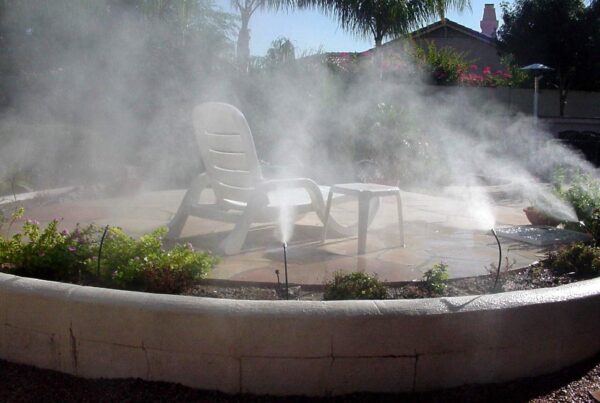
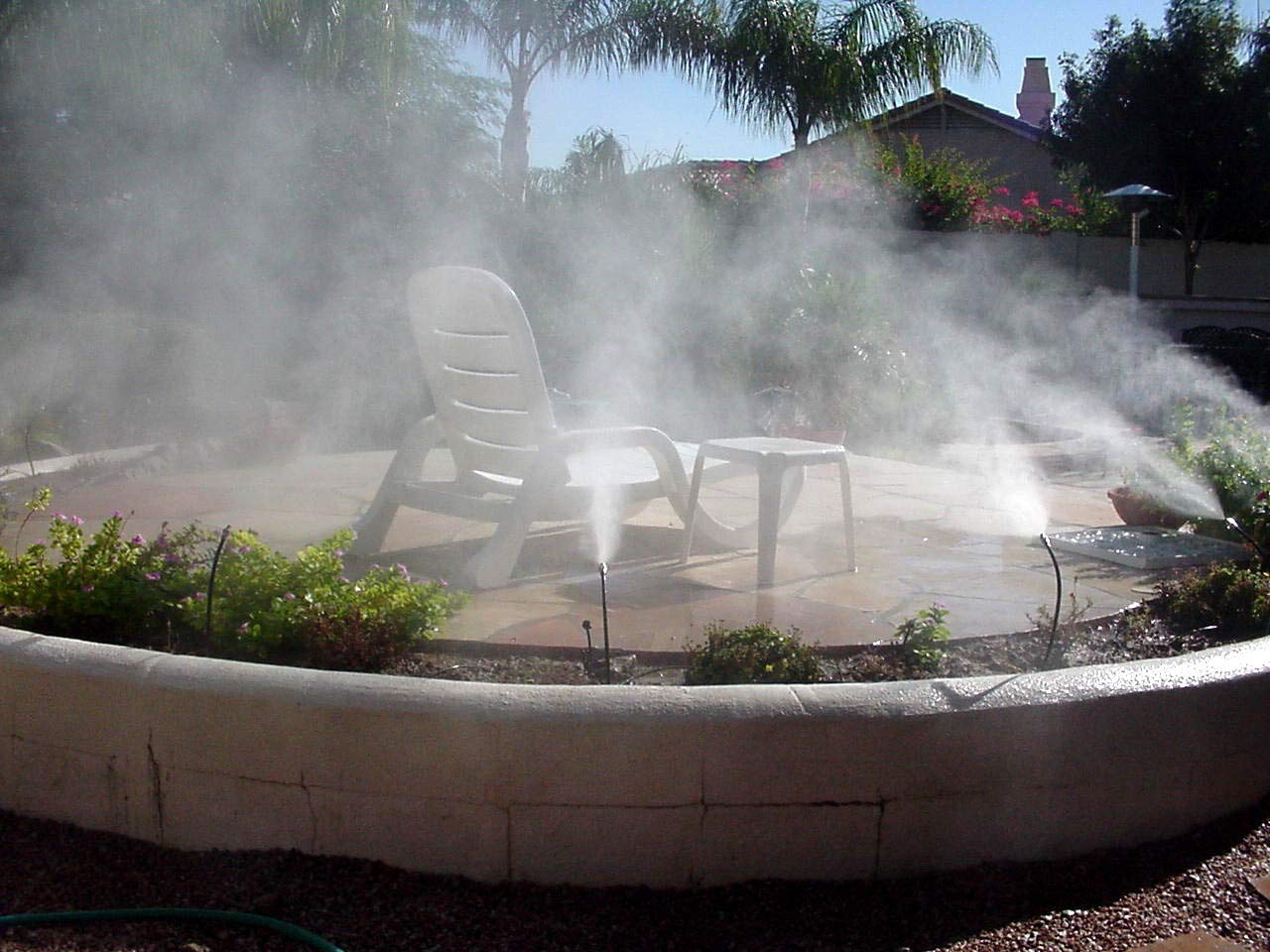
Creates ultra-fine droplets in the 5–30 micron range — thinner than a human hair. These evaporate in mid-air before touching surfaces, dropping ambient patio temperatures by up to 30°F in dry conditions. This is the only tier that makes sense for a luxury Coachella Valley patio.
Mid-pressure misting systems (150–300 PSI)
Larger droplets, temperature drop of roughly 10–15°F, and noticeable surface dampness. Fine for a mister cooling you directly; poor for an outdoor dining or entertaining area where wet tile and damp cushions are deal-breakers.
Low-pressure misting systems (40–60 PSI)
Essentially a glorified garden hose — droplet size is too large to evaporate before landing. You’ll cool down, but everything gets wet in the process. Acceptable for pet runs or garden humidification, not luxury patios.
Our climate actually favors high-pressure more than most markets. The Coachella Valley’s low humidity is the ideal environment for flash evaporation, which is why a properly designed system here outperforms identical installations in coastal California or Florida.
If you’re getting quotes in the $1,500–$2,500 range, ask what pressure class the system operates at. We’ve fixed too many projects where homeowners paid for what they thought was a complete system and received a mid-pressure setup that left their patio wet all summer.
When vetting a contractor, the PSI rating on the pump spec sheet is the single most useful number to ask for.
What’s Included in a Professionally Installed Misting System?
A proper install is more than tubing and nozzles. Here’s what goes into the $3,000–$4,500 range for a standard residential high-pressure system:
The pump unit: Rated for continuous desert operation, typically 1,000 PSI output. Expect 550–750 watts of electrical draw while running — similar to a hairdryer, only while the system is on. Quality pumps last 3–8 years before overhaul.
Tubing: Per-linear-foot costs run $5–$20, depending on material, per 2026 installation data. Nylon is budget-friendly and easy to install; copper and stainless steel cost more upfront but resist UV degradation and blend better with upscale patio covers.
Nozzles: High-quality brass or stainless anti-drip nozzles run $10–$50 each. A typical patio-scale system uses 20–40 nozzles spaced every 2–3 feet along the tubing run. Cheap nozzles clog with desert mineral content within a single season.
Filtration: Coachella Valley water has enough mineral content that an inline filter isn’t optional — it’s what keeps your nozzles from clogging. Filters add $100–$300 to the installation cost and need replacement annually.
Controls: Basic timers are standard. Smart-home integration, zoned controls, and temperature-triggered operation add $300–$800. For seasonal residents, remote app control is worth the upgrade — activate the system from Aspen or Newport Beach before you arrive.
Labor: Professional installation runs $50–$100 per hour. Most patio-scale systems take 4–10 hours depending on complexity.
How Much Does It Cost to Operate a Misting System Here?
This is where national articles get it wrong, and where most homeowners overestimate the ongoing cost. The honest answer: it’s cheap to run.
Water Usage
A 20-nozzle high-pressure system uses roughly one gallon per hour per nozzle — about 9.5–10 gallons per hour total. Run the system for six hours on a Saturday evening, and you’ve used 60 gallons. That’s less water than a single load of laundry.
CVWD Rates
The Coachella Valley Water District uses a budget-based tiered rate structure adopted in 2009. Every customer gets a personalized water budget based on landscape area, weather zone, and plant type.
A residential misting system running a few hours daily typically stays well within your allotted budget, which means no tier escalation and no penalty charges.
Electricity
Pump draw is 550–750 watts while running. At typical Coachella Valley power rates, that’s pennies per hour. Even daily summer use adds only a few dollars to your monthly power bill.
Total annual operating cost
For most of our clients running their system three to four evenings per week through the summer, combined water and electricity cost comes in under $100 for the entire cooling season.
Compared to the value of actually using your patio June through September, that’s the cheapest part of owning the system.
Is a Misting System Worth It for a Luxury Coachella Valley Home?
The ROI math is more interesting than most expect.
Take a mid-range $4,000 installed system with a 12-year service life. If you use your patio 800 hours annually during the recovered cooling season — roughly late April through October, when shade alone isn’t enough — you’re spending about 42 cents per hour of recovered patio time over the system’s useful life.
Add a quality patio cover to the equation, and the combined investment delivers usable outdoor living space for a fraction of what equivalent indoor square footage would cost.
For the homes we work on in Palm Springs’ mid-century modern neighborhoods, Rancho Mirage’s gated estates, and La Quinta’s golf communities, the calculation is more than just a matter of usage.
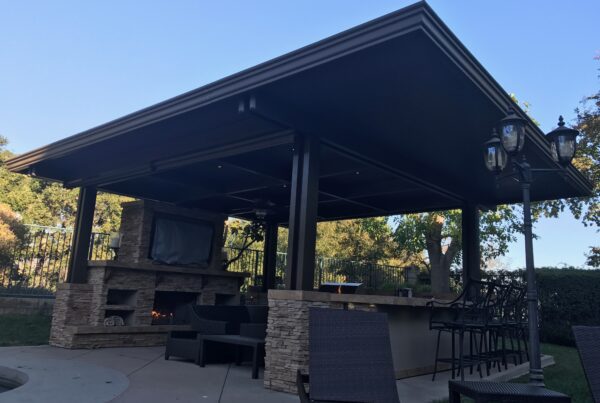
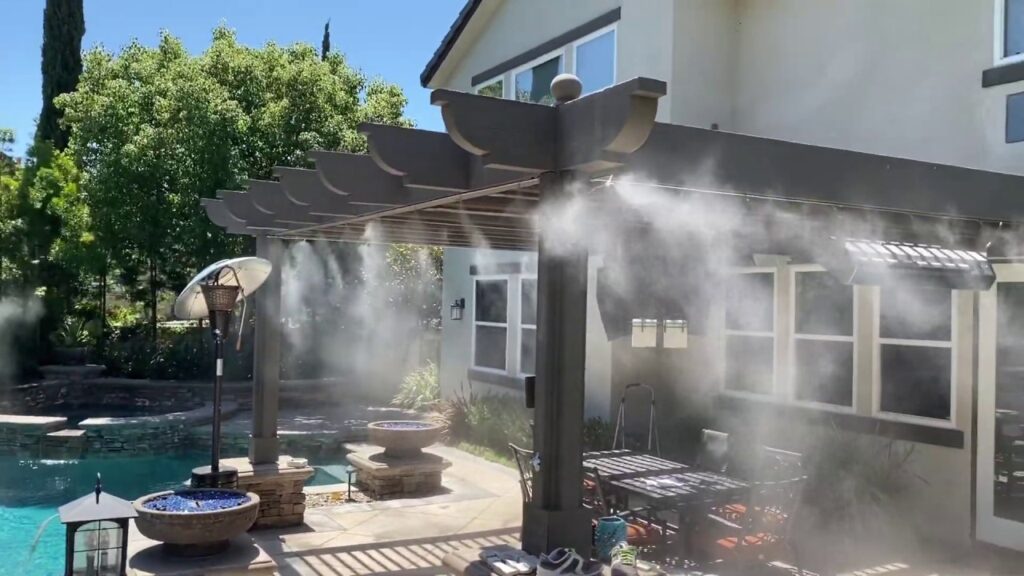
Our recent installations show what integrated systems look like when they’re designed as part of the outdoor architecture rather than bolted on afterward.
When your misting system is integrated thoughtfully with your patio cover and landscape, it becomes invisible architecture. Guests notice the comfort, not the equipment.
That’s the difference between a patio that feels like a contractor add-on and one that feels like part of the home’s original design.
Ready to See What a Misting System Would Cost for Your Patio?
Pricing ranges are useful for planning, but your actual investment depends on your specific patio, the materials you choose, and how the system integrates with your existing outdoor space. That’s why we start every project with a walk-through and a transparent, itemized estimate.
Schedule your no-pressure consultation, and we’ll measure your patio, walk through material and pressure options, and give you a real number for your project — not a national average.
Frequently Asked Questions
How much does a residential misting system cost in Palm Springs?
A professionally installed high-pressure residential misting system in Palm Springs typically costs between $3,000 and $4,500 for a standard patio. Premium custom installations with stainless steel tubing, larger pumps, and integration into existing patio covers run $5,000 to $15,000 or more. DIY mid-pressure kits start around $500 but don’t deliver the same cooling performance.
How much does it cost to run a misting system every day?
Operating costs are low. A typical 20-nozzle high-pressure system uses about 9.5 gallons of water per hour, which works out to under $1 in water for a six-hour evening on most Coachella Valley water bills. Electricity for the pump adds pennies per hour, since the pump draws roughly the same wattage as a hairdryer — only when running.
Is a high-pressure or mid-pressure system better for the desert?
High-pressure is the right choice for the Coachella Valley. High-pressure systems operate at 800–1,200 PSI and create 5–30 micron droplets that evaporate in mid-air, cooling the patio without wetting furniture or floors. Mid-pressure systems at 150–300 PSI produce larger droplets that land on surfaces — fine in some humid climates, but not for luxury desert patios.
How long do misting systems last in the Coachella Valley?
A well-built professionally installed high-pressure system lasts 10–15 years in our climate with basic maintenance. The pump itself typically needs overhaul or replacement every 3–8 years depending on runtime. Stainless tubing and quality nozzles often outlast the pump, so service work is usually limited to pump and seal replacement rather than full system replacement.
Do I need a permit to install a patio misting system?
Standard residential misting systems don’t require a building permit in Palm Springs or most Coachella Valley cities because they’re plumbing accessories rather than structural work. If a licensed plumber or electrician needs to tap into a main line or add a dedicated circuit, those sub-trades may pull their own permits. Your installer handles this; homeowners rarely need to be involved.
Can a misting system be installed under an existing patio cover?
Integrating a high-pressure system into Alumawood, 4K aluminum, or louvered patio covers is common. Tubing runs beneath rafters or inside the frame, hidden, with nozzles angled toward seating. This increases cooling as shaded, enclosed air holds mist longer before evaporating. See more project examples from our team.