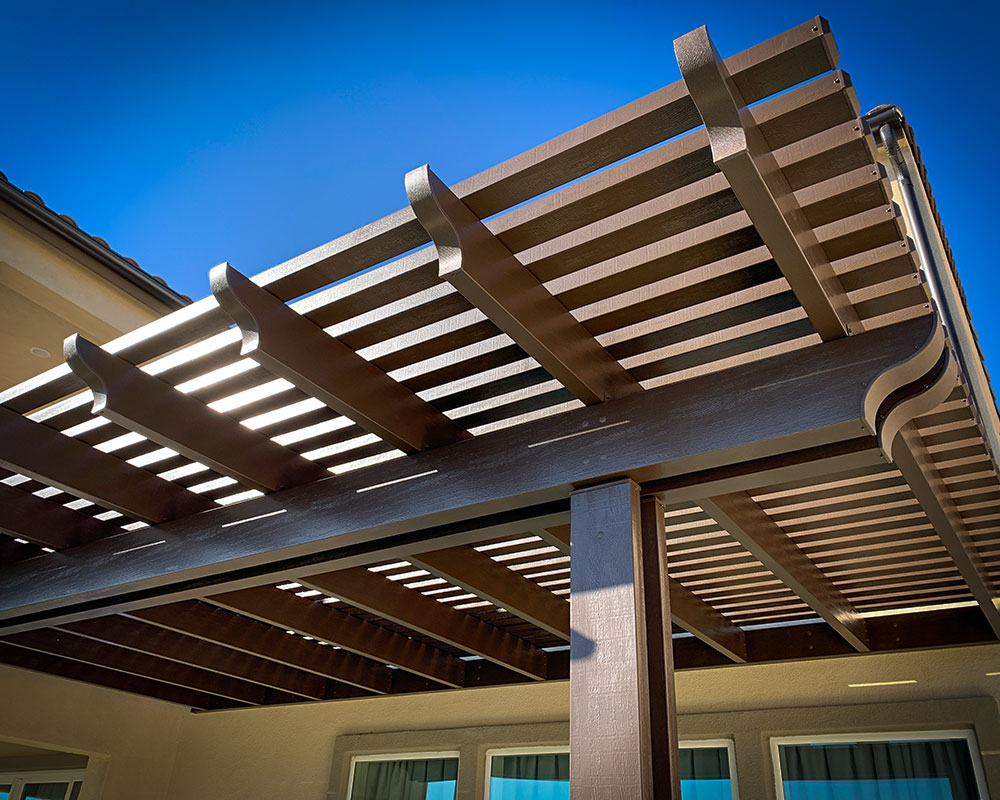
Key Takeaways
- Palm Springs requires a building permit for every attached patio cover and for any detached cover over 120 square feet. No exception for small structures attached to the house.
- Applications submit through the Palm Springs Online portal. Paper applications haven’t been accepted since May 2023, and your contractor files everything for you.
- Typical permit fees run $150–$600, plus mandatory add-ons (LDMF, TUMF, SMIP) that push total fees to $200–$700.
- If your home is in an HOA, budget 30–60 days for architectural review before the city process begins. Many Coachella Valley communities require both approvals in sequence.
- Building without a permit triggers fines, stop-work orders, insurance denials, and serious complications when you sell. It’s not a shortcut worth taking.
You’re planning a patio cover and the first question hitting Google is simple: Do I need a permit for this in Palm Springs?
Short answer — yes.
The longer answer involves an online portal, some modest fees, maybe an HOA review, and a set of code requirements that exist because our desert wind and heat are unforgiving on structures built wrong.
Here’s the straight story on how it works in 2026, what it costs, and what your contractor should handle for you across the Coachella Valley.
Do You Need a Permit for a Patio Cover in Palm Springs?
Yes, with one narrow exception. The City of Palm Springs Building Department requires a permit for every attached patio cover, regardless of size. If the structure connects to your house, it needs a permit.
The exception: a freestanding detached cover under 120 square feet can qualify for an exemption under California Residential Code Section R105.2. Even then, you still have to follow zoning rules for setbacks, lot coverage, and height.
Permit-exempt does not mean rule-free. The city defines a structure by permanence and attachment — not by size — so if it’s anchored to your home and stays put, it needs a permit, no matter how modest it looks.
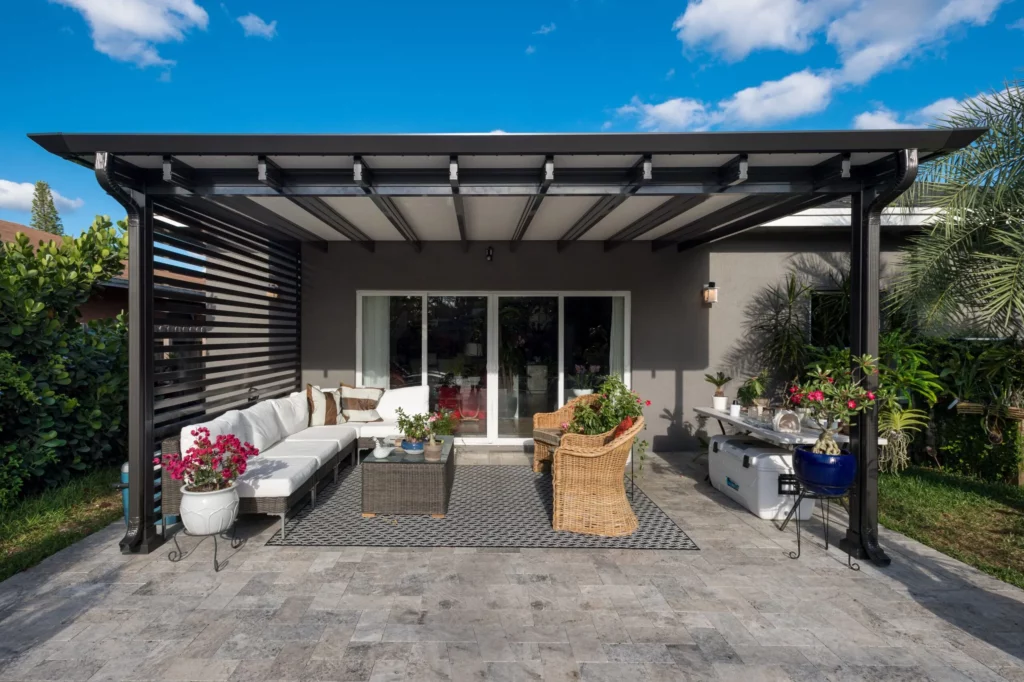
What Does the Palm Springs Patio Cover Permit Process Look Like?
The process runs through the city’s online portal and follows a predictable six-step path. Here’s what it looks like when your contractor handles it properly:
- Plan preparation. Site plan, elevations, framing layout, foundation details — assembled to match the city’s Patio Cover Standard handout or engineered to custom specs.
- Application submission. Plans upload through the Palm Springs Online portal. Paper hasn’t been accepted since May 2023.
- Plan review. Building & Safety reviews the submission against current CRC requirements. Typical turnaround: two to four weeks.
- Corrections, if needed. Most standard projects sail through; engineered custom designs may need one revision cycle.
- Permit issuance. Once approved, the permit is issued and fees are paid.
- Construction and inspections. Framing, structural, and final inspections happen as work progresses; final sign-off closes the permit.
Standard residential projects using the city’s pre-approved specs wrap up in two to four weeks from application to permit in hand. Custom designs or historically-significant properties run longer.
How Much Does a Patio Cover Permit Cost in Palm Springs?
Permit costs in Palm Springs are modest compared to what most homeowners assume. Here’s the breakdown for a standard residential patio cover, based on the city’s current fee schedule:
- Base permit fee: $150–$600, scaled to project valuation
- Plan review fee: Included in the base for standard plans; billed separately for engineered custom designs
- Local Development Mitigation Fee (LDMF): Funds Coachella Valley habitat conservation under the CVAG plan
- Transportation Uniform Mitigation Fee (TUMF): One-time impact fee per CVAG
- SMIP fee: Small state-mandated fee for earthquake data
Total fees for a residential patio cover typically range between $200 and $700. Compared to a total project cost of $15,000 to $60,000 for a quality install, permits represent 1–3% of the budget — not a reasonable place to cut corners.
What Are the Building Code Requirements for a Patio Cover?
California Residential Code Appendix AH governs patio covers across the state. The core requirements are straightforward:
- Maximum height: 12 feet
- One story only
- Minimum vertical live load: 10 pounds per square foot
- Must resist wind loads per CRC Section R301.2.1
Palm Springs sits in a zero-frostline zone, which means slab-on-grade installations without deep footings are permitted — provided the slab is at least 3.5 inches thick and each column carries no more than 750 pounds.
Wind is where desert patio covers separate from their coastal counterparts.
The San Gorgonio Pass funnels high winds through the western Coachella Valley, so open desert properties typically require Exposure Category C engineering rather than the more sheltered Exposure B.
Basic design wind speeds in our area commonly run 94 to 110 mph, 3-second gust, depending on risk category — stiffer engineering than imports from milder markets are built for, which is why those imports often fail plan review here.
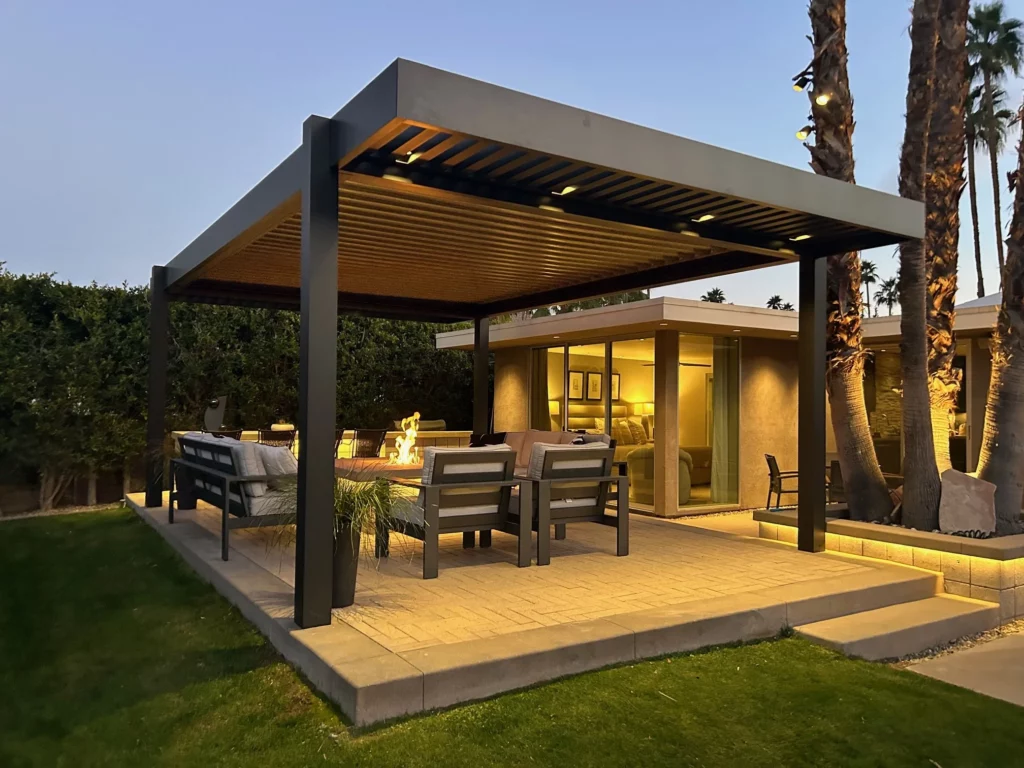
Do You Need HOA Approval on Top of the City Permit?
If you’re in a gated community, country club, or condominium association, yes — and it’s a separate process from the city permit. Under California’s Davis-Stirling Common Interest Development Act, HOAs run their own architectural review.
Timelines vary by community, but most Coachella Valley associations respond within 30 to 60 days. Packages typically need elevations, material and color samples, a site plan showing setbacks, and often a copy of the plans heading to the city — details we cover in our HOA approval guide.
Sequence matters here as well. Building & Safety occasionally requests the HOA letter as part of plan review, so most homeowners need HOA approval first.
One piece of Davis-Stirling leverage most homeowners don’t know: an HOA that fails to respond within its stated timeframe may have the request approved by default. If your committee stalls past their own deadline, you have options.
What Happens If You Skip the Permit?
Building without a permit is rarely worth the shortcut. The enforcement consequences stack fast:
- Fines and stop-work orders from the city
- Potential forced removal of the structure
- Insurance denials if the structure is damaged or causes injury
- Personal liability if someone is hurt by unpermitted work
- California Contractors State License Board civil penalties up to $5,000 per violation
- Disclosure problems and closing delays when you sell
Palm Springs offers a legalization path for unpermitted work, but retroactive permitting is invasive — inspectors often require destructive investigation of hidden structural work, meaning opened walls or removed finishes.
If the structure can’t be brought to current code, the only path is a demolition permit.
Let Us Handle the Permit Process for You
Permits are the least fun part of a patio cover project, and they’re the part where cutting corners costs the most.
We prepare the plan set, submit it through the city portal, coordinate corrections, and schedule inspections. For HOA communities, we also assemble the architectural review package your committee expects.
Schedule your consultation, and we’ll walk through your project, explain what’s required for your property, and handle the paperwork so you can focus on the fun part.
Frequently Asked Questions
How long does it take to get a patio cover permit in Palm Springs?
For standard residential projects using the city’s pre-approved specifications, permits typically issue within two to four weeks of a complete submission. Custom designs requiring structural engineering can take four to eight weeks. If your home is in an HOA, add 30 to 60 days for architectural review before the city process starts.
Can I pull the permit myself as the homeowner?
Yes — California recognizes owner-builder permits, and Palm Springs accepts owner-builder submissions through Palm Springs Online. In practice this almost always costs more time than it saves. Plan sets, corrections, and inspections go smoother when the licensed contractor building the project manages the permit.
What’s included in a Palm Springs patio cover permit fee?
The base fee covers plan review, permit issuance, and the required inspections. Mandatory add-ons include the Local Development Mitigation Fee, the Transportation Uniform Mitigation Fee, and the SMIP fee. Total fees for a standard residential patio cover typically land between $200 and $700.
Do small patio covers really need a permit?
If the cover is attached to your home, yes — size doesn’t change the requirement for attached structures. Detached freestanding covers under 120 square feet may qualify for a permit exemption under California Residential Code Section R105.2, but they still have to meet zoning rules for setbacks, lot coverage, and height.
What wind loads do patio covers in Palm Springs need to handle?
California Residential Code requires patio covers to resist the wind loads in Section R301.2.1. For Palm Springs, basic design wind speeds typically run 94 to 110 mph 3-second gust depending on risk category, with open desert properties usually engineered to Exposure Category C.
What if a patio cover was already built without a permit when I bought the house?
Palm Springs offers a legalization process that lets homeowners retroactively permit existing work. If the structure can’t meet current code, the alternative is a demolition permit. Most real estate attorneys recommend addressing unpermitted work before listing to avoid disclosure complications at resale. For a contractor who knows the local process, see our guide to finding the best patio cover company in Palm Springs.