Key Takeaways
- Near the coast, salt air — not heat — is the real threat to a patio cover, so corrosion resistance matters more than anything.
- Powder-coated aluminum and Alumawood shrug off salt air; wood needs constant sealing and still greys, swells, and rots.
- Marine-grade 316 stainless hardware and an AAMA 2604 powder-coat finish are what keep a coastal cover sound for decades.
- Alumawood gives a warm wood look with almost no upkeep; extruded 4K aluminum adds strength, longer spans, and a sleek modern profile.
- A well-built, permitted cover turns a foggy-morning patio into usable, sellable square footage — and quality patios can return 80%+ at resale.
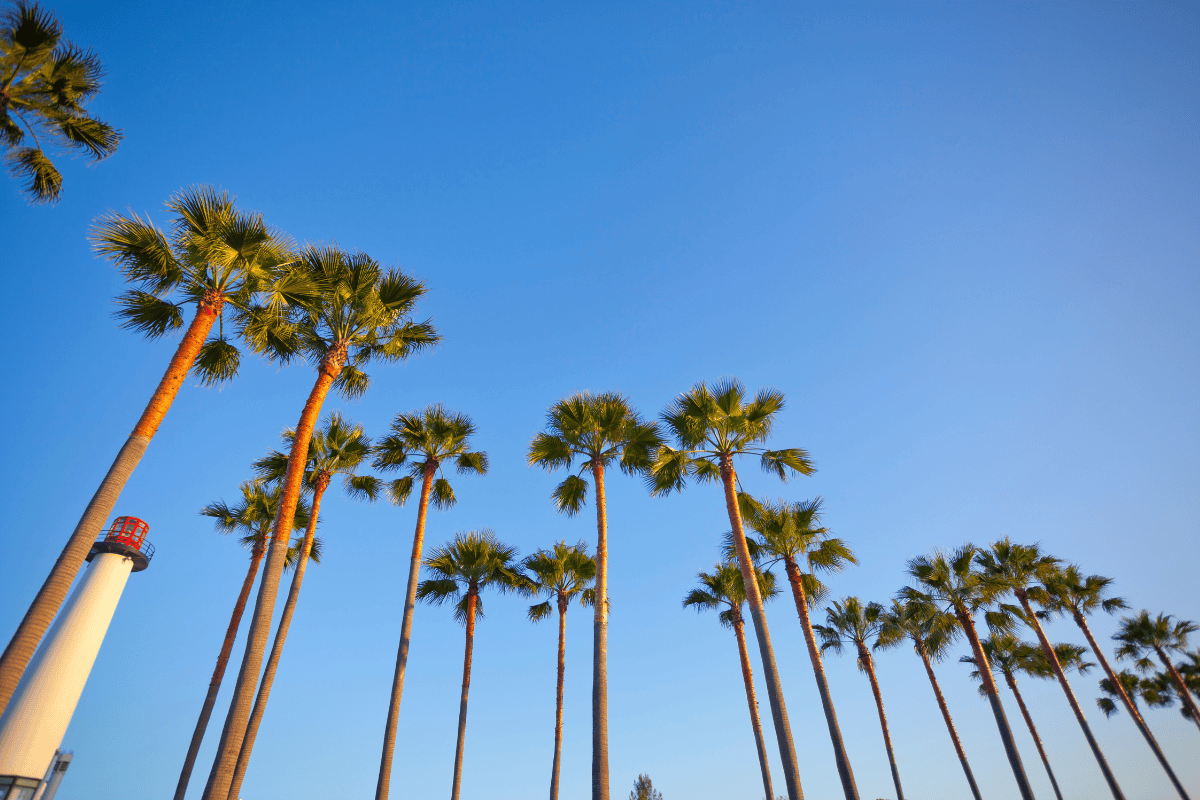
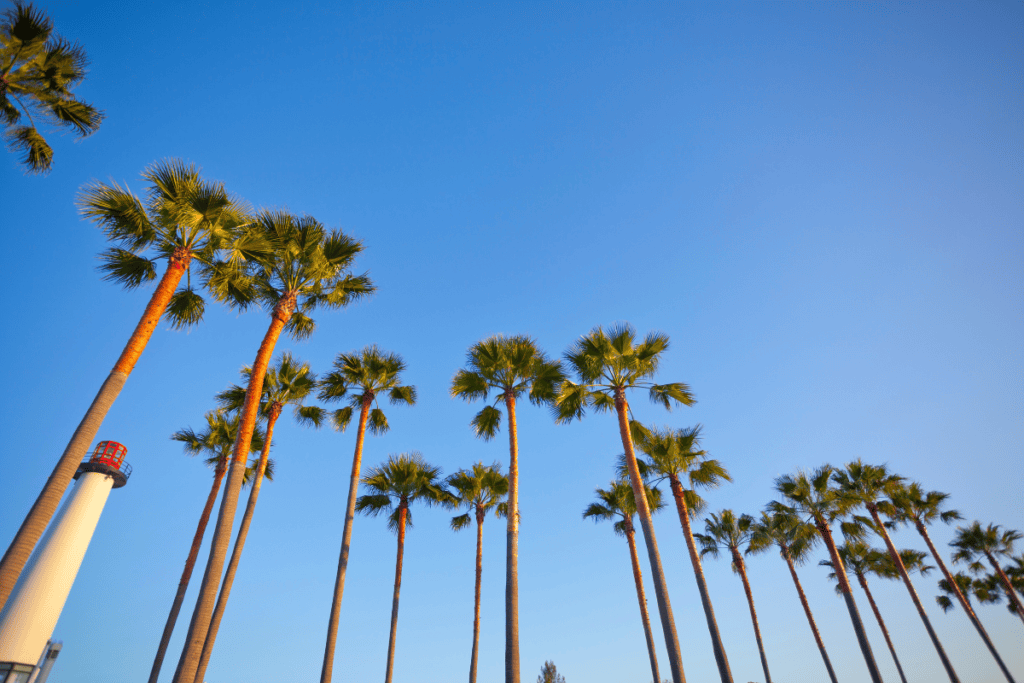
Long Beach has some of the best patio weather in the country — close to 280 sunny days a year, temperatures that rarely leave the 50s to 80s, and a cool breeze off the water.
But that same coastal setting is also what makes choosing a patio cover here so important – especially if you’re planning to host friends and family or enjoy your patio year-round.
If you’ve been searching for information about patio covers in Long Beach, this is the local guide we’d hand you before your first consultation:
- What lasts in the salt air
- What it costs
- How permits work in the city’s older neighborhoods
- How to choose someone to build it.
What patio cover materials hold up best in Long Beach’s coastal climate?
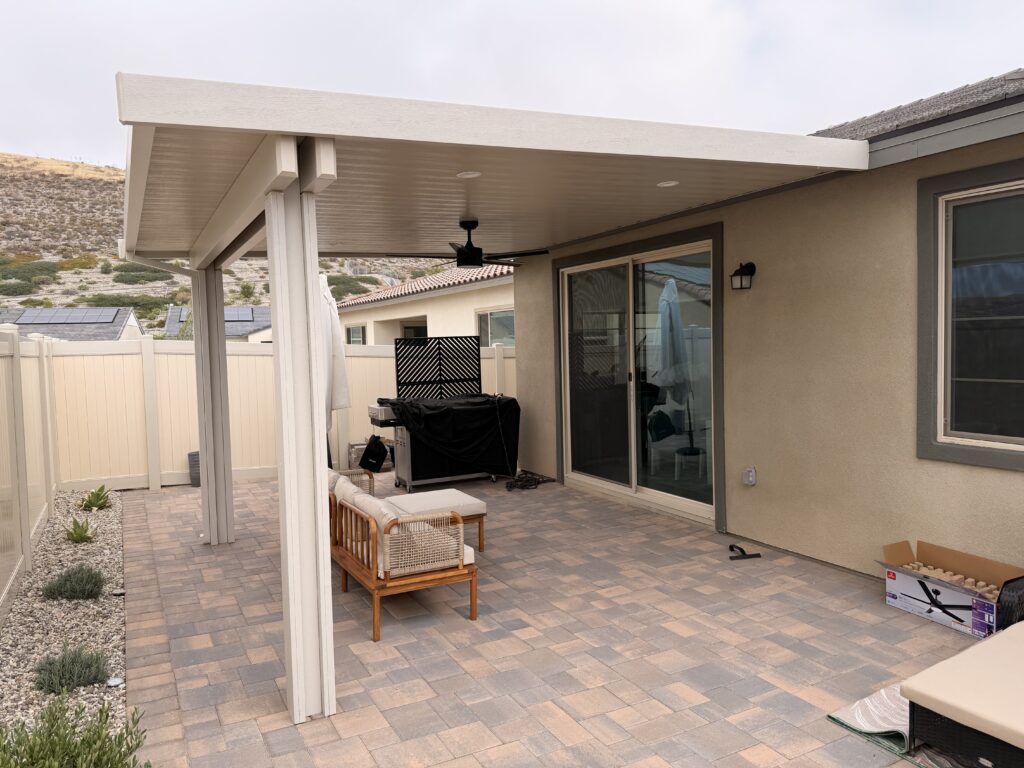
In a coastal climate like Long Beach’s, the materials that last are the ones that resist salt-air corrosion: powder-coated aluminum and Alumawood (aluminum finished to look like wood grain).
Wood can be beautiful, but it demands constant sealing and still tends to grey, swell, and rot in the marine air. Vinyl is a lower-cost, moisture-resistant middle ground.
Here’s why it matters so much here specifically. The marine layer rolls in most mornings from late spring through summer, and ocean-side humidity sits in the 65–75% range, which means moisture and airborne salt are quietly working on your patio structure nearly every day.
Aluminum doesn’t rust and can’t rot, which is the whole game within a few miles of the water. It’s the same reason we build most of our patio covers here from aluminum rather than timber.
Alumawood, aluminum, or wood — which is right for your coastal home?
For most Long Beach homeowners it comes down to two aluminum options. Alumawood gives you a warm, wood-grain look with almost none of the upkeep.
Extruded aluminum — the premium tier, often sold as 4K — is thicker and stronger, so it spans farther for cleaner sightlines and carries a smooth, modern profile.
Wood is still an option if you love the real thing and will commit to the maintenance; vinyl is the budget-minded, moisture-resistant choice.
| Alumawood | Aluminum (4K) | Wood | Vinyl | |
|---|---|---|---|---|
| Salt-air resistance | Excellent — won’t rust or rot | Excellent — won’t rust or rot | Poor — greys, swells, rots without upkeep | Good — PVC resists moisture |
| Coastal upkeep | Occasional freshwater rinse | Occasional freshwater rinse | Regular sealing & staining | Low; occasional cleaning |
| Look | Wood-grain, warm | Smooth, modern; color options | Natural wood grain | Smooth or faux-wood; limited |
| Lifespan (coastal) | 20+ yrs | 20–30+ yrs; 20-yr warranty | Shorter without heavy upkeep | 10–20 yrs; can grow brittle |
| Typical LB cost* | ~$23–$37 / sq ft installed | ~$40–$60 / sq ft installed | $20–$40+ / sq ft + upkeep | Lower upfront; shorter life |
| Best for | Wood look, low upkeep, value | Strength, long spans, modern homes | Purists committed to upkeep | Budget, moisture resistance |
*Cost figures are general Long Beach / LA-metro market ranges, not a Horizon quote.
If you want to go deeper, we cover what 4K aluminum is in its own guide, and we lay out the full Alumawood-versus-aluminum comparison separately. The table above is the quick version.
Why salt air changes the math on a Long Beach patio cover
This is the part that matters most within a few miles of the coast.
Salt-laden air doesn’t weather materials evenly — it pits metals, works underneath paint and coatings until they blister and flake, and lifts and greys wood grain from the inside.
The closer you are to the water in neighborhoods like Belmont Shore, Naples, or Bluff Park, the harder it works.
Two things separate a coastal cover that lasts decades from one that fails in a few years:
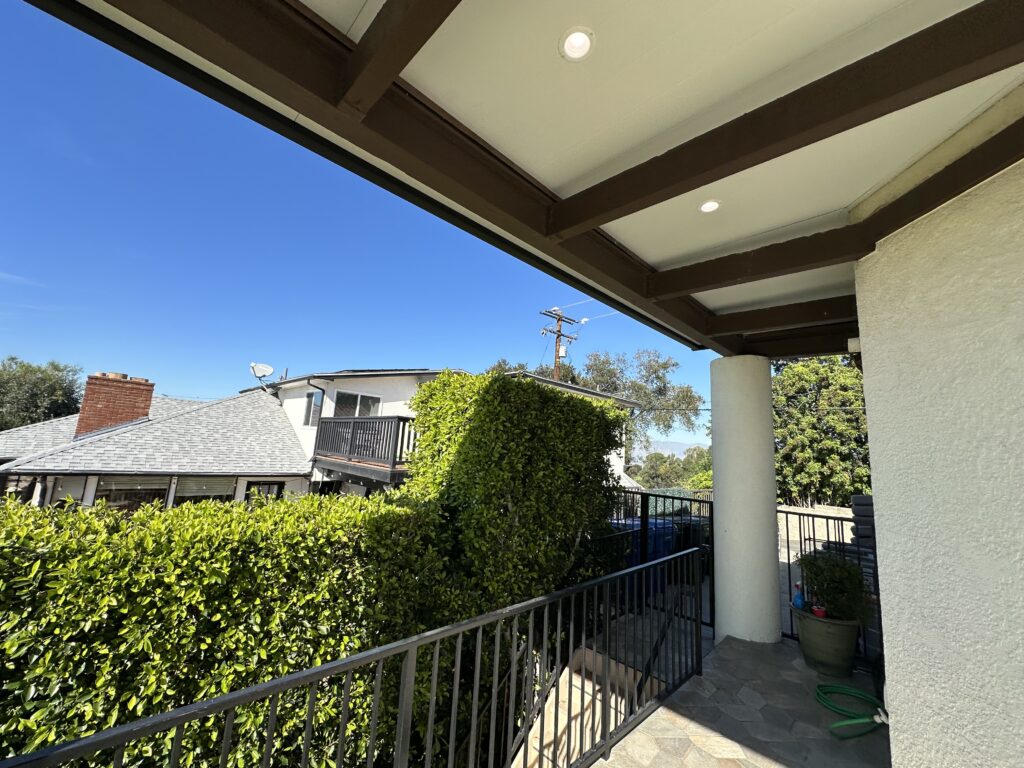
- A proper powder-coat finish. A quality finish certified to AAMA 2604 standards is salt-spray tested and holds its color and integrity through years of marine exposure — it’s the barrier that keeps salt off the metal.
- Marine-grade stainless hardware. Near the ocean, fasteners fail first. 316 stainless steel is the coastal standard because its added corrosion resistance keeps bolts and connections sound long after cheaper hardware would streak and seize.
The upkeep, happily, is almost nothing: a rinse with fresh water a few times a year clears salt buildup and keeps the finish looking sharp. No sealing, no staining, no repainting — which is exactly why aluminum is the practical answer here.
What does a patio cover cost in Long Beach?
Every project is different, and the figures below are general Long Beach / LA-metro market ranges rather than a quote — but they’re a useful starting point.
- Alumawood: roughly $23–$37 per square foot installed — the value-friendly wood-look option.
- Extruded (4K) aluminum: roughly $40–$60 per square foot installed for the stronger, modern-profile tier.
- Motorized louvered systems: the premium end, generally starting around $100 per square foot.
As a rough feel, that puts a typical 12×20 alumawood cover in the mid-four-figures to low-five-figures, and a comparable 4K aluminum build higher for the added strength and finish. Size, configuration, and how close you are to the water all move the number.
If you want to understand what goes into patio cover pricing before you call anyone, we break the variables down separately.
Designing a patio cover for Long Beach’s architecture
Long Beach isn’t one architectural style — it’s a dozen, and the best covers are the ones that look like they were always part of the house. A few rules of thumb we use:
- Craftsman, Spanish, and Mediterranean homes — common in Belmont Heights, California Heights, and Bixby Knolls — tend to suit solid or lattice covers in warm wood-grain or tan tones.
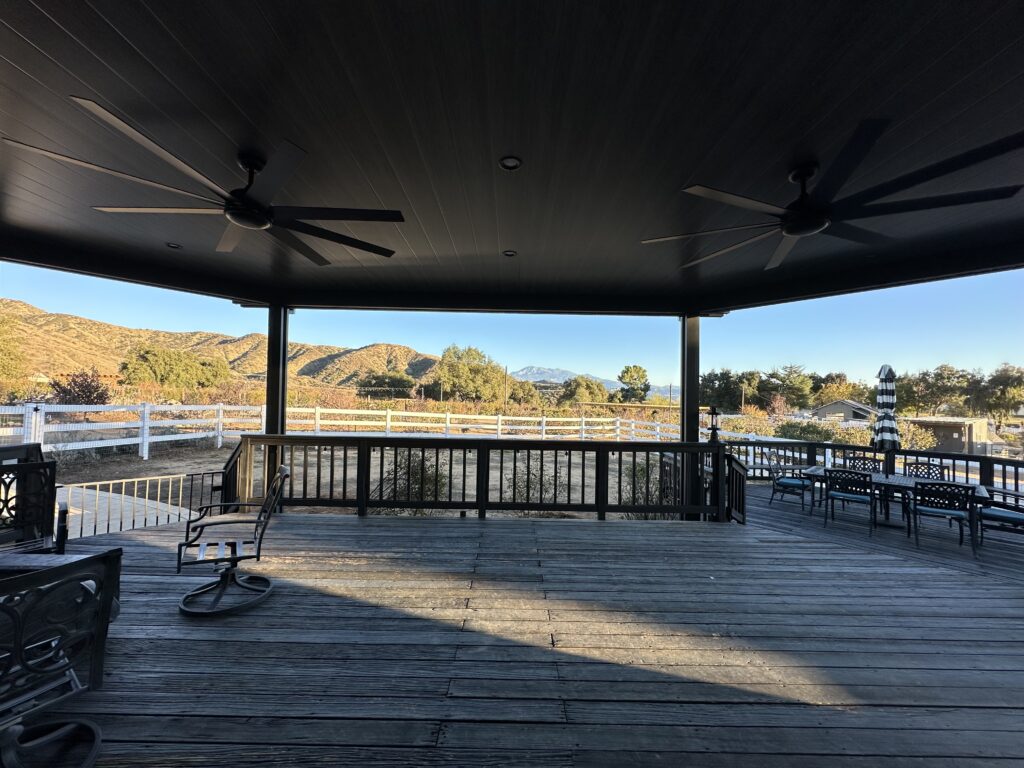
- Mid-century and modern homes — and the contemporary remodels around Belmont Shore — look best with clean open-beam or louvered designs in charcoal or black.
- Waterfront and bayfront homes in Naples and on the Peninsula often call for a solid insulated roof to tame afternoon glare off the water, or motorized louvers for adjustable sun and shade.
Beyond the roofline itself, this is also where an integrated approach pays off — tying the cover into hardscapes and patios, lighting, and shade as one design rather than piecemeal — the way we approach every one of our outdoor living solutions.
If you’re early in the process, our guide to planning an outdoor living project is a good place to start, and a well-designed space is consistently one of the improvements that adds to your home’s value.
Permits and HOA approval for a patio cover in Long Beach
A permanent, attached patio cover generally needs a City of Long Beach building permit — which is a good thing, since a permitted structure is the one that counts as a real improvement when you sell. There are a couple of local wrinkles worth knowing:
- Historic districts. If your home sits in one of the city’s designated historic districts — Belmont Heights, California Heights, or Bluff Park, among them — your project may go through design review so it stays compatible with the neighborhood’s character.
- HOA communities. Condo and HOA-governed pockets around Naples, the marina, and downtown require separate association approval on top of the city permit.
None of this needs to be your headache. We handle the permitting and HOA approval paperwork as part of the project, so the process stays off your plate.
Thinking about a patio cover for your Long Beach home?
The best outdoor spaces start with a conversation about how you want to use yours — and, near the coast, a frank look at how close you are to the water.
When you’re ready, start your project and we’ll walk your space, match a design to your home, and handle the details.
If you’d like to know the team behind the work first, here’s our story.
You can also browse our completed projects, see the communities we serve, or read up on how to choose a patio cover company before you talk to anyone.
Frequently Asked Questions
Will an aluminum patio cover corrode in Long Beach’s salt air?
No. Aluminum doesn’t rust, and a quality powder-coated finish paired with marine-grade 316 stainless hardware resists coastal salt-air corrosion. An occasional freshwater rinse a few times a year is all the upkeep it needs.
Is Alumawood or aluminum better for a home near the water?
Both resist salt air well. Alumawood gives a warm wood-grain look with very low upkeep, while extruded 4K aluminum adds strength, longer spans, and a smooth modern profile. The right choice comes down to your home’s architecture and how you want to use the space.
How much maintenance does a coastal patio cover really need?
Very little. A quality aluminum or Alumawood cover needs only an occasional rinse with fresh water to clear salt buildup — no sealing, staining, or repainting. Wood, by contrast, needs regular sealing and still tends to grey and rot in coastal air.
Do I need a permit or HOA approval for a patio cover in Long Beach?
In most cases, yes. A permanent attached cover typically requires a City of Long Beach building permit, homes in designated historic districts may need design review, and HOA-governed communities require separate approval. We handle the permitting and HOA paperwork as part of the project.
How long does a patio cover last in a coastal climate?
A quality aluminum patio cover lasts 20 to 30+ years in a coastal climate, and 4K aluminum carries a 20-year limited warranty. Wood covers last considerably less near the water unless they’re sealed and maintained on a strict schedule.
Can you match a patio cover to my beach cottage or Spanish-style home?
Yes. Covers come in a range of profiles and colors — warm wood-grain or tan tones for Craftsman, Spanish, and Mediterranean homes, and clean charcoal or black open-beam and louvered designs for mid-century and modern homes. We match the design to your home during the consultation.