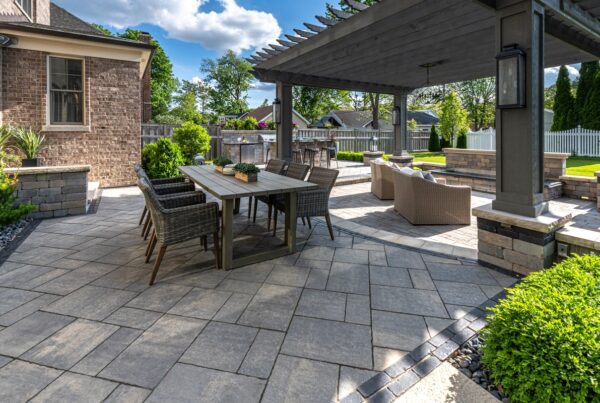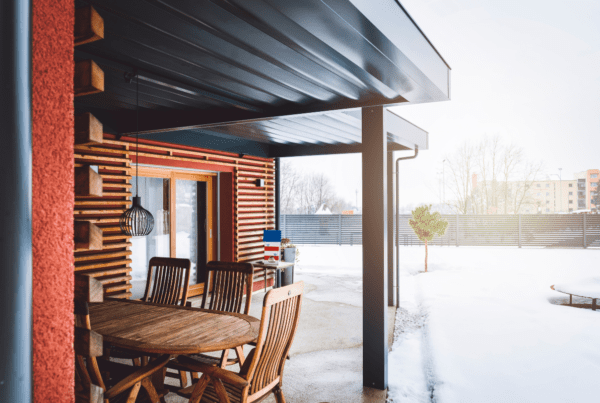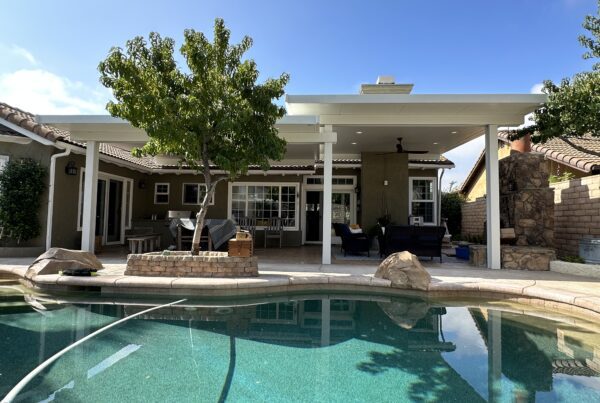
Key Takeaways
- Any covered patio in Newport Beach with a roof structure requires a building permit. Uncovered slabs under 200 sq ft may be exempt, but the moment a roof is added, the project becomes a permitted structural addition.
- Newport Beach permit timelines run 2–6 weeks, depending on project complexity. The city publishes a 2025 Standard Attached Patio Cover Plan that pre-approved aluminum systems are built from.
- In Newport Beach’s luxury communities — Newport Coast, Harbor Ridge, Big Canyon — HOA architectural review timelines commonly run 45–90 days and expect premium materials, professional design packages, and engineering drawings.
- Coastal conditions (salt air, coastal winds, year-round moisture) make powder-coated aluminum the clear material standard. Exposed wood, vinyl, and fabric all have meaningful durability limitations in this environment.
Newport Beach patio cover projects come with two gatekeepers that operate completely independently of each other: City Hall, which cares about structure and safety, and your HOA, which cares about style, materials, and whether your cover affects a neighbor’s view corridor.
Add in the coastal climate — salt air, marine layer mornings, and year-round outdoor living expectations — and the design decisions that seem cosmetic at first actually have real functional consequences.
Do You Need a Permit for a Patio Cover in Newport Beach?
Yes. The Newport Beach Building Division treats covered patios as structural additions subject to full plan review.
The city’s threshold: uncovered at-grade patios under 200 sq ft may not require a permit, but any structure with a solid roof does — regardless of size or whether it’s attached to the home.
Permit fees for covered patios in Newport Beach typically range from $250 to $500 for standard projects.
The Newport Beach Building Division’s standard plans page includes a “2025 Standard Attached Patio Cover Plan” — a pre-approved structural template that covers the baseline engineering Newport Beach plan reviewers expect. We build every project from those same standards, so there’s no back-and-forth during plan check.
For simple projects, Newport Beach processing can run as fast as two weeks. For more complex or high-end structures — louvered systems with motors, projects requiring engineering outside the standard plan parameters, or homes in coastal overlay zones —
Orange County permit timelines of four to six weeks are more realistic. We build that window into every project schedule.
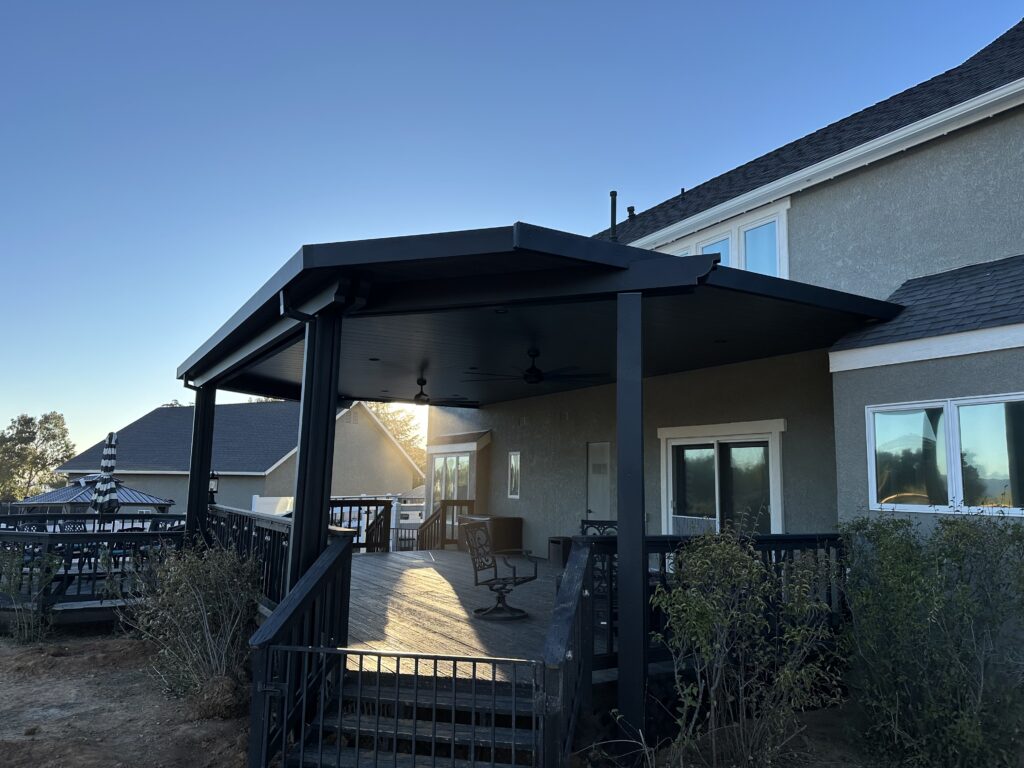
How Does Newport Beach’s Coastal Climate Impact Patio Cover Design?
Newport Beach averages annual highs around 68°F and lows near 57°F, with roughly nine inches of rain per year. That’s a mild, temperate climate that makes year-round outdoor entertaining practical.
The design constraints come from the other side of that profile:
- Salt air accelerates corrosion on anything not rated for coastal exposure
- Marine-layer mornings bring regular moisture even on days that turn sunny by noon
- Coastal wind loads can exceed those required by inland jurisdictions
Because outdoor living here is genuinely year-round, the design problem isn’t “survive August” — it’s “perform beautifully in every month.” Every material and finish choice has a coastal durability dimension on top of its aesthetic one.
That’s why the luxury standard in Newport Beach is powder-coated aluminum with coastal-grade fasteners — not because it’s the cheapest option, but because it’s the one that still looks right in ten years.
Which Patio Cover Materials Are Right for Newport Beach Luxury Homes?
Aluminum is the standard. The two systems we install for Newport Beach projects are 4K Aluminum and Alumawood — and which one fits your home depends on architecture and HOA palette, not personal preference alone.
4K Aluminum
Clean horizontal lines, longer spans with fewer visible posts, and AAMA 2604-rated powder-coat finishes that hold their color and sheen in salt air.
4K profiles suit contemporary, transitional, and view-forward homes where a minimal visual footprint matters — oceanfront properties and newer construction in Newport Coast.
HOA committees in communities that allow contemporary architectural forms approve 4K when the color and height specifications match their guidelines.
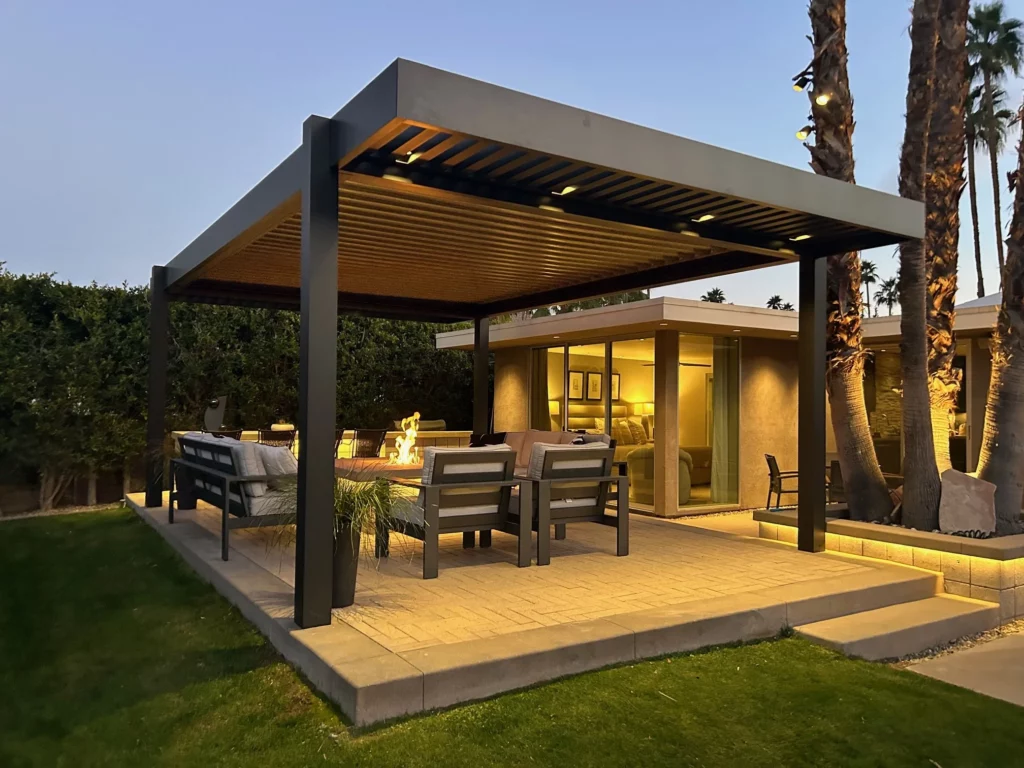
Alumawood
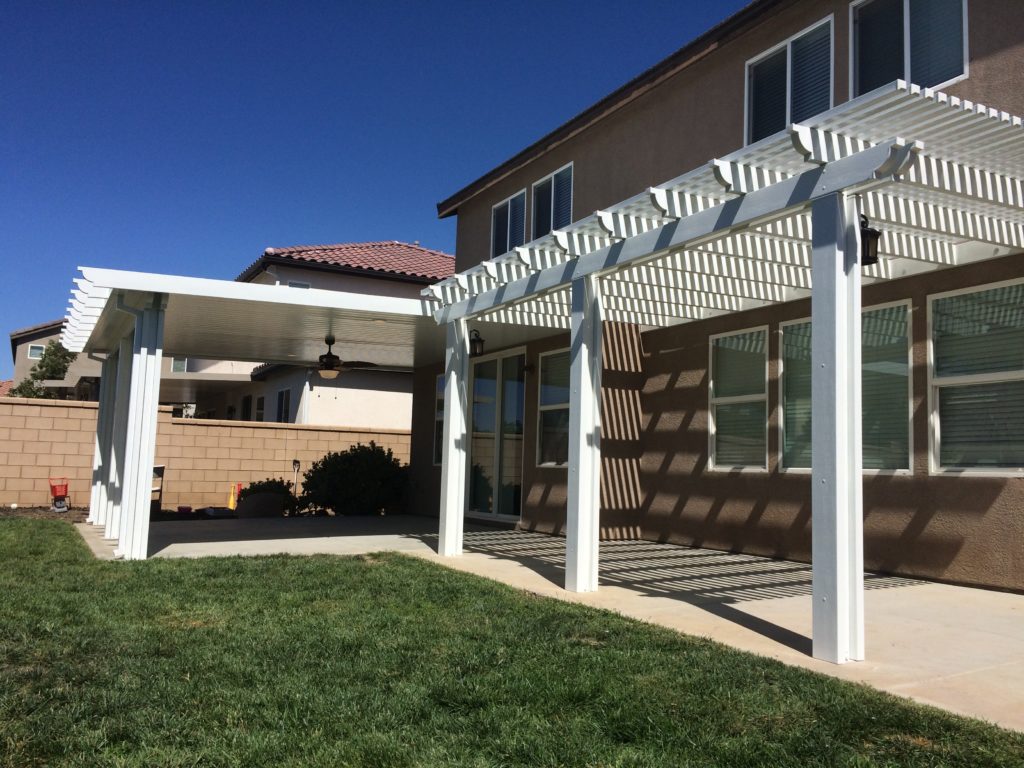
Alumawood is the coastal-traditional choice. Its realistic wood-grain texture reads like original beam-and-rafter architecture on Mediterranean, Spanish, and Craftsman homes — the dominant styles throughout Balboa Island, Harbor View Homes, and established Newport Beach neighborhoods.
It’s HOA-friendly precisely because it looks like it belongs: consistent with existing eaves, balconies, and exterior trim rather than introducing a new material vocabulary.
Louvered and Insulated Systems
For projects where year-round usability and maximum flexibility matter, motorized louvered systems are the premium option: adjustable for sun, shade, airflow, or rain coverage from a phone app.
Insulated panel covers are the clean-line, solid alternative — ideal for outdoor rooms with integrated A/V, heaters, and lighting where thermal performance matters.
Both are available through our patio cover solutions and require permits in Newport Beach due to structural and electrical requirements.
What to Avoid
Wood exposed to Newport Beach’s salt air requires constant maintenance and will show deterioration within a few seasons, regardless.
Vinyl fades and can deform under sustained UV. The fabric doesn’t meet the structural requirements for a permitted patio cover. The material question in Newport Beach isn’t about cost — it’s about which aluminum system fits the architecture and the HOA.
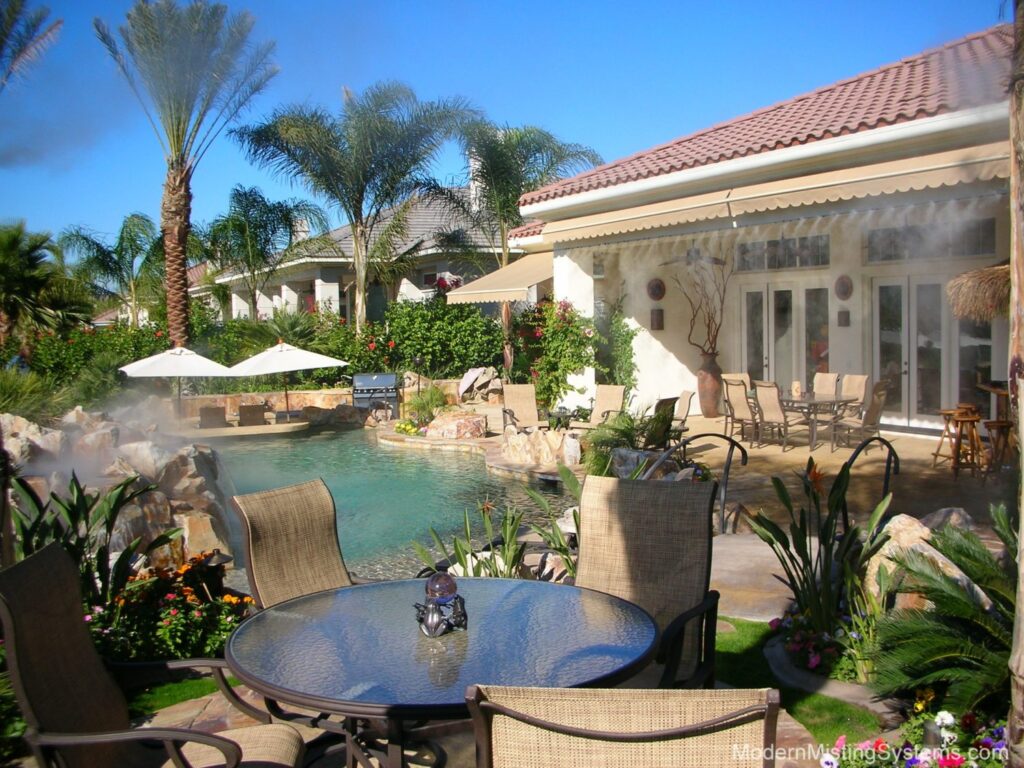
Which Patio Cover Styles Work Best in Newport Beach’s Luxury Communities?
Newport Beach’s luxury residential market spans several distinct architectural profiles, and HOA requirements track closely with them.
Contemporary and oceanfront properties
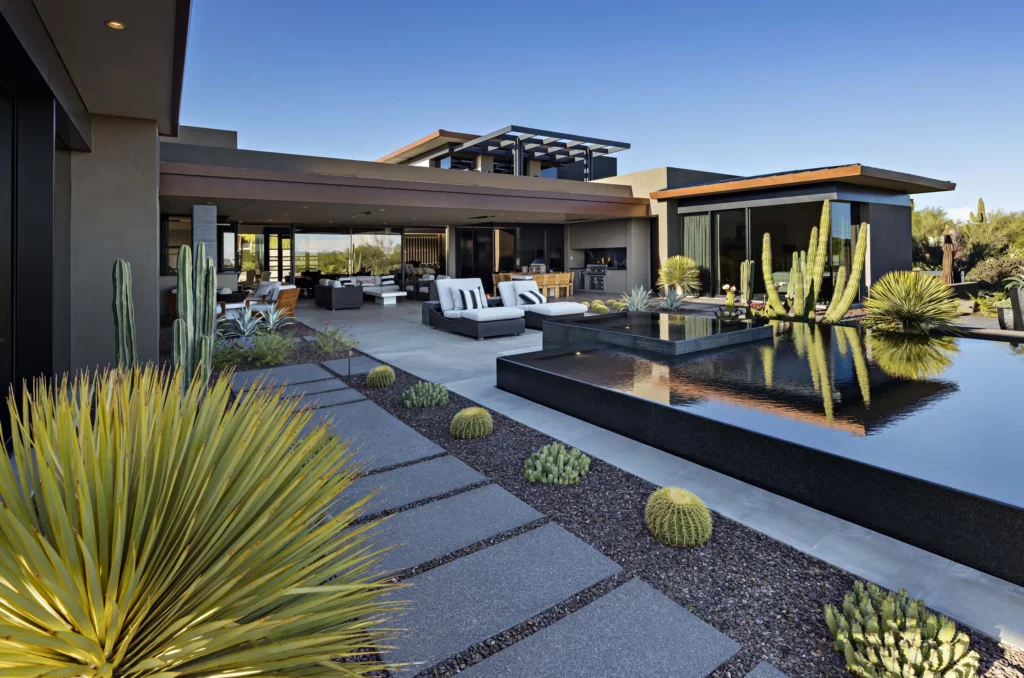
Low-profile flat covers with minimal post spacing, integrated recessed lighting, and neutral coastal palettes: white, warm sand, and greige. 4K Aluminum is the natural fit.
HOAs in these communities prioritize sightline preservation, so height and projection dimensions are the first things they scrutinize.
Mediterranean and Spanish homes
Wood-look Alumawood beams and lattice that tie into existing eaves and balconies. Decorative fascia trim and arched details can be incorporated on request.
These covers feel like part of the original architecture, which is exactly what HOA architectural committees in established Newport Beach neighborhoods are evaluating.
Modern transitional
A clean, insulated panel cover with a contemporary fascia profile, integrated fans and heaters, and a monochromatic finish palette.
This is the outdoor room approach — designed for the homeowner who entertains year-round and wants the patio to function like an extension of the interior.
We bring samples and comparable project photos to every design consultation. Seeing what’s already been approved two streets away is more useful than any spec sheet. Browse our completed projects for examples across Southern California communities.
How Does HOA Approval Work for Patio Covers in Newport Beach?
In Newport Beach’s luxury communities, HOA architectural review is typically more rigorous than the city permit process — and it runs on a completely separate timeline.
As the distinction between permits and HOA approvals makes clear: a city permit says the structure is safe; an HOA approval says it fits the community’s design standards. You need both.
For established Newport Beach communities — Harbor Ridge, Big Canyon, Newport Coast, Balboa Peninsula HOAs — architectural review timelines commonly run 21–45 days.
For the most exclusive luxury communities, OC HOA approval timelines can stretch 45–90 days, with expectations for professional design packages, engineered drawings, material samples, and color callouts.
Here’s what Newport Beach HOA architectural committees typically evaluate:
- Material and finish: Does it meet the community’s quality standard and align with adjacent homes?
- Color: Does it fall within the approved palette or harmonize with the existing exterior?
- Height and projection: Does it preserve sightlines and view corridors for neighboring properties?
- Profile and visual footprint: Does it look like it belongs on the home, or does it introduce a foreign material vocabulary?
- Structural documentation: Engineering drawings are often required, especially in coastal wind zones.
Our process: we review the HOA’s architectural guidelines before the first design draft, build color and profile specs to match what the committee has already approved in the neighborhood, and prepare the full submission package — application, plans, elevations, material specs, and engineering — as a single coordinated set.
We cover this process in depth in our complete HOA approval guide and in our post on golf community HOA approvals in La Quinta, which shows how community-specific the expectations can be.
Ready to Design Your Newport Beach Patio Cover?
We handle both the HOA submission and the city permit as a coordinated process — from design to approval, not design, then scramble.
Schedule your design consultation, and we’ll walk through your community’s specific requirements, show you what’s been approved on comparable homes, and build a timeline that works for your project. We currently serve Newport Beach and communities throughout Southern California.
Frequently Asked Questions
Do patio covers require a permit in Newport Beach?
Yes. Any covered patio with a roof structure is treated as a structural addition and requires a building permit from the Newport Beach Building Division. Uncovered concrete slabs under 200 sq ft may be exempt, but the permit requirement applies regardless of whether the cover is attached or freestanding once a roof is involved.
How long does HOA approval take for a patio cover in Newport Beach?
It depends on the community. Standard Newport Beach HOAs commonly run 21–45 days. Luxury communities — Newport Coast and similar high-end enclaves — can take 45–90 days and require professional design packages with engineering drawings. The key variable is submittal completeness: an incomplete or non-compliant package is held until the next review cycle, adding a full month to the timeline.
What’s the best patio cover material for Newport Beach’s coastal climate?
Powder-coated aluminum — specifically 4K Aluminum or Alumawood — is the standard for Newport Beach luxury projects. Both handle salt air, coastal moisture, and UV well. Wood degrades quickly in this environment; vinyl fades and can deform; fabric doesn’t satisfy permit requirements for a structural cover. Which aluminum system fits your home depends on your architecture and HOA palette.
Can I submit my HOA application and city permit at the same time?
Yes, and we recommend it. Running both processes in parallel shaves weeks off the overall timeline. In practice, some HOA boards want to see a city permit number before final approval, and some cities want to see an HOA approval letter during plan check — we navigate both directions and sequence the submissions to minimize delays.
Is a Newport Beach patio cover a good investment?
In a market where year-round outdoor entertaining is expected, a well-designed patio cover extends usable living space and enhances property value. Browse our completed projects to see how these spaces photograph and present alongside the interiors they complement.
Does Horizon Patios serve Newport Beach?
Yes. We currently serve Newport Beach and communities throughout Southern California. A dedicated Newport Beach area page is forthcoming — in the meantime, contact us directly, and we’ll walk through your specific project, community, and timeline.