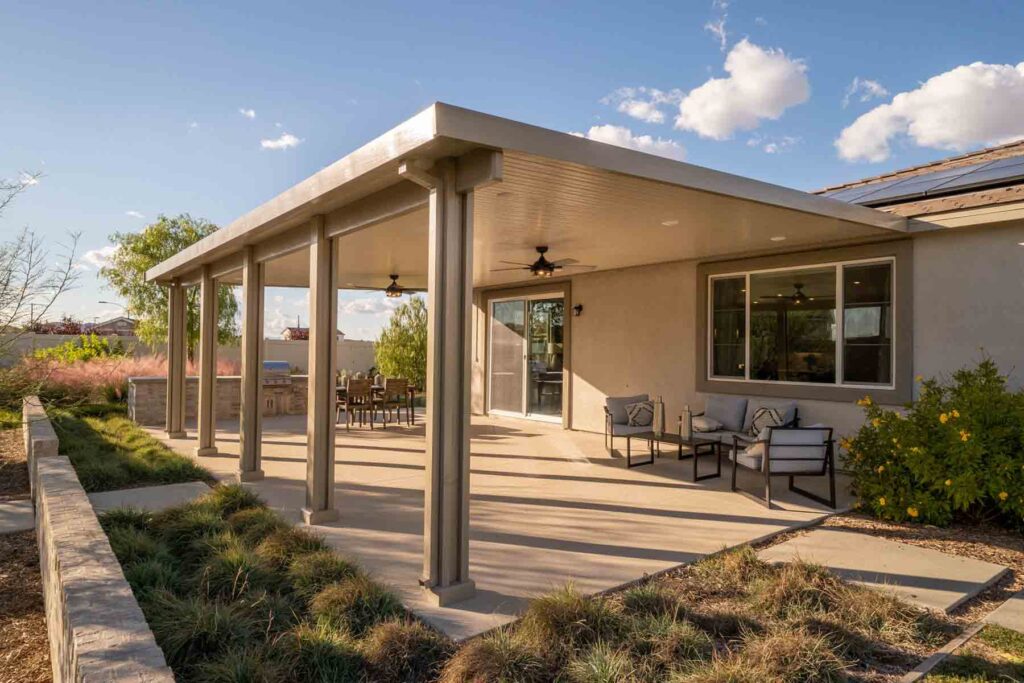
Key Takeaways
- Palm Springs requires a building permit for every patio cover — attached or freestanding. A concrete slab alone is exempt, but the moment a roof goes on, a permit is required.
- If you’re in an HOA, expect a second layer of architectural approval on top of the city permit. Both run on their own schedules, and one typically can’t start until the other approves.
- Palm Springs’ desert climate — with average highs well over 100°F from June through September — should drive every design decision: material, style, color, and whether to integrate fans or misting.
- 4K Aluminum and Alumawood are the materials we spec for Palm Springs heat. Wood, vinyl, and fabric all degrade faster in sustained desert conditions.
- The real timeline friction is permits and HOA review, not installation. Once approvals are in hand, a pre-engineered aluminum system typically installs in a few days.
Most Palm Springs homeowners ask us a version of the same question on their first call: “How long does this really take?”
The honest answer? The entire process takes a bit longer than the installation itself. But there’s a good reason!
A patio cover in Palm Springs means a city permit, a design shaped by desert climate, and — for many residents — an HOA review process on its own separate timeline.
Here’s what the full process looks like, from first conversation to the afternoon you’re finally sitting under your cover with nothing left to sign.
Does a Patio Cover in Palm Springs Require a Permit?
Yes — and without exception. The City of Palm Springs Building Department is direct: a permit is required for all attached and freestanding patio covers.
The only exemption is a concrete slab on its own. The moment a roof structure goes over it, the project enters the permit process.
This surprises some homeowners who’ve owned property in other Coachella Valley cities. La Quinta, for example, exempts very small freestanding covers under 120 square feet from the permit requirement.
Palm Springs has no such threshold — if it has a roof, it gets reviewed. We dig into the full permit process in our Palm Springs patio cover permit guide, but the short version is: plan for it from day one.
The city’s Building Department forms page offers details on the baseline detail sets that Palm Springs plan reviewers work from. We build every permit package around those same standards, so there’s no back-and-forth during plan check.
What Does the Permit and Installation Process Look Like?
From a homeowner’s perspective, the project moves through four distinct phases. Here’s what each one involves.
Phase 1: Design and Material Selection
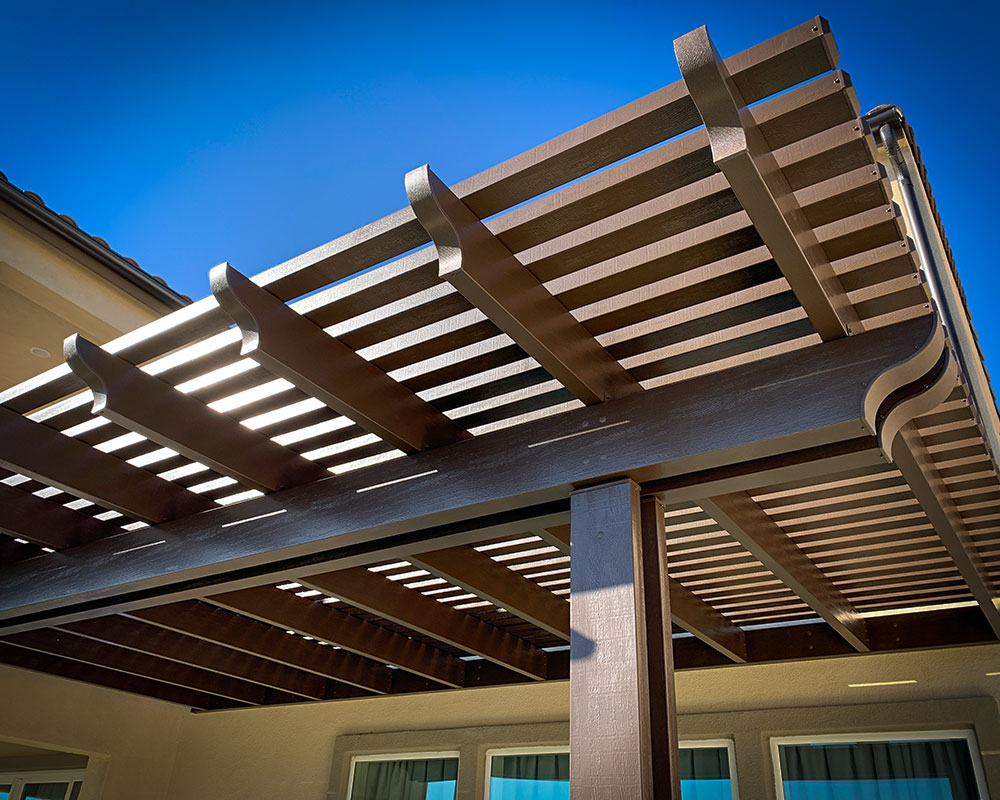
This is where we talk through style — solid, lattice, or louvered — and which material makes sense for your home’s architecture and the Palm Springs heat.
For most projects in the neighborhoods we serve, the answer is aluminum: either 4K Aluminum or Alumawood. Both hold up in sustained desert conditions where wood degrades, and vinyl can soften.
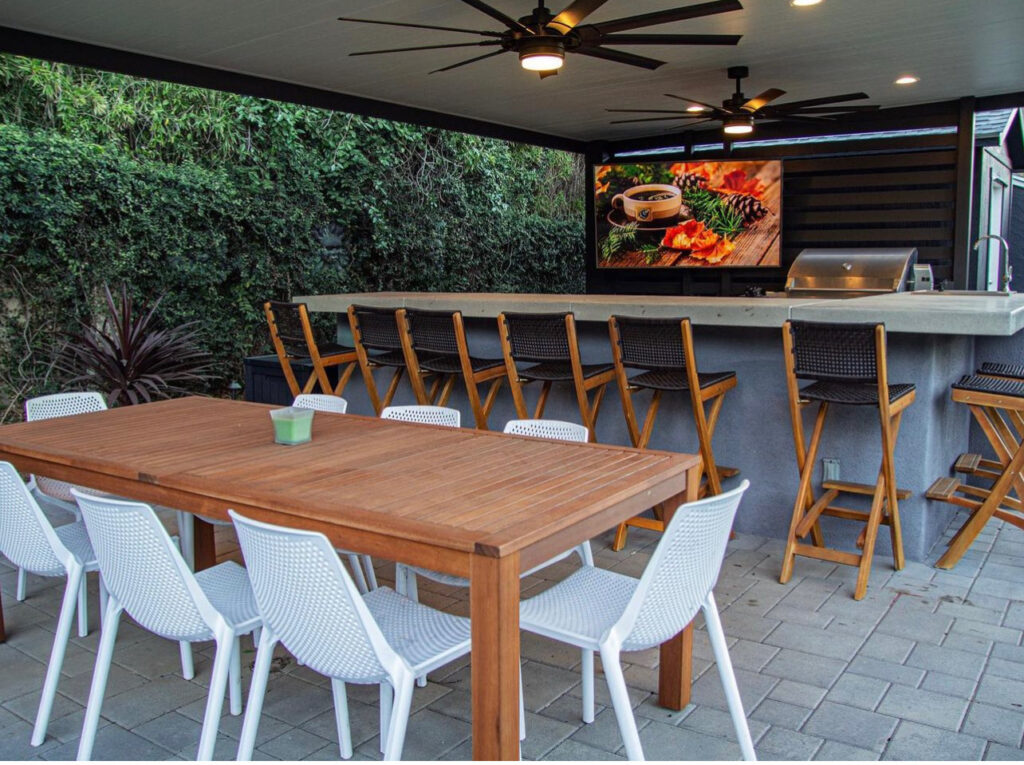
We also discuss integration — whether you want fans, lighting, or a misting system wired into the project from the start rather than added later. It’s always cleaner to spec those in now than to retrofit them after permit sign-off.
Phase 2: Site Visit, Measurements, and Permit Paperwork
We visit the property to review setbacks, lot coverage, existing slab conditions, and wind exposure.
Palm Springs zoning regulations set height limits and setback requirements for residential structures, and those constraints shape the design before we draw a single line.
For homes in historic or mid-century neighborhoods, the city’s planning department includes additional architectural review provisions — it’s better to design with that in mind from day one than to revise after submittal.
The permit set includes a site plan, structural drawings, and manufacturer specs for the aluminum system. If you’re in an HOA, the architectural review submission runs in parallel.
The two processes are completely independent — HOA review and city permitting operate on separate schedules, and you need both approvals before a post goes in the ground. Our HOA approval guide covers that two-track process in full.
Phase 3: Installation and Inspection
Once approvals are in hand, installation of a pre-engineered aluminum system typically runs a few days.
You’ll have a crew on site, trucks in the driveway, and daylight-hours noise from drilling and cutting. We protect the surrounding landscape and clean up daily.
Palm Springs requires at least a final inspection, which we schedule directly with the city — the permit package is built to match what gets installed, so there are no surprises.
How Palm Springs’ Desert Climate Should Shape Your Cover Design
The Coachella Valley’s hot season runs roughly from early June through late September, with average highs above 100°F in nearby cities and Palm Springs running close behind, according to regional climate data.
That’s not a corner case — it’s the baseline. Any patio cover we spec for Palm Springs has to function in those conditions, not just the pleasant November evenings.
Here’s what that means for each design decision.
Material, Style, and Color
Aluminum is the right call for Palm Springs. Wood warps in prolonged desert heat; vinyl softens and deforms; fabric degrades quickly under sustained UV exposure.
We compare both primary aluminum systems in our 4K Aluminum vs. Alumawood guide, but the short version is: both handle desert conditions, and which one fits your home depends on architecture and HOA palette.
For style, lattice allows for constant airflow, which often makes a space feel cooler in dry desert heat. Solid insulated covers block radiant heat but trap warm air without a fan. Louvered systems let you adjust in real time.
For most Palm Springs projects, we recommend pairing any cover style with integrated ceiling fans — the installation cost is minimal, and the comfort difference in July is not.
Lighter finishes reflect more sunlight and absorb less heat than darker ones. In a climate that regularly exceeds 110°F, the color of your powder coat affects the temperature of the space beneath. We’ll walk through finishes that meet HOA palette requirements and complement your home’s existing exterior.
Comfort Integration
If misting is on your mind, spec it now. Misting system plumbing and electrical roughed in during the cover project costs significantly less than retrofitting later.
Same for lighting and fans. It’s always cleaner to design the full outdoor room once than to layer additions onto a finished structure.
What to Expect from HOA or Architectural Review in Palm Springs
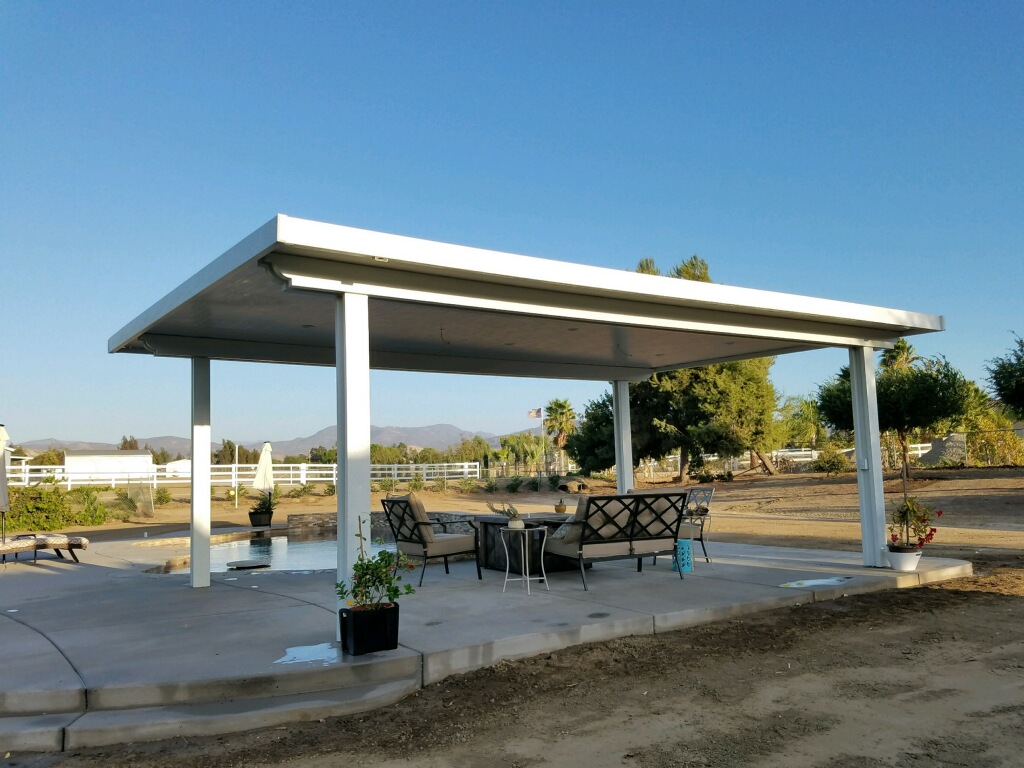
Palm Springs isn’t one homogeneous neighborhood. Gated communities, master-planned developments, and historic districts each have their own overlay of review requirements on top of the city permit process.
In many Palm Springs HOAs, any new patio cover requires an architectural application before the project can proceed. The review committee evaluates color, material, profile, and visual consistency with neighboring homes.
Most HOA boards in Palm Springs communities care as much about how the cover looks from the golf course or common area as how it’s anchored.
Under California HOA law, an association can levy fines, require removal, and place liens for unapproved exterior modifications — even if the city has issued a valid building permit. For homes in historic or mid-century neighborhoods, the city’s planning department adds its own architectural review layer for certain properties.
Our approach? We design to HOA guidelines from the first draft, not as an afterthought. That means we’re already working within approved color families and profile dimensions before we submit anything.
For a deeper look at how that process works across Coachella Valley communities, see our HOA patio cover approval guide or our post specifically covering golf community HOA approval in La Quinta.
How Long Does a Patio Cover Installation Take?
The installation itself is the fastest part. A pre-engineered aluminum patio cover typically goes up in two to four days once the crew is on site.
The real timeline question is everything that comes before.
- Design and selection: a few days to two weeks.
- Permit submittal and plan check: typically two to four weeks at the City of Palm Springs.
- HOA architectural review: one to two monthly meeting cycles if the submittal is complete. An incomplete submittal holds to the following meeting.
- Installation: two to four days once the crew is on site and materials have arrived.
If you’re planning around a specific date — a return from another property, a gathering you’re hosting — we build backward from that date. For seasonal residents arriving in October, design conversations should start no later than August.
Not sure about your timeline? Reach out, and we’ll walk through your timeline on a first call.
Ready to Start Your Palm Springs Patio Cover Project?
We’ve handled every part of this process — permits, HOA submittals, mid-century design compatibility, desert-rated material selection, and the installation itself — for homeowners across Palm Springs and the Coachella Valley.
You don’t need to coordinate between your designer, your HOA, and Building & Safety. That’s what we do.
Schedule your design consultation, and we’ll walk through your project, your neighborhood, and your timeline — so you know exactly what to expect long before installation day.
You can also explore our full range of Palm Springs outdoor living services or browse completed projects to see what’s possible for homes like yours.
Frequently Asked Questions
Does Palm Springs require a permit for all patio covers?
Yes. The City of Palm Springs requires a building permit for all attached and freestanding patio covers. The only exemption is a concrete slab with no roof structure. For details on what the permit set includes and how the process works, see our Palm Springs patio cover permit guide.
How long does it take to get a patio cover permit in Palm Springs?
Plan check typically takes two to four weeks, depending on current workload and the completeness of the submittal. An incomplete set — missing engineering, incorrect setbacks, absent manufacturer specs — adds revision rounds. We build complete packages the first time to avoid that delay.
Do I need HOA approval on top of the city permit?
If you’re in an HOA-governed community, yes. The HOA architectural review and the city building permit are entirely separate processes.
The HOA evaluates aesthetics, material, and community standards; the city evaluates structural compliance. You need both approvals before installation can begin. Our HOA approval guide covers the full process in detail.
What patio cover material works best in Palm Springs heat?
Aluminum is the standard for Coachella Valley projects. It handles thermal cycling well, and quality powder-coat finishes maintain their appearance in prolonged UV exposure.
Our two primary systems are 4K Aluminum and Alumawood — both are engineered for desert conditions and widely accepted by HOA architectural committees across the valley. Wood, vinyl, and fabric all have meaningful durability limitations in sustained high heat.
Should I add misting to my patio cover project?
If misting is on your mind at all, spec it in now. Roughing in the misting system plumbing and electrical, while the cover is being designed and permitted, is significantly cleaner and less expensive than retrofitting it later. We’ll build the system into the overall design so it doesn’t look or feel like an add-on.
How do I know which patio cover style is right for my Palm Springs home?
Style depends on your architecture, HOA requirements, and how you plan to use the space. For mid-century and contemporary homes, flat-panel or louvered profiles tend to fit naturally.
For Spanish or Mediterranean architecture, Alumawood’s wood-grain finish is often the HOA-friendly choice. We discuss all of this during the design consultation — schedule yours here, or explore our patio cover solutions page to get familiar with the options before we talk.