Key Takeaways
- Most of Beaumont’s master-planned communities — Four Seasons, Tournament Hills, Sundance, Fairway Canyon, Solera at Oak Valley Greens, and Altis — require written architectural approval before patio cover construction begins.
- Four Seasons at Beaumont allows wood, vinyl, or approved wood-look aluminum covers, requires a 5-foot rear and side setback, and deems applications approved if its committee doesn’t respond in writing within 30 days.
- California’s Davis-Stirling Act (Civil Code §4765) requires HOAs to decide in writing, explain any denial, and offer reconsideration — but it sets no universal deadline. Your community’s documents control the clock.
- Building without approval risks fines, hearings, and court-ordered removal. California courts have made homeowners tear out or redo non-compliant structures.
- HOA approval and a City of Beaumont building permit are two separate steps. Horizon Patios prepares community-specific submittals and manages both.
If you live in one of Beaumont’s master-planned communities, yes — you need written HOA approval before a patio cover goes up.
That’s true at Four Seasons, Tournament Hills, Sundance, Fairway Canyon, Solera at Oak Valley Greens, and Altis, and it comes before the City of Beaumont ever sees a permit application.
But don’t stress: the rules are more workable than the horror stories you may read online suggest.
The largest community in town automatically approves applications its committee doesn’t answer within 30 days. And the materials its guidelines pre-approve happen to describe exactly what a modern premium cover is built from.
We built this guide to patio cover HOA approval in Beaumont from the community’s own published guidelines and California law, so you can see what your neighborhood requires before you fall in love with a design.
For permits, construction timelines, and the Pass wind question, our companion guide to patio covers in Beaumont walks the full process.
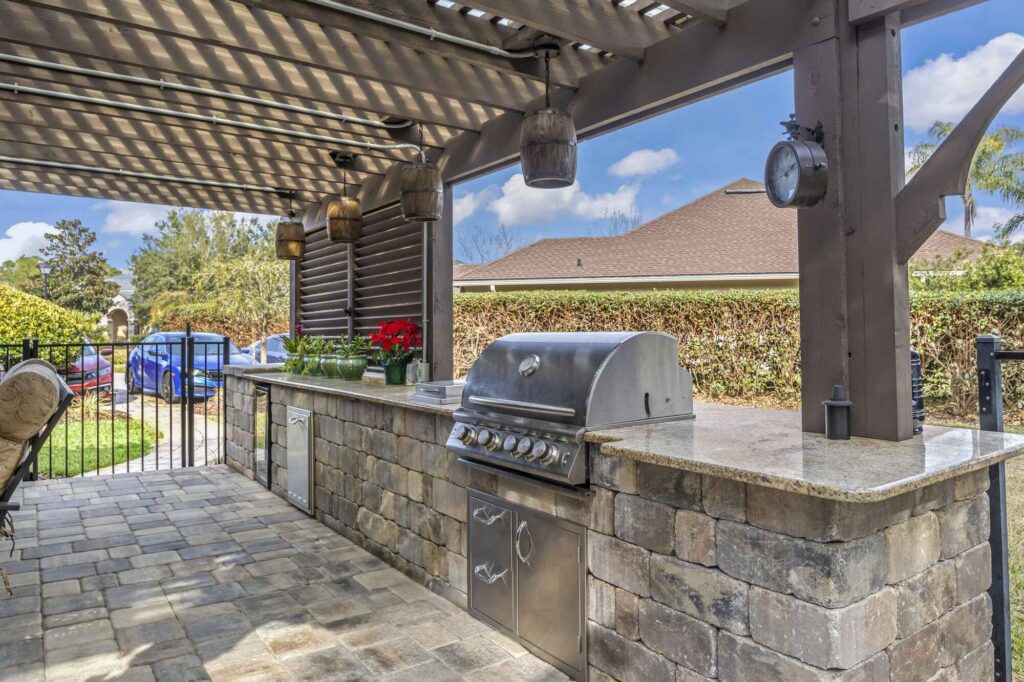
Do You Need HOA Approval for a Patio Cover in Beaumont?
In nearly every master-planned Beaumont community, yes — and the approval must be in writing before work begins.
Four Seasons’ architectural guidelines put it bluntly: no work may start, and no materials may even be delivered to the site, until the owner holds written committee approval. Tournament Hills requires an Architectural Approval Application with a plot plan for any new improvement.
There are two exceptions worth having an eye on:
- Like-for-like repairs and replacements are generally exempt — Tournament Hills says so explicitly
- Not every Beaumont street is governed: parts of the original Oak Valley Greens area are marketed as no-HOA neighborhoods.
If you’re not sure which side of that line your home sits on, your CC&Rs will tell you — or we will, in one phone call.
Our complete guide to HOA approvals for outdoor upgrades explains how these committees work anywhere in Southern California; the rest of this article is about how they work here.
What Are the Patio Cover Rules in Beaumont’s Communities?
Every association writes its own guidelines, but they rhyme: an application, a plot plan, materials and colors that match your home, setbacks from the property line, and a written decision. Here’s what the major communities publish.
| Community | Who runs the review | What their rules say |
|---|---|---|
| Four Seasons at Beaumont | Gated 55+ community, 1,923 homes; its own Architectural Review Committee meets on Wednesdays | Covers must be wood, vinyl, or approved wood-look aluminum; colors must match or complement the home; height stays below the roofline; 5-foot rear and side setbacks; applications due by noon the Friday before the meeting; applications are deemed approved if the ARC doesn’t respond in writing within 30 days |
| Tournament Hills | Managed by Action Property Management | Architectural Approval Application plus a plot plan before any new improvement; like-for-like repairs are exempt; the association warns that unapproved work risks hearings, fines, and removal |
| Sundance | Two separate associations — Sundance North (about 1,114 homes) and Sundance South | Submit to your association’s architectural committee; confirm which of the two governs your street before you apply |
| Fairway Canyon | Fairway Canyon Community Association | Active design review; request the current guidelines and application packet from the association before you plan |
| Solera at Oak Valley Greens | 55+ community with its own association | Architectural application required; 55+ communities tend to hold the tightest visual standards in town |
| Altis | Newer 55+ community of roughly 700 homes | Newer associations enforce their guidelines most actively; start with the current application packet |
| Olivewood | Taylor Morrison master plan, now built out | HOA-governed; confirm current requirements with the association |
You’ll want to give the Four Seasons materials rule a closer look.
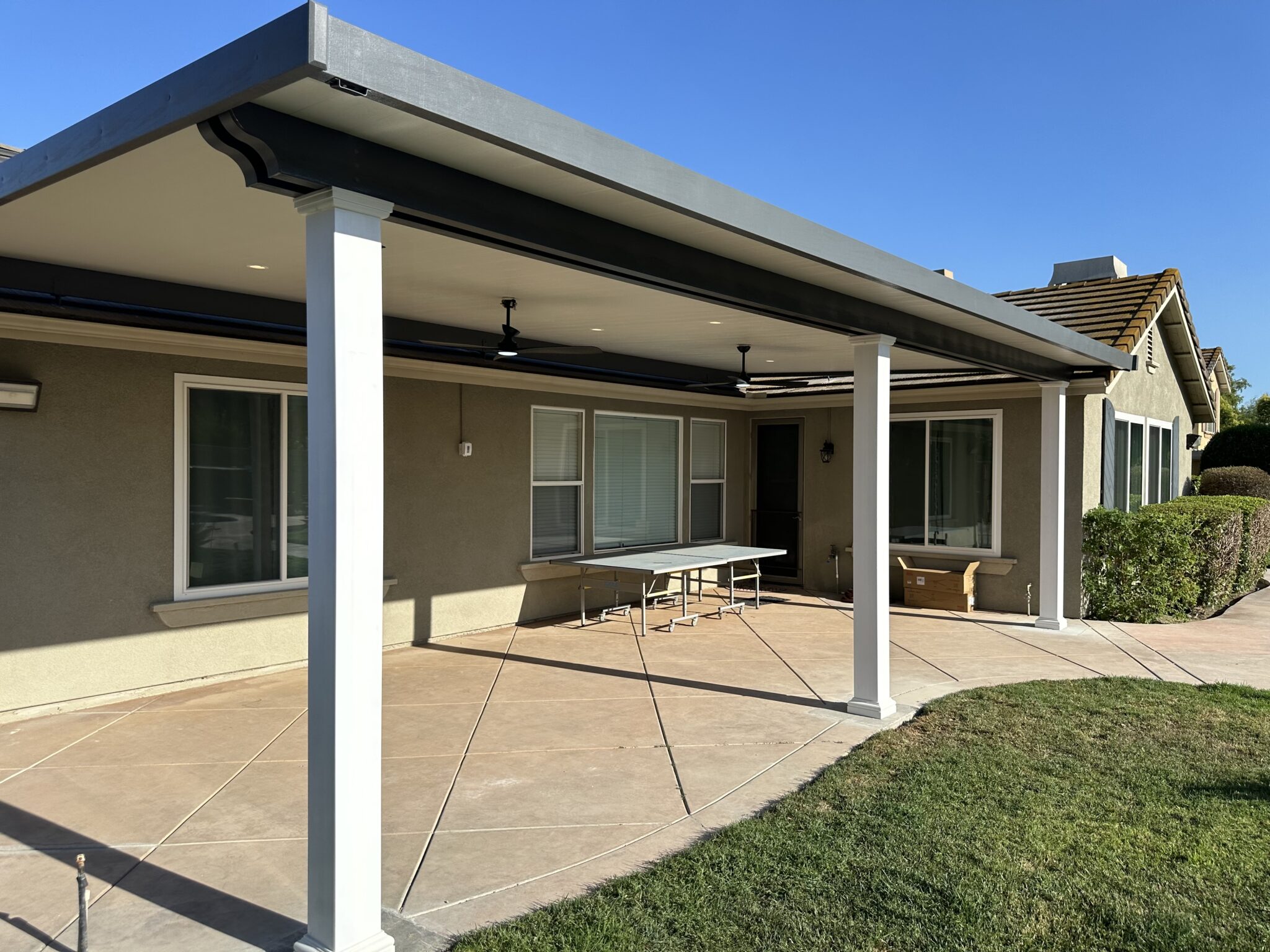
“Approved aluminum with wood appearance” is a precise description of the wood-grain aluminum systems we install every week — 4K aluminum and Alumawood covers built to look like wood and outlast it. The guidelines weren’t written to block a premium cover.
They were written to block an ugly one — and engineered aluminum clears that bar easily.
One caution: management companies and guidelines change. Treat the table as your map, then request the current application packet from your association before you design anything.
We do this for clients as step one.
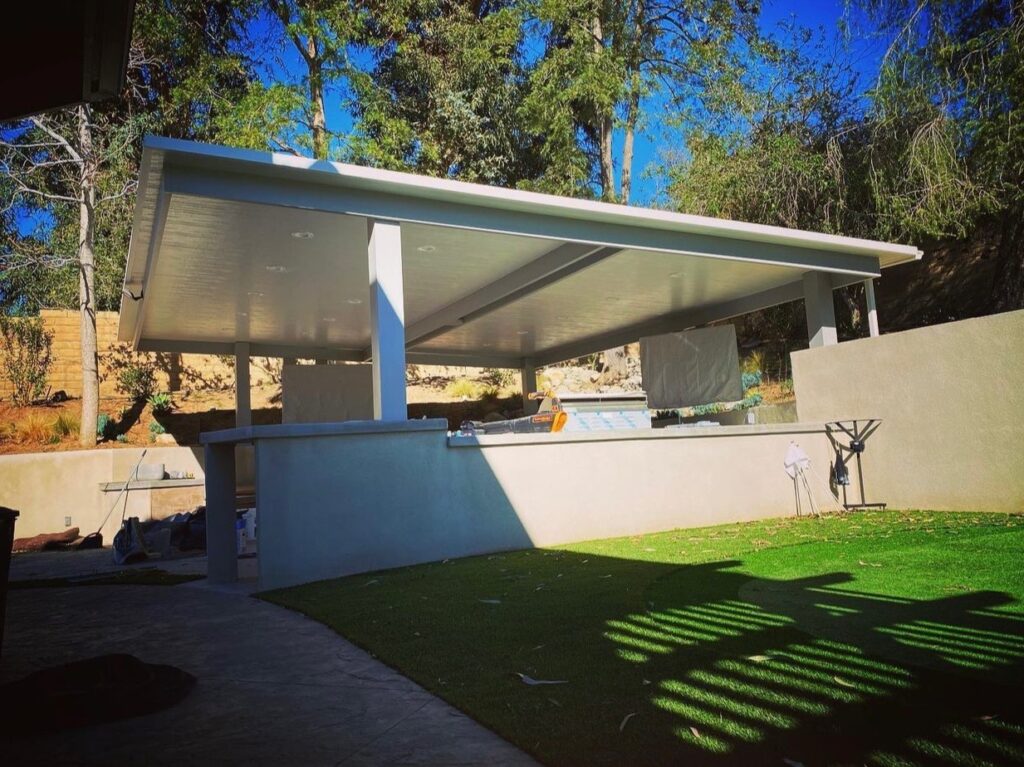
How Long Does Approval Take — and What If the Committee Never Responds?
California law sets the ground rules. Civil Code §4765, part of the Davis-Stirling Act, requires your association to run a fair, reasonable, and expeditious review, issue its decision in writing, explain any denial, and offer you reconsideration by the board at an open meeting.
What the statute doesn’t set is a deadline. Response times live in each community’s own documents.
Four Seasons is the local example worth copying: per its architectural guidelines, an application the ARC doesn’t answer in writing within 30 days is deemed approved.
In practice, the clock is rarely the problem — incomplete applications are. A packet with a clear plot plan, elevations, and exact materials and colors tends to clear in a single meeting cycle. A hand sketch bounces, and the calendar resets.
That’s why we build submittal-ready drawings before anything else.
What Happens If You Build Without Approval?
More than most homeowners expect. Tournament Hills’ own site warns that unapproved improvements invite hearings, fines, and potential removal — and California courts back associations up.
Homeowners have been ordered to remove structures built into setbacks (Morgan v. Veach), to undo work a committee had approved because it violated the CC&Rs anyway (Woodridge v. Nielsen), and to bring a finished project into compliance at their own expense (Clear Lake Riviera v. Cramer).
We’re not sharing that to scare you – but because it never has to happen: an approved submittal costs a few weeks, while an unapproved cover can cost the whole project.
Do Pergolas and Louvered Roofs Need HOA Approval Too?
They do. Architectural review covers structures, not just anything named “patio cover” — a freestanding pergola, an attached lattice cover, and a motorized louvered roof all go through the same committee.
Freestanding structures trip setback rules faster, since they tend to drift toward property lines; Four Seasons’ 5-foot rule applies either way.
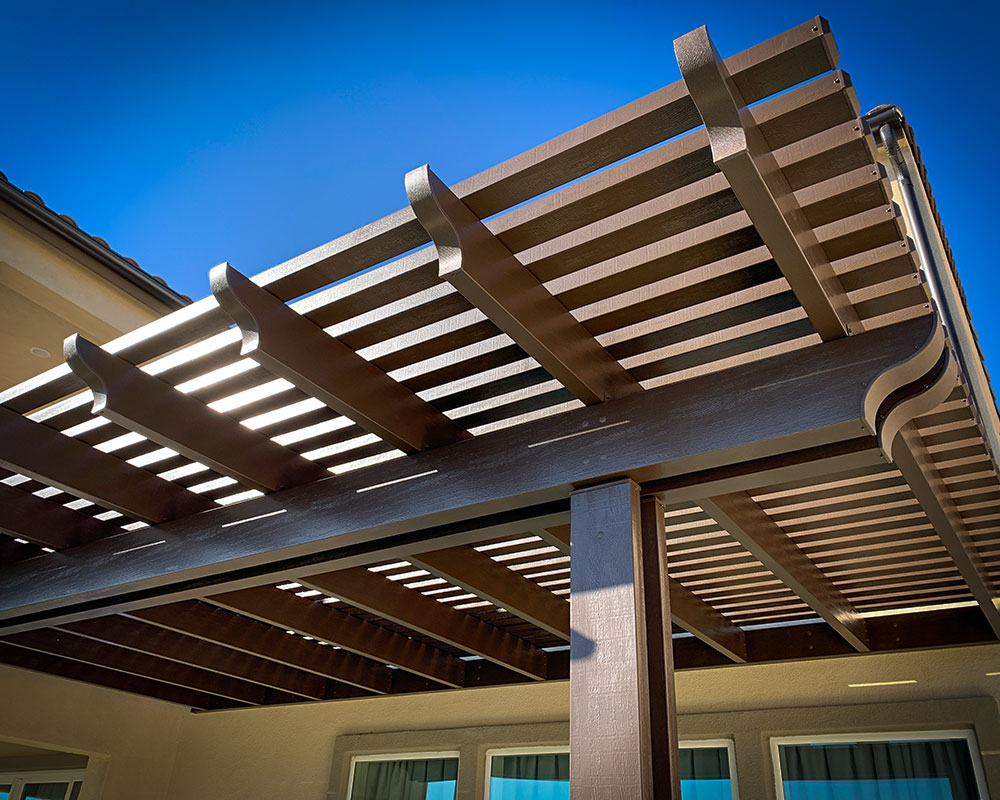
Louvered systems are worth the paperwork. To a committee they read as premium architecture — engineered aluminum, integrated drainage, factory colors matched to the home.
Our guide to motorized louvered roofs covers what they cost and when the investment makes sense.
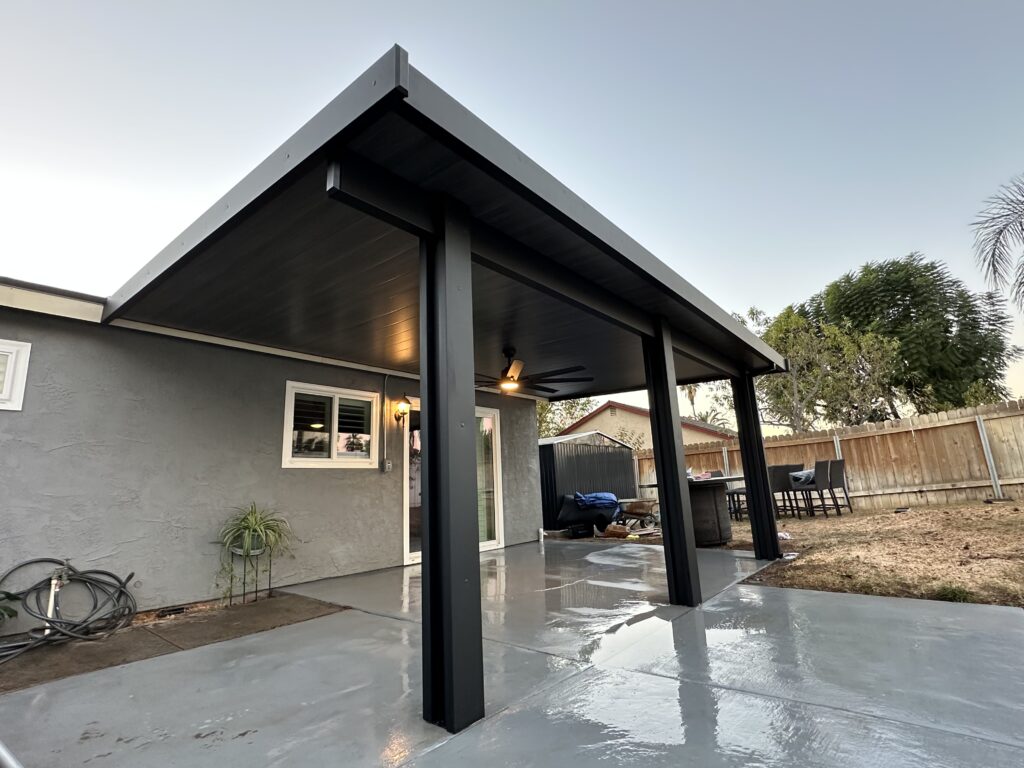
Do You Still Need a City of Beaumont Permit After HOA Approval?
Yes. HOA approval and the city permit are two separate gates, and the order matters: HOA first. Four Seasons’ guidelines say directly that a City of Beaumont permit may also be required — and the city doesn’t care what your HOA prefers, only what California’s building codes demand.
Beaumont runs a digital-only permit process — PDF plans submitted by email or through the city’s CSS portal — with a published review clock of 15 business days for the first review and 7 for each round after. Our Beaumont patio covers guide walks the full permit path, timelines included.
One Beaumont-specific reason engineering matters: the San Gorgonio Pass, immediately east of town, is designated special wind territory — Banning, Cabazon, and San Gorgonio carry a 130-mph design wind speed, against 95–100 mph in standard Riverside County territory.
This is the corridor that powers one of the largest wind farms in the country. Your HOA reviews how a cover looks; the building code reviews whether it stays put. A cover designed for both is the only kind worth buying.
How Does Horizon Handle HOA Approval for You?
HOA approval is a paperwork problem, and paperwork problems are solved with preparation. Here’s how we run it:
- Community check. We pull your association’s current guidelines and application forms — Four Seasons, Tournament Hills, Sundance, and the rest each get their own packet.
- Submittal-ready design. Plot plan, elevations, and a materials-and-colors sheet matched to your home — the application a committee approves the first time.
- Calendar-aware timing. We submit against your community’s actual meeting schedule, not a generic estimate.
- Decision handling. If the committee asks for changes, we respond. If it denies unreasonably, California law gives you reconsideration rights — and we’ll use them.
- City permit and build. Once the HOA signs off, we run the city’s digital submittal, then schedule construction.
It’s the same white-glove process we run everywhere we work — from Newport Beach and Long Beach to the Inland Empire and the Coachella Valley.
See our recent work, browse everything we build beyond patio covers, or start with our project planning guide — and our full service area is growing across the Pass.
Ready for a Cover Your HOA Will Approve?
Tell us where you live — Four Seasons, Tournament Hills, Sundance, or anywhere in the Pass — and we’ll tell you exactly what approval takes, then design a cover your committee says yes to.
Frequently Asked Questions
Do you need HOA approval for a patio cover in Beaumont, California?
In nearly every master-planned community, yes — Four Seasons, Tournament Hills, Sundance, Fairway Canyon, Solera at Oak Valley Greens, and Altis all require written architectural approval before construction. A separate City of Beaumont building permit follows.
How long does HOA approval take in communities like Four Seasons or Tournament Hills?
Your community’s documents set the clock, not state law. Four Seasons deems applications approved if its committee doesn’t respond in writing within 30 days. A complete application typically clears in one meeting cycle; budget two to six weeks before permitting begins.
Can an HOA make you remove a patio cover you already built?
Yes. California courts have upheld orders to remove or rebuild unapproved structures — in one case even where a committee had approved work that violated the CC&Rs. Written approval before construction is the only safe path.
Do pergolas and louvered roofs need HOA approval in Beaumont?
Yes. Freestanding pergolas and motorized louvered roofs go through the same architectural review as attached covers, and freestanding structures still must respect setbacks — 5 feet from rear and side lines at Four Seasons.
What should a patio cover HOA application include?
A plot plan with dimensions and setbacks, elevation drawings, and exact materials and colors matched to your home — plus whatever your community’s checklist adds. Complete packets get approved; sketches get returned.
Does Horizon Patios handle HOA submittals in Beaumont?
Yes. We prepare community-specific application packets for Beaumont’s associations and manage the process end to end — architectural approval, city permit, and construction. Tell us your community, and we’ll tell you what approval takes.