Key Takeaways
- Embers, debris, and gaps decide whether a deck or patio cover ignites, not just the structure itself.
- Start this weekend: clear debris, empty the space under the deck, and keep the first five feet clear.
- A non-combustible material is not always enough. Clearance and upkeep count too.
- Before you build, ask your building department, your manufacturer, your HOA, and your insurer. The questions are in this guide.
- California’s wildfire building code applies by mapped fire zone. The state’s Zone 0 rule for the first five feet is not law yet.
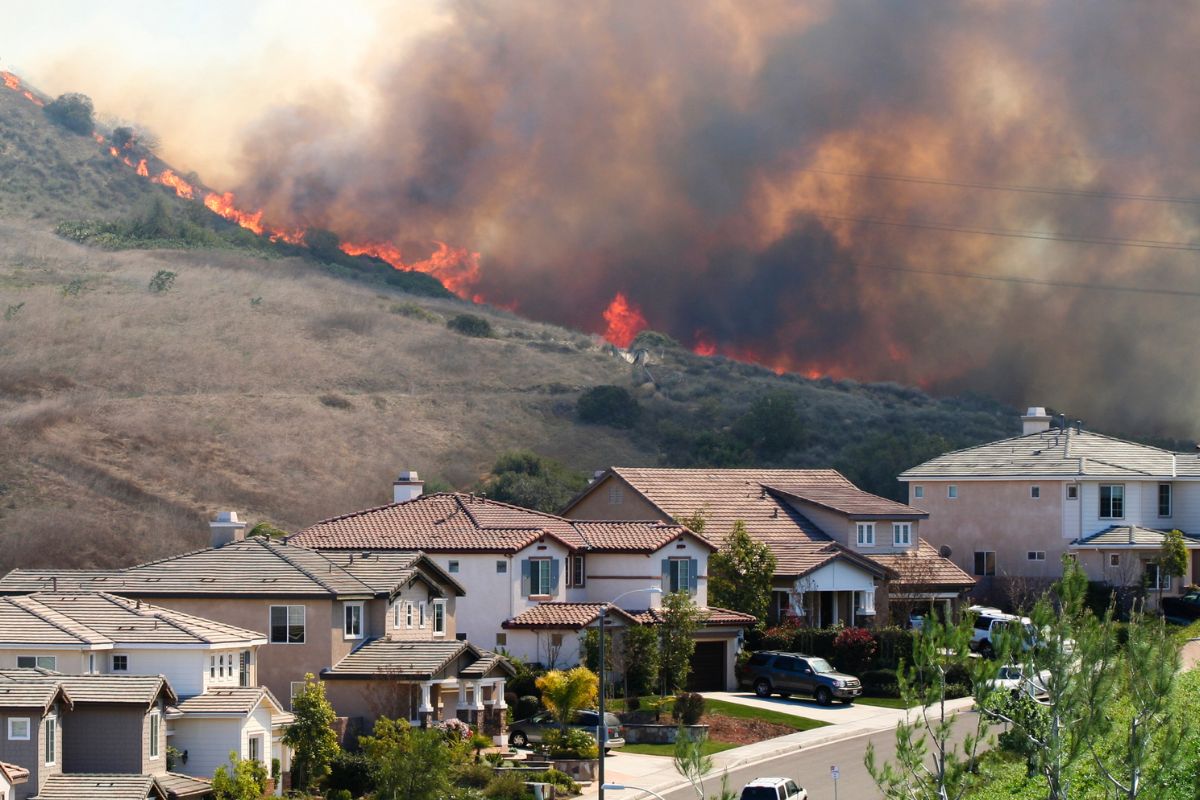
Embers decide whether a deck or patio cover ignites. No matter where they come from, they often land in board gaps. Or they collect in debris.
Then they find the combustible items stored nearby.
When you design and build (and outfit) your patio or deck, the structure matters, and so does everything around it.
Most of the protection comes from work you can do yourself, starting this weekend. This guide puts that work first and the rules after it, because you can act on the steps whatever your city decides. If you are planning a new patio cover or deck, it also covers materials and who to ask.
One note up front: This is general information, not legal, code, or insurance advice. Your city or county decides what applies to your parcel, so we point you to who to ask.
How Do Embers Get Into a Patio or Deck?
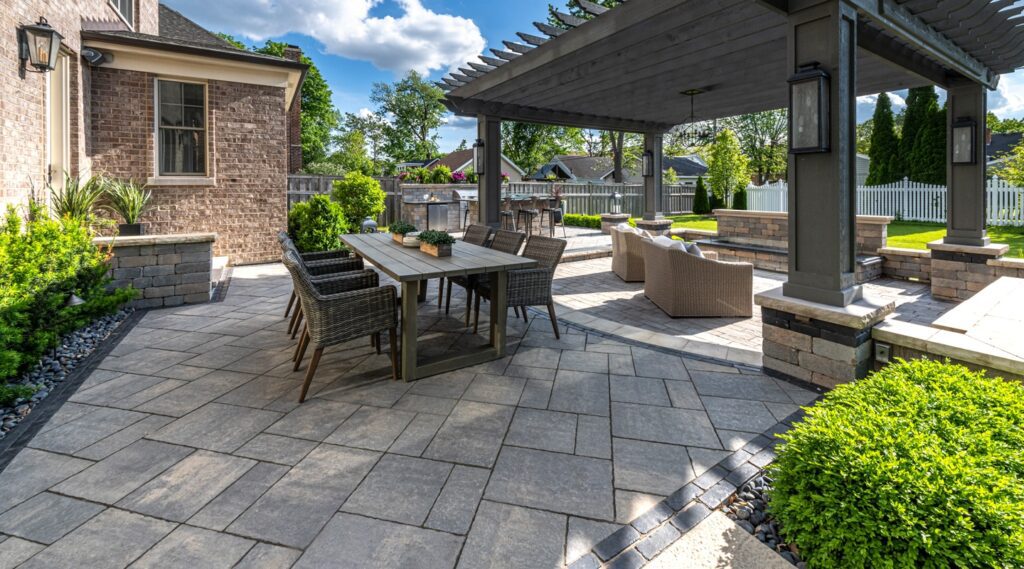
Embers and flames can ignite a deck from above and from below. That makes debris, gaps, and nearby items as important as the material itself.
The Four Weak Spots to Check
Decks can be ignited by contact with a flame, usually from below. Embers can also collect in gaps between deck boards and ignite the debris there. Walk your patio and deck and look at four spots:
- The gaps between boards. Debris packs into them, and embers can ignite what collects there.
- The space under the deck. Flame contact usually comes from below, and anything stored there adds fuel.
- The boards themselves. Rotting boards add fuel.
- What sits nearby. Vegetation and furniture add fuel too.
A non-combustible surface or structural component is not always enough to prevent ignition. Think of material as the first layer. Clearance and upkeep are the second, and they work together.
What to Do to Protect Your Patio or Deck
Start at the top of this list. The first group is free and works on any patio or deck, new or old. The later groups depend on the time of year or on a build.
What You Can Do This Weekend
- Sweep out the debris. Clear deck gaps, cover surfaces, and gutters.
- Empty the space under the deck. Nothing should be stored there.
- Clear the first five feet. Remove mulch, firewood, and other combustible items next to the home.
- Trim back vegetation. UC Cooperative Extension advises keeping at least five feet of clearance between the deck and vegetation.
- Look over the boards. Replace or flag any that are rotting.
What to Do Each Season (and Before an Evacuation)
Do a full clear-out before the dry season, and a quick check each season. Our post-summer care guide and pre-season timeline show where the work fits in the year.
If an evacuation is possible, UC Cooperative Extension suggests bringing cushions and mats inside and moving propane tanks away from the house.
What to Do When You Build or Replace
Choose the materials with the next section, then take the questions in “Who to Ask Before You Build” to your city, your manufacturer, your HOA, and your insurer.
As always, keep any and all receipts, product documentation, and dated photos of every upgrade.
Choosing Materials for a Cover and a Deck
Start with a material that does not burn, then plan the details around your choice.
The fact is that people (and manufacturers) use three terms as if they mean the same thing. They do not, and that matters when you’re investing in materials.
| Term | Plain meaning | What to remember |
|---|---|---|
| Non-combustible | A material that does not burn, such as aluminum, steel, or concrete. | Helpful, but not the whole answer. Debris and nearby items can still burn. |
| Ignition-resistant | A material or assembly the building code treats as resisting ignition, usually shown by testing. | Your city decides which products qualify in your zone. |
| Ember-resistant | A design and upkeep goal: keep embers from lodging in gaps or igniting what is nearby. | Tight details, a clean surface, a clear underside, and nothing stored nearby. |
Patio Covers: Aluminum, Wood, and Open Pergolas
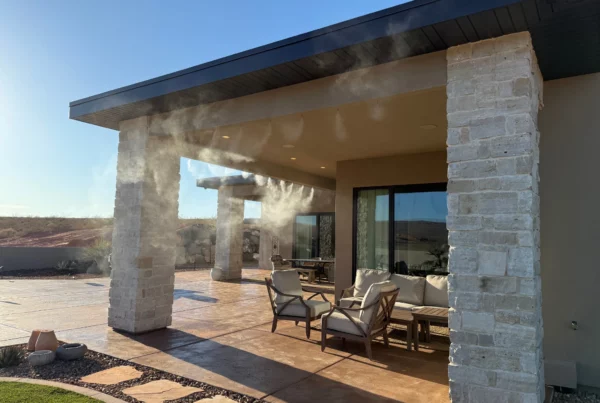
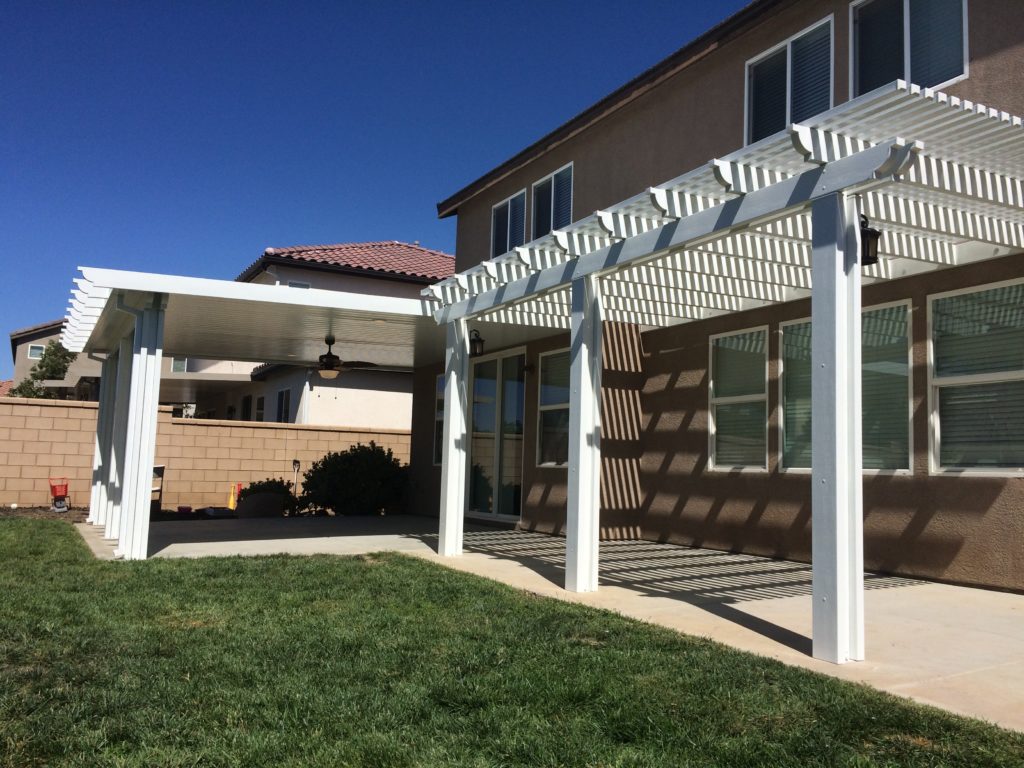
Aluminum is a non-combustible material, and wood is a fire consideration, especially above a grill or fire feature. Our guide to choosing between a patio cover, pergola, and louvered roof compares the structures.
Our 4K aluminum patio covers are built from this material, and our 10-year look at 4K aluminum shows how it holds up. The 4K aluminum versus Alumawood comparison covers the finish choice.
Wood covers and open pergolas follow the same code and city rules. In Newport Beach’s Zone A setback, a patio cover must be completely noncombustible, which leaves wood out there.
Decks: Surface, Gaps, and Joists
In Newport Beach’s Zone A setback, a deck must be completely noncombustible. Elsewhere, ask your building department which decking materials qualify before you order boards.
For new untreated-wood decks, UC Cooperative Extension suggests wider board gaps of one-quarter inch, 24-inch joist spacing, and foil-faced flashing tape on the joists. Keep the underside clean of debris.
We describe deck practices here as general guidance. Our Hardscapes page covers the patio and paver surfaces we install.
Who to Ask Before You Build
Rules vary by city, so a few short conversations get you the right answer. Here is who to talk to and what to ask.
Your Building Department and Your Manufacturer
Start by finding your parcel’s zone. Enter your address in the State Fire Marshal’s viewer, then call your city or county. Our permit guides for Palm Springs, Palm Desert, and Beaumont show how those departments work. Ask:
- Which fire hazard severity zone is my parcel in, and which code and local rules apply?
- Which cover and decking materials qualify in my zone?
- Do you need to see fire test or listing documentation before you issue a permit?
Then ask the manufacturer whether it has fire test or listing documentation for the cover you are considering.
Your HOA and Your Insurer
Get HOA sign-off on materials before you order them. Our HOA approvals guide explains the process, and our Coachella Valley HOA post covers what review looks like in the desert.
Then call your insurer. California’s insurance department says insurers must now offer discounts of 4% to 40% for wildfire mitigation actions. Its briefing does not name patio covers, so we cannot promise a discount for one.
Ask which measures your insurer credits, and bring the receipts and dated photos you kept.
Some Legal Considerations
You don’t need to read the entire code to make sure your patio or deck is safe. Here’s a look at what is in force and what may still be pending.
The State Code and Your Zone
California folded its wildfire building rules into one standalone code. It is Part 7 of Title 24, and its 2025 edition took effect on January 1, 2026. Newport Beach’s ordinance adopting it shows how a city picks it up.
The code applies by mapped fire zone. The State Fire Marshal classifies state lands as Moderate, High, or Very High, and local jurisdictions work from maps for their own areas.
Where you fall on the map matters to you because it shapes what applies to any new build.
Newport Beach is a great example. Its ordinance says no patio covers, sheds, decks, stairs, or similar structures may be built in the 20-foot Zone A setback unless they are “completely constructed of noncombustible materials.”
Permitted accessory structures between 3 and 50 feet from a building must be noncombustible or ignition-resistant. Other cities set their own rules, so ask yours. Our Newport Beach and Long Beach guides cover two coastal markets.
A Note on Zone 0
Zone 0 is the state’s proposed ember-resistant zone for the first five feet around a home. A legal analysis of the rule says it generally extends five feet from the exterior wall, roof, attached deck, stairs, or pergola.
It calls for removing vegetation and combustible materials beneath decks, balconies, pergolas, and stairs; keeping roofs and gutters clear; and storing no firewood in the zone.
The documentation doesn’t name patio covers, so it’s wise to ask your city before you assume yours is in or out.
The Board of Forestry adopted Zone 0 on August 19, 2026, and sent it to the Office of Administrative Law on August 28.
On September 8, the Board withdrew the package before review finished. Status trackers call the move procedural and expect a refiling. As of the latest status reports we found, from late September 2026, nothing in Zone 0 is enforceable. We will update this post when that changes.
Horizon Patios Helps Homeowners Stay Safe
Our work centers on 4K aluminum patio covers and motorized louvered roofs, built as a complete project with HOA-compliance experience. See the Patio Covers page and finished projects in Our Work. Our louvered roof guide explains the investment.
Your city decides what applies to your parcel, and we build to what it requires. If you are away part of the year, our guide to building a patio cover from out of state shows how a long-distance project works.
Planning a New Cover or Deck? Start With a Conversation
Start your project with a few details about your home. We will walk you through the options and what to ask your city.
Frequently Asked Questions
What should I do first to fire-harden my patio or deck?
Clear debris from deck gaps, the cover surface, and gutters. Empty the space under the deck and keep the first 5 feet next to the home clear of mulch, firewood, and other combustible materials. Then check each season and do a full clear-out before the dry season.
Should I leave cushions and furniture on my patio?
UC Cooperative Extension suggests bringing cushions and mats inside and moving propane tanks away from the house when you evacuate. It also lists furniture as something that adds fuel to a deck fire, so keep it out of the space under the deck.
Are aluminum patio covers fire resistant?
Aluminum is non-combustible, but no patio cover is fireproof. UC Cooperative Extension notes that a non-combustible surface or structural component is not always enough to prevent ignition, so debris, vegetation, and nearby items still matter. Ask the manufacturer for fire test or listing documentation.
What kind of decking can I use in a fire hazard severity zone?
It depends on your zone and your city. In Newport Beach’s Zone A setback, a deck must be completely noncombustible. Elsewhere, ask your building department which decking products qualify before you order. For untreated wood decks, UC Cooperative Extension suggests wider board gaps, wider joist spacing, and foil-faced flashing tape on the joists.
What is Zone 0 in California?
Zone 0 is the state’s proposed ember-resistant zone for the first five feet around a home. The Board of Forestry adopted it on August 19, 2026, then withdrew it from state review on September 8 to refile it. As of the latest status reports we found, nothing in Zone 0 is enforceable yet.
How do I find out if my home is in a fire hazard severity zone?
Enter your address in the State Fire Marshal’s Fire Hazard Severity Zones viewer for state responsibility areas. For local responsibility areas, contact your local jurisdiction. Then confirm with your building department what applies to your parcel.
Disclaimer
This guide is general information, not legal, building code, fire safety, or insurance advice. Wildfire rules change often, and they differ by city, county, and fire zone. No material, product, or practice makes a home or outdoor structure fireproof. Before you build, replace, or modify a patio cover or deck, confirm what applies to your property with your local building department, your HOA, and your insurer. Follow all evacuation orders and guidance from your local fire authority.