Key takeaways
- How much wind can a patio cover handle? There’s no single wind rating for the Coachella Valley. Each city sets its own design criteria, and the numbers we found differ from one city to the next.
- A design wind speed is the target the engineer builds the plans around, so what matters is whether your cover was built to those plans.
- Connections, meaning the footings, the posts, and how the cover attaches to your house, do more to keep a cover in place than the number on paper.
- Before you sign, ask for the engineered plans, the footing details, the attachment method, and a permit.
- Confirm the current value for your address with your city’s Building and Safety division.
Wind in the valley is one of the first things people ask about when they are planning a patio cover. It’s a fair question to ask before you spend the money, because the last thing you want is a good wind storm to tear up your new investment.
Can a patio cover handle valley wind? Yes, when properly permitted, an engineered patio cover is built to the design wind speed your city sets. But that number varies across the valley, and it matters both for what you build and what will be accepted by the city and your HOA.
In Indian Wells, for example, the city’s residential design criteria call for an ultimate design wind speed of 123 mph. That is the gust the engineer designs the structure around.
It’s a target for the plans, not a promise about every storm, and it only means something if the cover is built the way the plans say.
So the better question to ask isn’t “what is the wind rating?” but “what was my cover designed for, and was it built to that?”
Why does the Coachella Valley get special treatment when it comes to wind?
Building codes use wind maps to set a baseline for each region.
Riverside County’s design handout lists Palm Springs, Indio, Palm Desert, Rancho Mirage, and Desert Hot Springs among its special wind regions.
That label is the code’s way of saying the standard map does not capture local conditions, so local values apply.
For you, that means you cannot rely on a number you read in a general article, a manufacturer’s brochure, or an AI answer. The number that counts is the one your city puts on your permit.
What do the cities say?
Here is what we could find in each city’s own published design criteria. The numbers are not directly comparable, because cities cite different code editions and risk categories.
Even within one city, the value for your lot can differ, which is why La Quinta points homeowners to a site-specific lookup.
| City | What the city’s criteria say | Source |
|---|---|---|
| Indian Wells | Special wind region, Exposure C minimum. Residential code: 123 mph ultimate design wind speed. | Indian Wells design criteria |
| Rancho Mirage | Plans must show a wind speed of 110 and Exposure C. | Rancho Mirage Building & Safety |
| La Quinta | 95 to 100 mph, Exposure C, with the city pointing to the ASCE Hazard Tool for a site-specific value. | La Quinta building codes |
| Palm Desert | Basic wind speed of 97 mph for Risk Category II (the category most homes fall under). | Palm Desert design criteria |
What does “Exposure C” mean? Open, flat terrain with few obstructions, and that describes a lot of the valley floor. Your engineer may justify a different exposure for a specific lot.
What matters more than the number?
A design wind speed on paper does not hold a roof down. Connections do. When we look at what the city standards spell out, it’s mostly about how the cover is tied together and tied to the ground.
The Palm Springs patio cover standard, for example, gets specific about spans, footings, and how the cover attaches to the house.
That is where a good installer earns the price. Before you sign, ask for these five things:
- The engineered plans or the city’s standard detail the cover will be built to, and the design wind speed they show.
- How the footings are sized for your soil and your cover size.
- How the cover attaches to your house, including what it’s fastened to and with what.
- A permit. An inspected cover has been checked against those plans. An uninspected one has not. Our guides to Palm Springs patio cover permits and Palm Desert patio cover permits cover how that works.
- The manufacturer’s guidance for your product, especially if you are choosing a louvered or motorized roof.
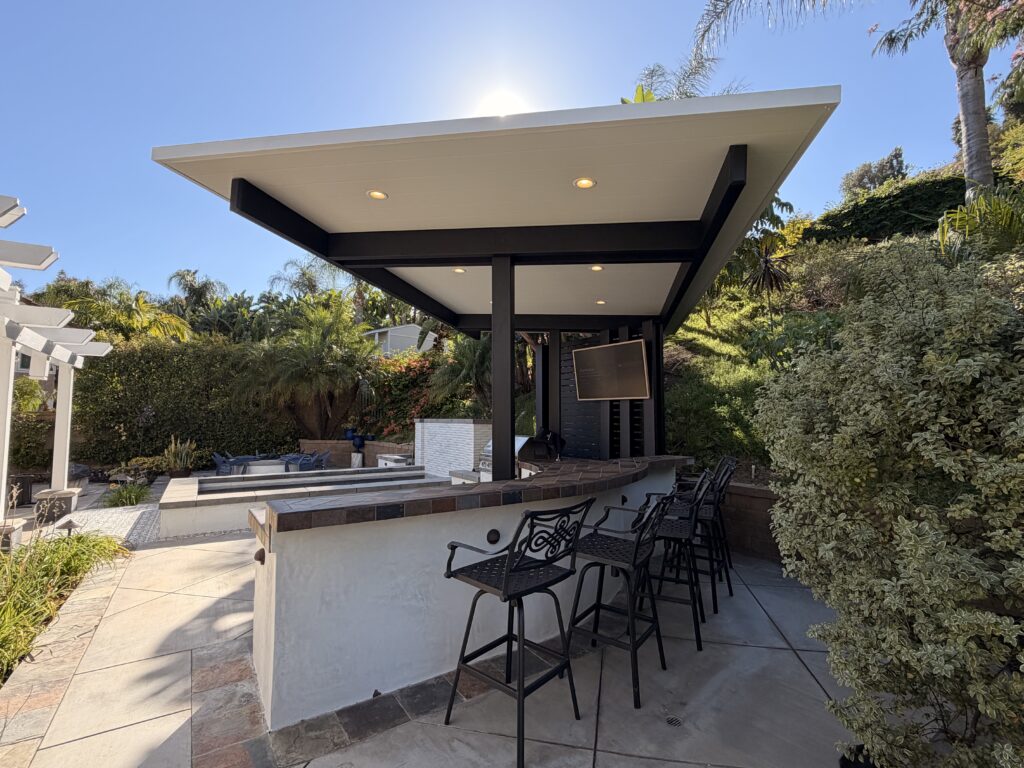
Does the type of cover change the answer?
It can. A solid aluminum cover, an insulated panel system, and a motorized louvered roof all behave differently in wind, and each manufacturer publishes its own engineering for its system.
If you are comparing materials, our post on 4K Aluminum versus Alumawood walks through the differences, and our look at whether motorized louvered roofs are worth the investment covers the louvered side.
If you have a louvered roof, ask what the manufacturer says to do with the louvers when a big wind event is forecast.
How to find the number for your own address
Finding it takes less time than most people expect.
- Check your city’s website first. Some cities post their wind values openly. Rancho Mirage lists a wind speed on its Building & Safety page, and La Quinta lists a range on its building codes page.
- Call the permit counter if it’s not posted. Ask what design wind speed and exposure category the city requires for a patio cover at your address, and write down who you spoke with and the date.
- Ask your installer to show you the same number on the plans. If the two do not match, that is worth a conversation before the permit is submitted, not after.
- Ask about your specific lot. La Quinta points homeowners to the ASCE Hazard Tool for a site-specific value, and your installer or engineer can run an address through it.

Common mistakes with wind and patio covers
- Trusting a brochure number. A manufacturer’s rating describes the product. The city’s design criteria describe what your installation has to meet, and the two are not the same thing.
- Skipping the permit to save time. Without one, no one has checked your cover against engineered plans, and you have no record that anyone did.
- Focusing on the roof and ignoring the footings. The roof gets the attention, but the posts and footings are what hold it to the ground. Ask how they were sized.
- Waiting for a storm before you ask the question. It’s much easier to ask about wind before the cover goes up than after the first big gust.
When to call a in professional
If you already have a cover and are not sure how it was built, ask your installer or the city for the permit record, which shows whether plans were approved and inspected.
If you see movement in the posts, cracking where the cover meets the house, or a roof panel that has shifted, call a licensed installer instead of tightening things yourself.
After a windy week
The valley always has weeks that are windy, and sometimes that wind can do a bit of damage to buildings and landscaping. If you have a particularly windy week, a quick walk-around goes a long way.
Here’s what to look for:
- Loose or missing fasteners and caps
- Gaps where the cover meets the house
- Any new rattling, shifting, or visible movement in posts or beams
- Debris or furniture that blew against the structure
If anything looks off, call your installer before the next wind event. Small fixes are easier than big ones, and you don’t want to wait on a fix if it has the potential to impact the structure of your patio cover.
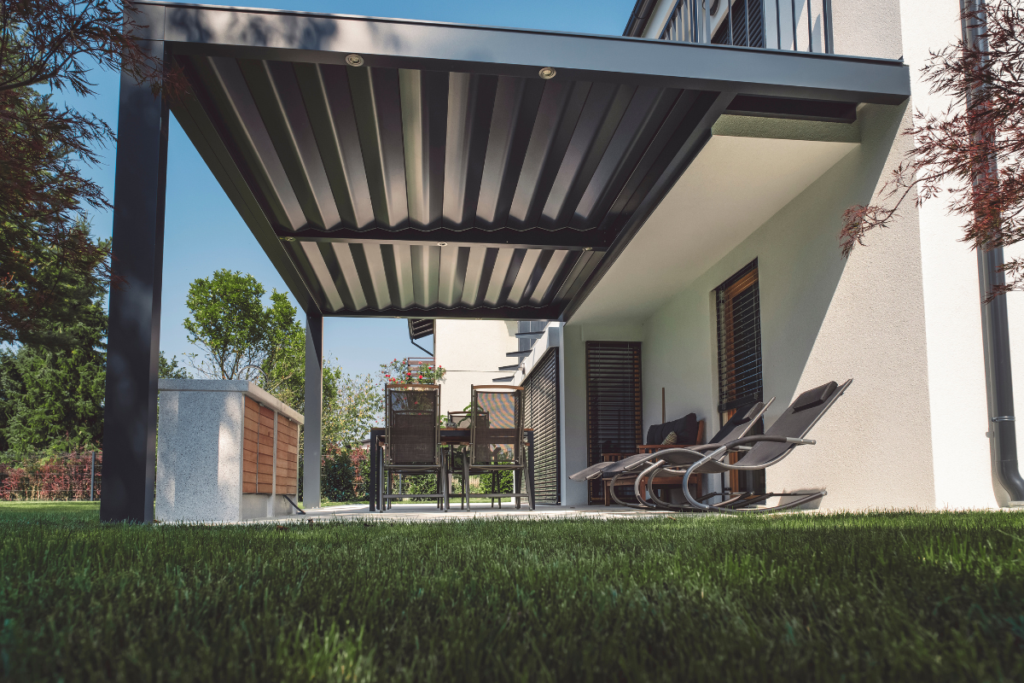
Planning a patio cover? Let’s chat!
If you want a cover that is engineered for where you live and built to the plans, let’s chat! Whether you’re in the beginning stages of a build or want to get a second opinion, we are happy to walk you through the options for your home.
Frequently Asked Questions
What wind speed should a patio cover be built to in the Coachella Valley?
It depends on your city, because each one sets its own design criteria. The values we found are 123 mph in Indian Wells (residential code), 110 in Rancho Mirage, 95 to 100 in La Quinta, and 97 for Risk Category II in Palm Desert. These are on different bases, so confirm the number for your address with your city.
Can a patio cover blow off in high wind?
Any structure can be damaged by a strong enough gust, but a cover built to engineered plans and inspected by the city is designed for the wind that city requires. How the cover is anchored matters as much as the roof, so ask how the footings and the house connection were built.
Do I need a permit for a patio cover in the Coachella Valley?
Check with your city before you build, because requirements are set locally. Palm Springs and Palm Desert both publish patio cover requirements, and our guides cover Palm Springs and Palm Desert. The permit is also how the city confirms the cover matches plans engineered for local wind.
How can I tell if my existing patio cover was built to code?
Ask your city or your installer for the permit record, which shows whether plans were approved and inspected. If there is no record, a licensed installer or engineer can look at the posts, footings, and house connection and tell you what they see.
Is a louvered roof or a solid roof better in high wind?
It depends on the system, so ask the manufacturer for its engineering and its guidance for wind events. With a motorized louvered roof, ask specifically what position the louvers should be in when strong wind is forecast. Our posts on motorized louvered roofs and 4K Aluminum versus Alumawood cover the product side.
What should I do before a big wind event?
Put away or tie down loose furniture, umbrellas, and cushions, and follow your manufacturer’s instructions for any louvers or moving parts. After the wind passes, walk around the cover and check for loose fasteners, gaps at the house, and any shifting in the posts.