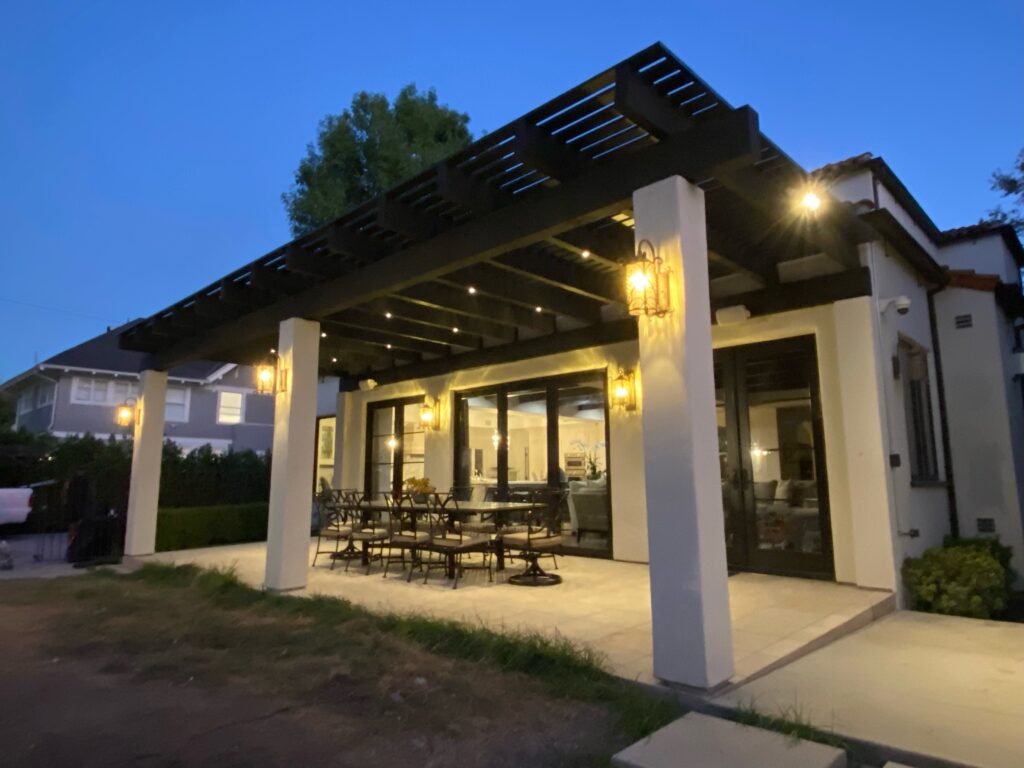
Key Takeaways
- Resort-caliber comes from one plan built in the right order, not five separate purchases added over a few summers.
- Entertaining season’s real design challenge is nighttime cold, not desert heat. From November through April, average lows sit in the 40s and 50s.
- Good outdoor lighting works in three layers: ambient, task, and accent. Whether a patio feels staged or feels like a resort usually comes down to whether all three are present.
- Outdoor kitchens, fire features, and statement lighting are exactly the additions many Coachella Valley HOAs and architectural review boards want to review before installation. Confirm early, not after the work is done.
- Lighting scenes, shade position, and climate can all be run from a phone or a schedule now, which matters if you’re not on the property year-round.
You’ve probably driven past a backyard with a beautiful patio cover and furniture that clearly cost real money. But look closer, and you start to notice that it feels a bit disjointed.
It all reads as assembled: a little different, year by year, contractor by contractor.
The problem is the sequencing of the design.
The homeowners we talk to in Rancho Mirage, Indian Wells, La Quinta, and across the valley want one outdoor room that feels as intentional as the inside of their house, built by people thinking about how the pieces fit together.
A Coachella Valley backyard used mainly for entertaining needs thought put into its form and its function.
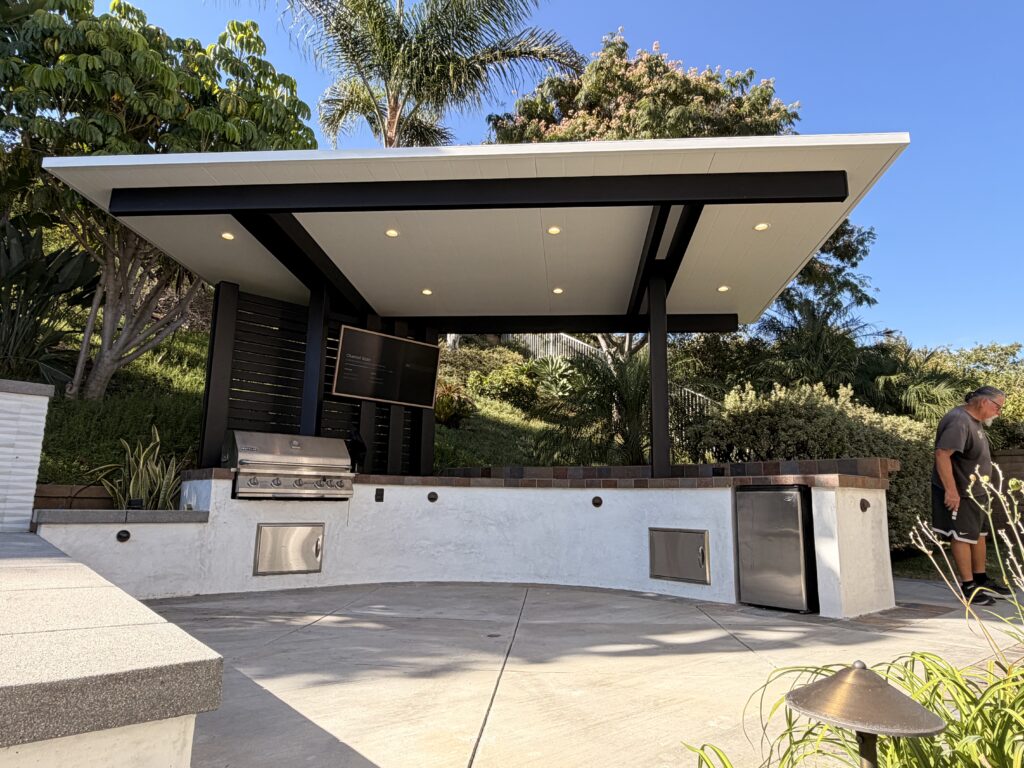
Designed, Not Assembled
What separates a backyard that reads as “designed” from one that reads as “assembled” really comes down to two things: cohesion and sequencing.
The Cohesion Test
A single beautiful feature doesn’t make a backyard feel like a resort. It may look great from the street, but the next level comes when multiple features are deliberately chosen to work together.
That’s the gap between a backyard with nice things in it and an outdoor room, and it’s a distinction most homeowners can feel as they walk through a space, even if they can’t name it.
One Team, Not Five Vendors
Part of the gap comes when hiring a lighting company, then a kitchen company, then a patio company, rather than hiring one team that designs across all of it.
If you’ve seen what we mean by modern desert luxury before, consider this the more specific version of that idea: the sequence, not just the look.
Our project gallery is full of backyards in these same communities that got there through planning, not accumulation.
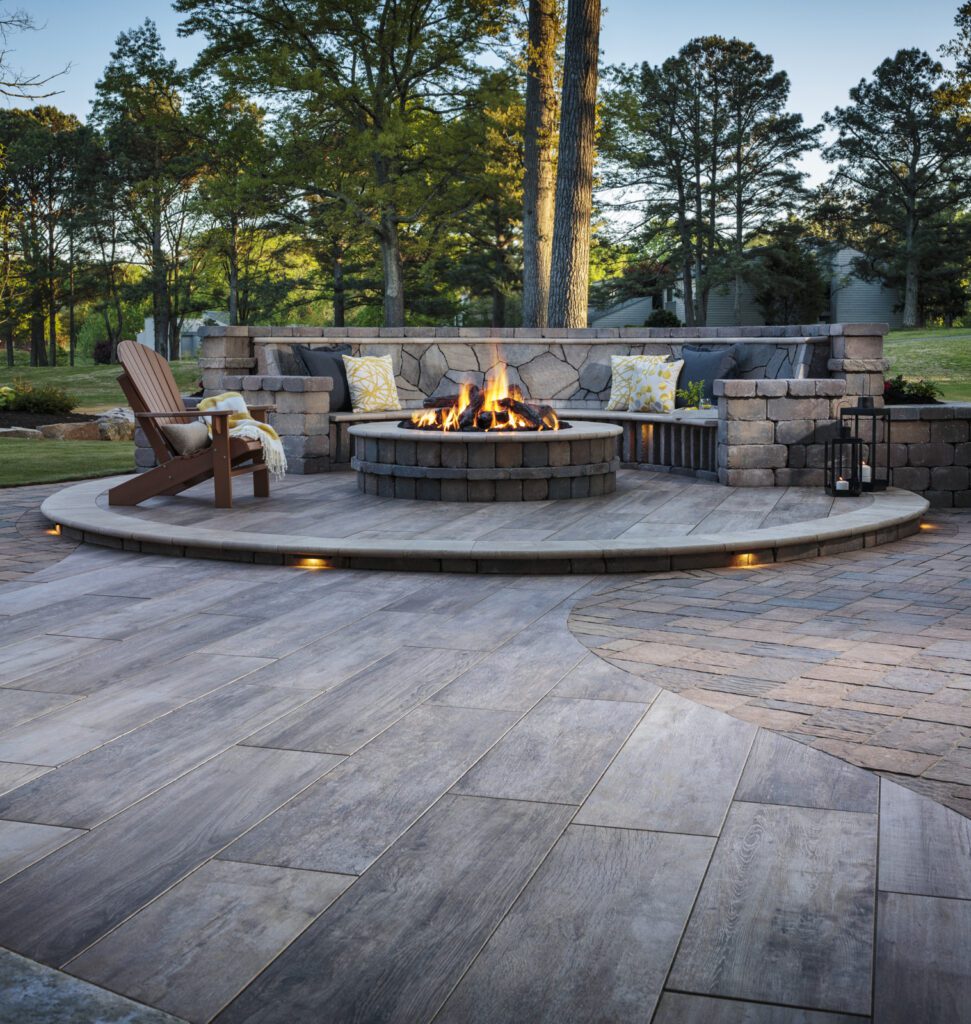
The Five-Layer Sequence
Think about a backyard design build in five layers. Like a recipe, each one sets the constraints for the layer after it, and it makes the most sense when you follow it from start to finish as intended:
| Layer | What it does | How it’s handled |
|---|---|---|
| Structure | The shade frame everything else hangs off — a solid patio cover or a motorized louvered roof. It goes first because it decides sightlines, post placement, and where power and lighting can run. | 4K aluminum panels or a motorized louvered roof — sized and placed before any other layer gets planned. |
| Climate | Makes the space usable after dark, not just during the day. This is the layer most homeowners get backward for entertaining season — more on that below. | A louvered roof that closes against the evening breeze, plus a heat source built into the plan from day one, not bolted on later. |
| Light | Turns a daytime patio into somewhere people want to stay after sunset. Built in three tiers: ambient, task, and accent. | Three tiers working together — ambient, task, and accent. (See the lighting breakdown below.) |
| Gather | The furniture, kitchen or bar, fire feature, and sound that make the space host-ready, not just look-ready. Sited to the structure layer, so nothing gets improvised around a post after the fact. | Furniture, kitchen or bar, and fire feature are sited to the structure layer, so nothing gets improvised around a post after the fact. The fire feature also cuts the evening chill. |
| Control | Ties the first four together for an owner who isn’t on the property every day — lighting scenes, shade position, and climate, run from a phone or a schedule. | App-based control for lighting scenes, shade position, and climate — run from a phone or on a schedule. |
Why Does Structure Come First?
Structure is one of the hardest layers to change your mind about later.
Whether that’s a solid 4K aluminum cover or a motorized louvered roof you can open and close by season, it sets the geometry everything else works around.
If you’re still deciding between materials, our comparison of 4K aluminum and Alumawood is a good place to start, and the patio covers page covers what we build.
Once the structure’s set, everything else has a place to belong.
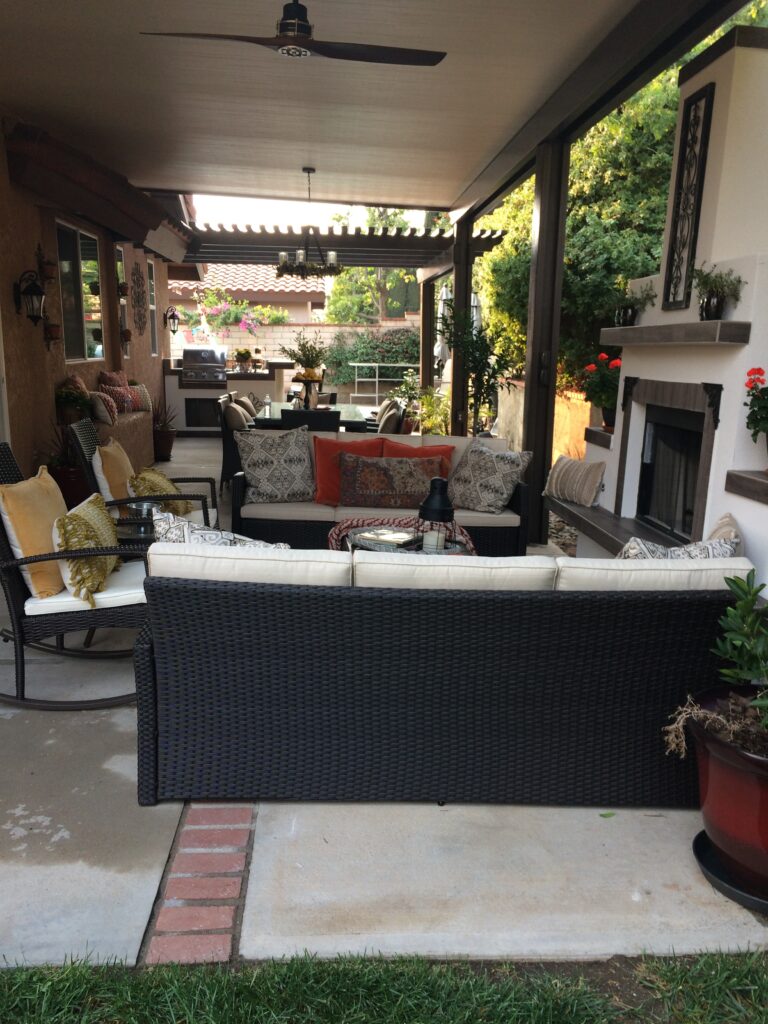
The Climate Challenge: Desert Nights, Not Desert Days
The desert’s reputation is heat, but entertaining season runs November through April, and the heat isn’t the problem then. It’s when you’re trying to enjoy your outdoor space in the evenings.
Average nighttime lows in the Coachella Valley run 54°F in November, drop to 45°F in December, sit around 47°F in January, climb back to 49°F in February, and reach 54°F and 59°F in March and April.
A dinner that starts at a comfortable 75°F at five o’clock can be sitting at 47°F two hours later, on an ordinary evening, not an unusual one.
Fire as Function, Not Just Ambiance
That’s why the climate layer of a well-designed entertaining space isn’t about cooling at all for this particular season.
It’s about warmth: a fire feature sized and sited as part of the design, not added later because someone got cold in October. A well-placed fireplace or fire pit does double duty, working as both a heat source and a windbreak for the evening breeze on an open patio.
Granted, cooling still has its place. When your covered patio feels like an oven, a misting system is a nice addition. If you’re designing specifically around entertaining season, though, plan for warmth first.
If you’re weighing whether the structure itself holds up to that kind of temperature swing year after year, we’ve written about what a 4K aluminum cover looks like after ten years of this kind of cycling.
Lighting That Works Day and Night
Think about lighting the way your favorite restaurant does: in layers, not with a single switch.
| Layer | Purpose | What it looks like |
|---|---|---|
| Ambient | Soft, general light for safe, comfortable movement after dark | Wall sconces, post lights, string lights; downlighting from trees or your structure layer can recreate a moonlit effect across the whole space |
| Task | Focused light where people are doing something specific | Step lights, path lights, and fixtures over a cooking surface, staggered, never “runway-bright” |
| Accent | Depth and drama, not function | Uplighting on trees or architectural features, silhouetting, grazing texture across stone or block walls |
One Space, Two Moods
Layering matters for entertaining specifically because it lets one space do two jobs.
- Bright and functional while guests are arriving and finding their way around
- Dimmed to ambient and accent once everyone’s seated
That transition, on a dimmer, is most of what people mean when they say a space feels resort-caliber.
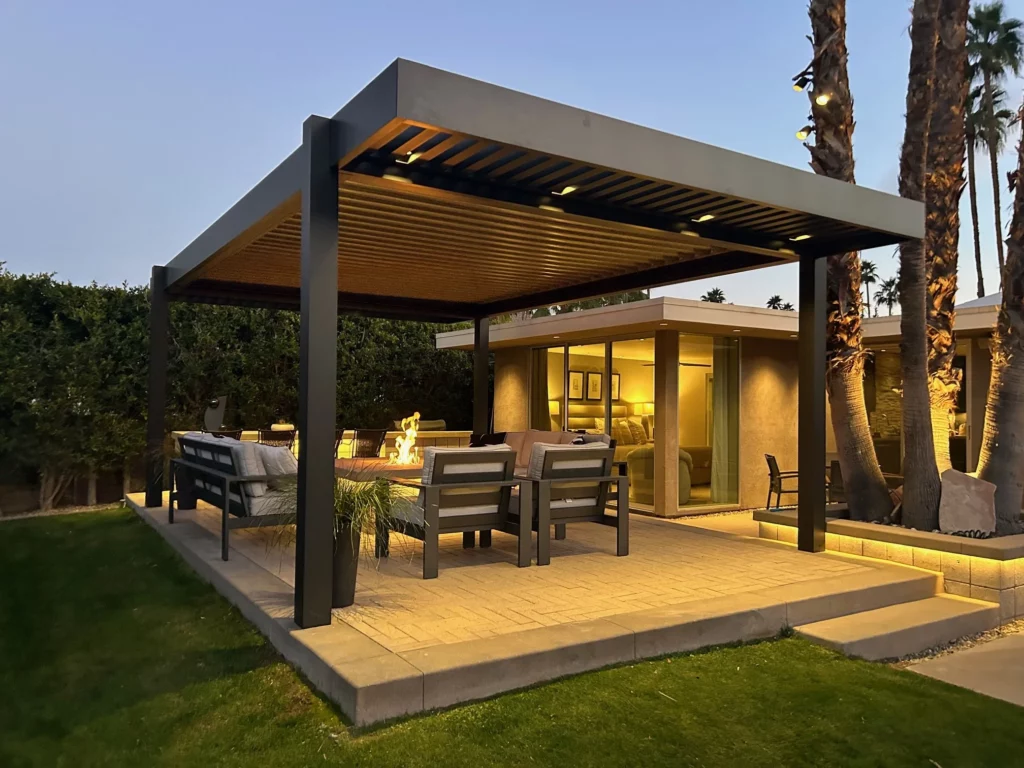
Are Outdoor Kitchens Worth the Investment?
Not automatically — it depends on how you choose to entertain.
A household that hosts sit-down dinners has different needs than one that does poolside drinks for twenty, and a bar built for the wrong style of hosting sits unused.
Whatever you build belongs in the gather layer alongside your furniture, fire feature, and sound, sited to the structure so the whole area reads as one room, not a kitchen bolted onto a patio. Hardscape surfaces matter here too.
Our hardscape work covers the patios, pavers, and kitchen surfaces that tie a “gather layer” together, and the right desert landscaping around a covered patio finishes the edges so the space reads as designed, not just built.
If you’re weighing the investment itself rather than the design, our piece on how a luxury patio cover affects home value in Palm Desert and our planning guide for a luxury outdoor living project both go deeper on budget than we will here.
HOA and Architectural Review Considerations
Check before you start, not after.
Outdoor lighting, fire features, and outdoor kitchens are categories of additions that many Coachella Valley country-club and gated communities, including La Quinta’s PGA West, require architectural review for.
That’s not universal. Every association sets its own process and its own pace, and some move faster than others.
Rather than re-explain that process here, our guide to HOA approvals for luxury outdoor upgrades and our piece on HOA approval for patio covers in the Coachella Valley both walk through it in detail.
The short version: ask early, because a lighting plan or a kitchen layout is a lot easier to adjust on paper than after it’s built.
Remote Control for Traveling Owners
Lighting scenes, shade position on a louvered structure, and climate can all be scheduled or adjusted from a phone.
That matters for the kind of ownership we see most: a primary residence elsewhere, a property manager on the ground, and a homeowner who wants the space season-ready without personally flipping switches.
We’ve written before about what a Coachella Valley summer does to a patio cover and how to manage that from out of state. The control layer is the same idea applied to daily use instead of seasonal maintenance.
If remote management is the piece you’re most trying to solve for, tell us that up front. It changes what we recommend.
Design Your Entertaining Space as One Plan, Not Five
We design across all five layers before the first post goes in the ground, so the finished space reads as one room, not five separate purchases. Tell us how you entertain, and we’ll build the sequence around it.
Start your project today, or read more about our patio covers and the rest of what we build.
Frequently Asked Questions
What’s the right order to design a luxury outdoor entertaining space?
Structure first (your patio cover or louvered roof), then climate, then lighting, then furniture and features, then remote control on top of all of it. Each layer sets the constraints for the one after it, which is why doing them out of order results in backyards that look assembled rather than designed.
Do I need to hire separate companies for patio covers, lighting, and an outdoor kitchen?
You can, but it’s the single biggest reason backyards end up feeling disjointed: five vendors with five opinions and no shared plan. One team designing across all five layers keeps the finished space looking like a single idea rather than five purchases.
How do I light a patio so it works for both parties and quiet evenings?
Layer it: ambient light for general movement, task light for functional areas like paths and cooking surfaces, and accent light for depth and drama. Put the ambient and accent layers on dimmers, and you can go from bright and functional to intimate and warm without changing a single fixture.
Will my HOA or architectural review board need to approve outdoor lighting or a kitchen?
Often, yes, especially in gated and country-club communities. Requirements and timelines vary by association, so it’s worth confirming with your HOA’s governing documents before finalizing a design. We’re glad to help you figure out what your specific community requires.
Can I control my patio’s lighting, shade, and cooling remotely?
Yes: lighting scenes, louvered-roof position, and climate features can generally be scheduled or adjusted from a phone, which is especially useful if you’re not on the property full-time or you rely on a property manager to keep things running.
Do I need to heat my patio for entertaining season, or is the desert warm enough at night?
Most likely, yes. Average nighttime lows from November through February sit in the 40s and 50s, so a heat source, most often a fire feature, is a practical part of the design for anyone entertaining after sunset during that window, not just a nice-to-have.