Key Takeaways
- A professionally installed residential misting system typically runs $1,500–$4,000 for quality mid-range setups; professional high-pressure systems start around $2,500 and can reach $15,000+ for large multi-zone estates.
- Water use is far lower than most people assume: about 1–2 gallons per hour per nozzle — a typical residential system running through a hot afternoon uses roughly as much water as one load of laundry.
- High-pressure misting can drop the felt temperature on a desert patio by 20–30°F — turning a 105°F afternoon into the mid-80s.
- Evaporative cooling works best precisely where we live: government data confirms it performs at its peak in dry climates like the Coachella Valley, and it uses a fraction of the energy of air conditioning.
- Misting is not for everyone — if your space is enclosed or poorly ventilated, or if you are rarely outdoors in summer, a shade-first approach may serve you better.
It is June in the Coachella Valley, which means your beautiful backyard just became a place you wave at through the window.
For the next four months, the patio you invested in sits mostly unused — unless you cool it.
A misting system is the most-asked-about fix, and the most-asked question about it is blunt: is it actually worth the money?
Fair question, and we are going to answer it the way we would for a friend — with the real costs, the real water use, the real temperature numbers, and the honest cases where misting is not the right call.
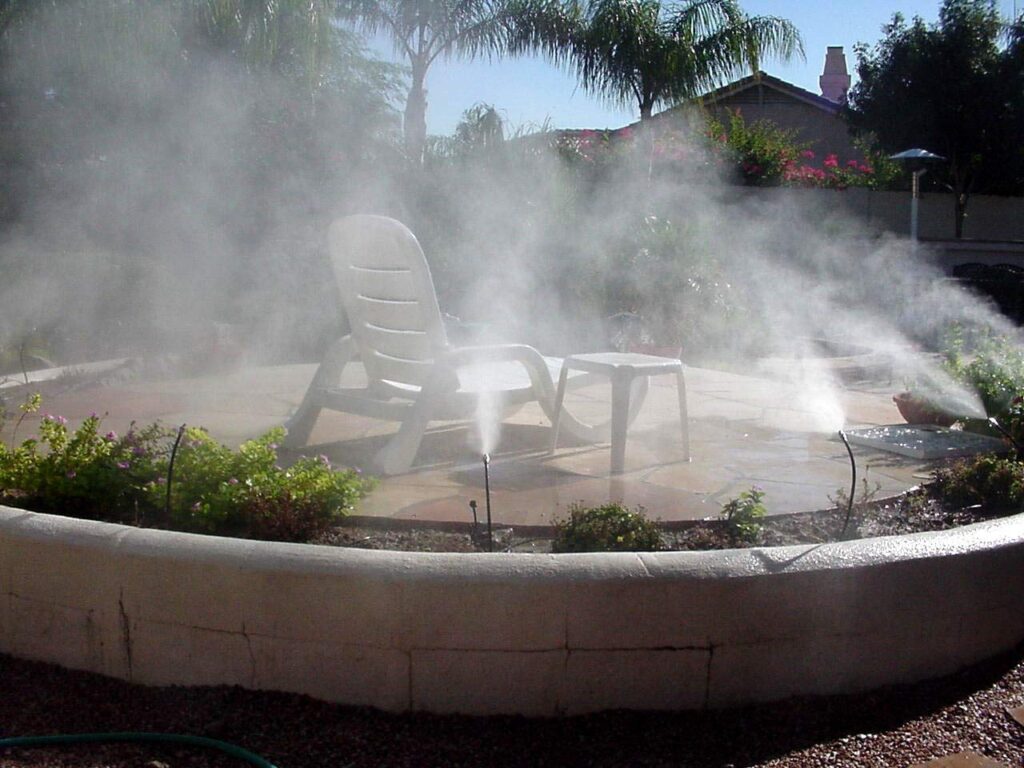
How much does a residential misting system cost?
Here is the straight answer: most Coachella Valley homeowners invest between $1,500 and $4,000 for a quality, professionally installed mid-range misting system.
Professional high-pressure systems — the kind that cool without soaking — start around $2,500, with most full-patio installations landing in the $4,000–$8,000 range and large multi-zone estates reaching $15,000+.
National cost data puts a typical professional installation at $1,940–$3,550, which squares with what we see locally for standard projects.
What moves the number?
Coverage area is a big driver — a misted dining patio costs far less than a full pool deck and outdoor kitchen.
The pump is the second: high-pressure systems run a 1,000 PSI pump that atomizes water into a flash-evaporating fog, and that hardware is most of the premium over the low-pressure kits you see at big-box stores.
We compared those two system types head-to-head in our recent breakdown of high-pressure versus low-pressure misting systems — if you have not chosen a type yet, start there.
The short version: low-pressure is cheaper to buy and worse at the actual job.
How much water does a misting system use — and what does that add to your bill?
A residential misting system uses approximately 1–2 gallons of water per hour per nozzle.
For a typical 10–15-nozzle patio system misting in cycles through a hot afternoon, that works out to roughly 30 gallons — about the same as a single load of laundry.
Run the math across a desert summer, and it stays small. A ten-nozzle system running three hours a day uses about 30 gallons per day — 210 gallons per week.
At Coachella Valley water rates, where a gallon costs a fraction of a cent, even daily summer use typically adds only a few dollars a month to your bill. The pump’s electricity adds a similarly modest amount.
There is a smart-design angle, too. A well-designed system mists in cycles rather than running continuously, places nozzles where the cooling is needed, and pairs with shade so it works less.
That is the difference between a system designed for your space and a kit clipped to a fence — and it is exactly how we approach every misting installation.
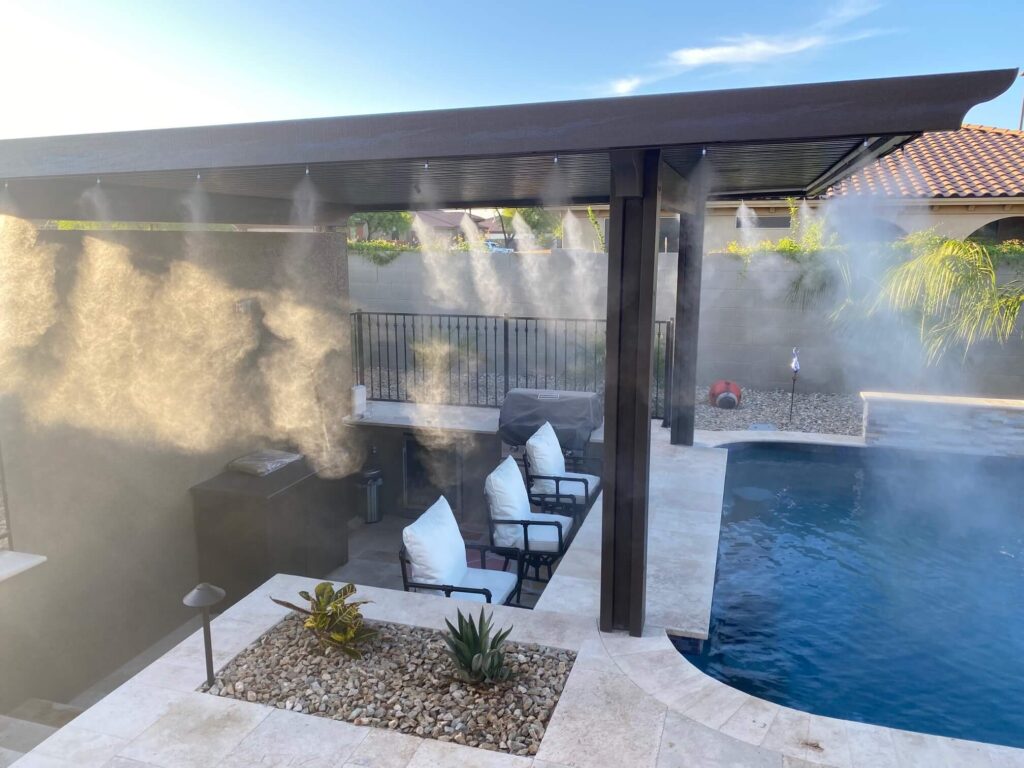
What’s the real temperature difference a misting system makes?
A quality high-pressure misting system drops the felt temperature in the misted zone by 20–30°F. On a 105°F Palm Desert afternoon, that puts your patio in the low-to-mid 80s — the difference between unusable and genuinely pleasant.
The science is on our side here, and it is worth understanding why. Misting is evaporative cooling: as the micro-droplets flash-evaporate, they pull heat out of the surrounding air.
The U.S. Geological Survey classifies the desert Southwest as the single best region in America for evaporative cooling — the drier the air, the more water it can absorb, and the more heat that evaporation removes. Humid Houston gets maybe 10–15°F from misting. We get the full effect.
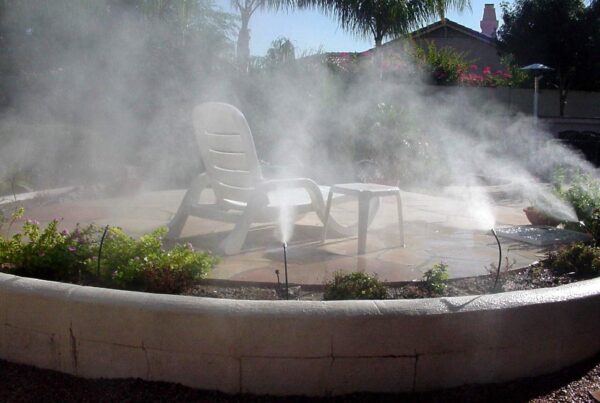
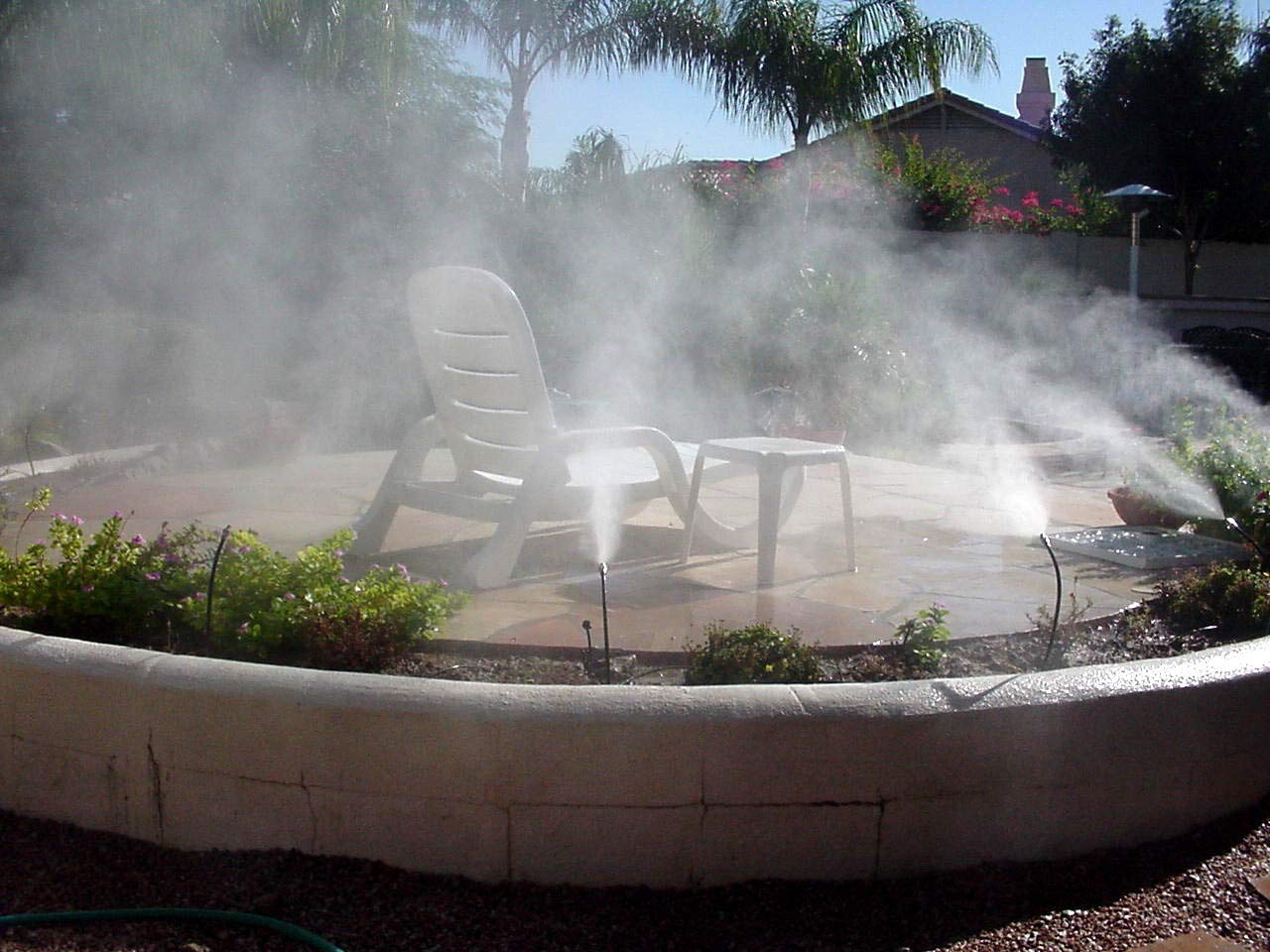
That is also why the high-pressure distinction matters so much in our climate. A 1,000 PSI system atomizes droplets so fine they evaporate before they land — full cooling, dry furniture. Low-pressure systems produce bigger droplets that cool less and wet more.
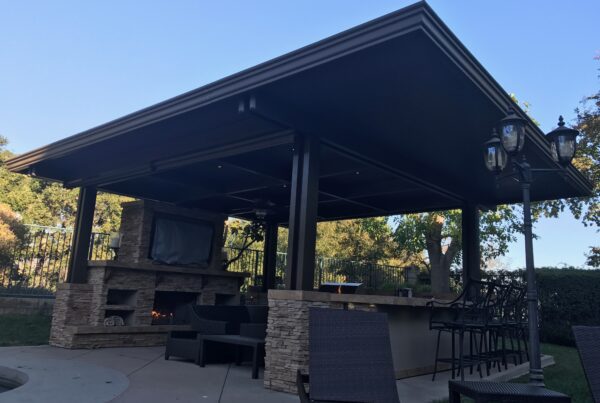
And cooling compounds. Pair misting with overhead shade — a solid patio cover or a motorized louvered roof — and you remove the radiant sun load before the mist even goes to work. Shade plus mist is how a 110°F day becomes an outdoor dinner party.
Do misting systems add value to your home in the desert?
In the Coachella Valley, outdoor cooling is not a novelty — it is the feature that determines whether a backyard is usable for a third of the year.
Buyers here know that instinctively, which is why a professionally installed misting system reads as a genuine amenity in this market, the way a pool heater reads in a colder one.
The value logic mirrors what we laid out in seven ways a luxury patio cover increases your home’s value: improvements that extend usable living space carry weight at resale, and in the desert, cooling is what unlocks that space from May through September.
A misted, shaded outdoor room effectively adds functional square footage for the hottest months of the year.
There is an efficiency story buyers appreciate too. The Department of Energy notes that evaporative cooling uses about one-quarter the energy of conventional air conditioning — so cooling your patio with mist costs dramatically less than any attempt to mechanically chill outdoor air.
For our many seasonal and second-home owners, we also design systems with seasonal startup and shutdown service, so the system is ready the day you arrive in October.
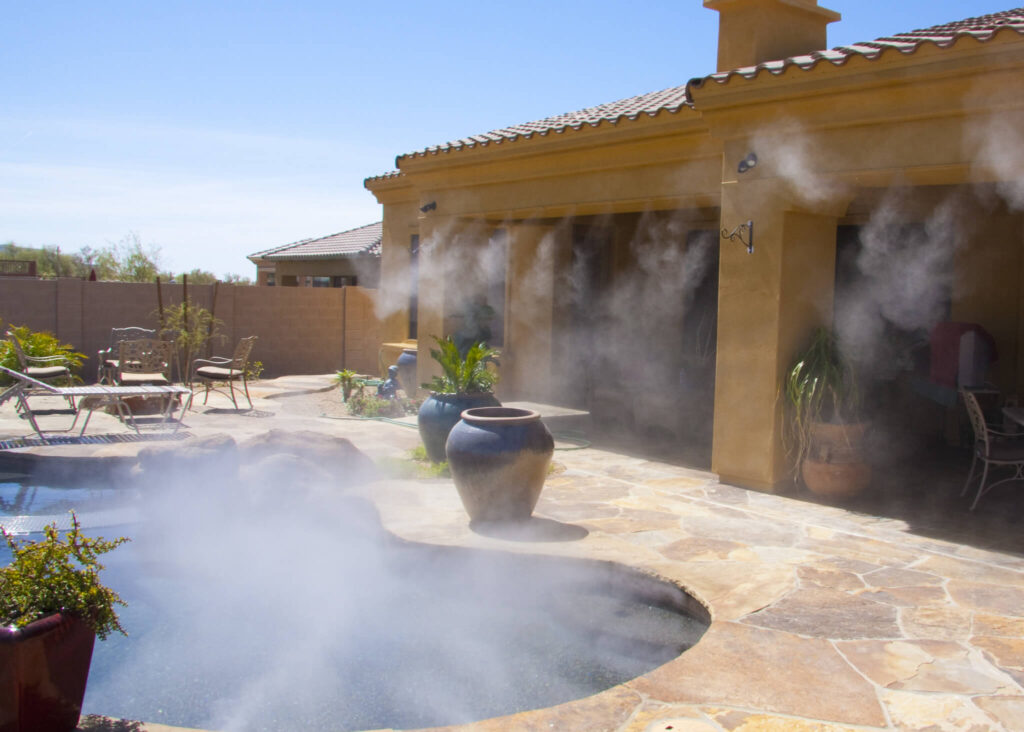
How does misting compare to other outdoor cooling options?
Shade alone is the foundation — and it is not enough at peak. A quality cover blocks the radiant sun, but on a 108°F afternoon, the air itself is still 108°F.
Shade makes the heat survivable; mist makes it comfortable. That is why we design them together rather than selling one against the other (our planning guide walks through how to think about the layers).
Portable evaporative coolers and outdoor fans are the budget path, and they have a place — but they cool a person, not a space, and they occupy floor area in exactly the spots where you want furniture. Trying to air-condition open outdoor air, meanwhile, is the one option we will talk you out of every time: the energy economics are upside-down, which is precisely the point the DOE’s evaporative cooling data makes.
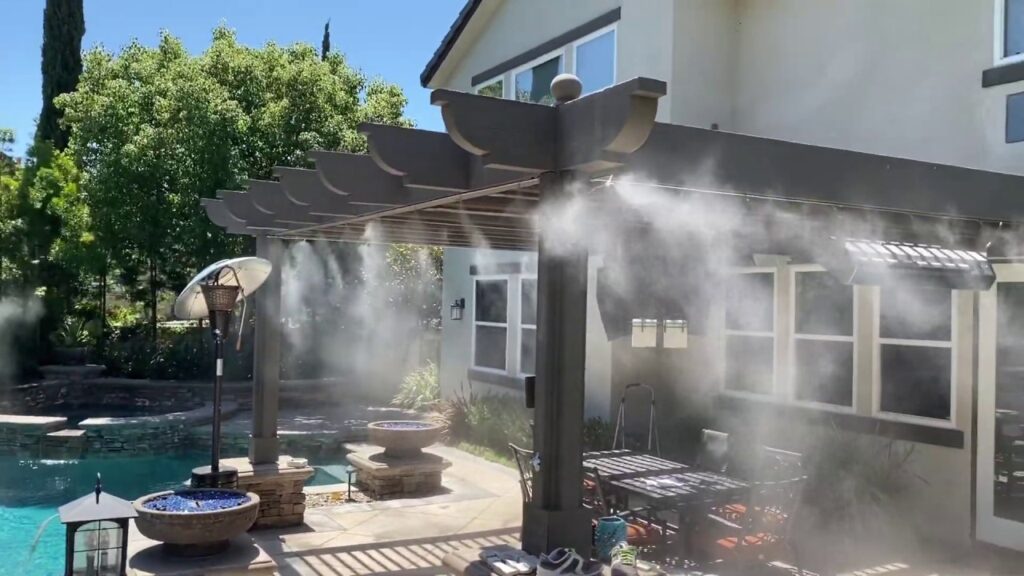
A built-in high-pressure misting system is the only option that cools the entire space, invisibly, at a running cost of pennies per hour. Integrated into the patio structure with concealed lines and zone controls, it disappears into the architecture — which is the standard our clients expect from any part of a complete outdoor living design.
When does a misting system NOT make sense?
We promised honesty – so here it is.
Skip the misting system if your outdoor space is fully enclosed or poorly ventilated — mist needs airflow to evaporate and carry heat away, and a sealed-in patio will just get humid.
Skip it if you genuinely do not use your outdoor space from June through September and have no plans to start using it; the system earns its keep in exactly those months.
And if your budget forces a choice between quality shade and a bargain misting kit, choose the shade first: a well-built patio cover is the foundation everything else builds on.
For everyone else — the homeowner who entertains, who has the shade structure in place, who wants the patio back for the half of the year the desert tries to take it away — the math is comfortably in favor.
After two decades of building outdoor spaces across Palm Springs, Palm Desert, and beyond, misting remains the single highest-impact comfort upgrade per dollar we install.
Want the Real Number for Your Patio?
Every space mists differently — coverage, zones, and pump sizing all depend on your layout and how you use it.
Start your project, and we will design a system around your actual patio, with a real quote instead of a guess — in time to enjoy it this summer.
Frequently Asked Questions
Do misters use a lot of water?
No. A misting nozzle uses about 1–2 gallons of water per hour, so a typical 10–15 nozzle residential system misting in cycles through a hot afternoon uses roughly 30 gallons — comparable to one load of laundry, and a small fraction of what landscape irrigation uses in the same yard.
Will a misting system make my patio and furniture wet?
A properly designed high-pressure (1,000 PSI) system will not. The droplets are atomized so finely that they flash-evaporate before reaching surfaces. Wet furniture is the signature of low-pressure systems, which produce larger droplets that fall rather than evaporate.
How much does it cost to run a misting system each month?
Very little. Daily summer use typically adds a few dollars a month in water at Coachella Valley rates, plus a modest amount of electricity for the pump. Evaporative cooling uses about a quarter as much energy as conventional air conditioning, which is why operating costs stay so low.
Does misting work on very hot days?
Yes — desert heat is where misting performs best. Evaporative cooling intensifies as the air dries, and the Coachella Valley’s low humidity allows a high-pressure system to deliver its full 20–30°F felt-temperature drop even at peak summer temperatures.
What maintenance does a misting system need in the desert?
Plan on periodic nozzle cleaning to manage hard-water minerals, filter changes, and an annual professional service for the pump and lines. Seasonal residents can schedule startup and shutdown service so the system is ready on arrival and protected when the home is empty.
Can a misting system be added to an existing patio cover?
Yes — retrofitting is one of the most common installations we do. Mist lines integrate cleanly along the beams of an existing patio cover or pergola, and pairing mist with shade you already own is the most cost-effective path to a fully comfortable summer patio.